New Year’s Resolution: Use Camels to Regenerate Land… (and produce high quality milk) ! (Part II)

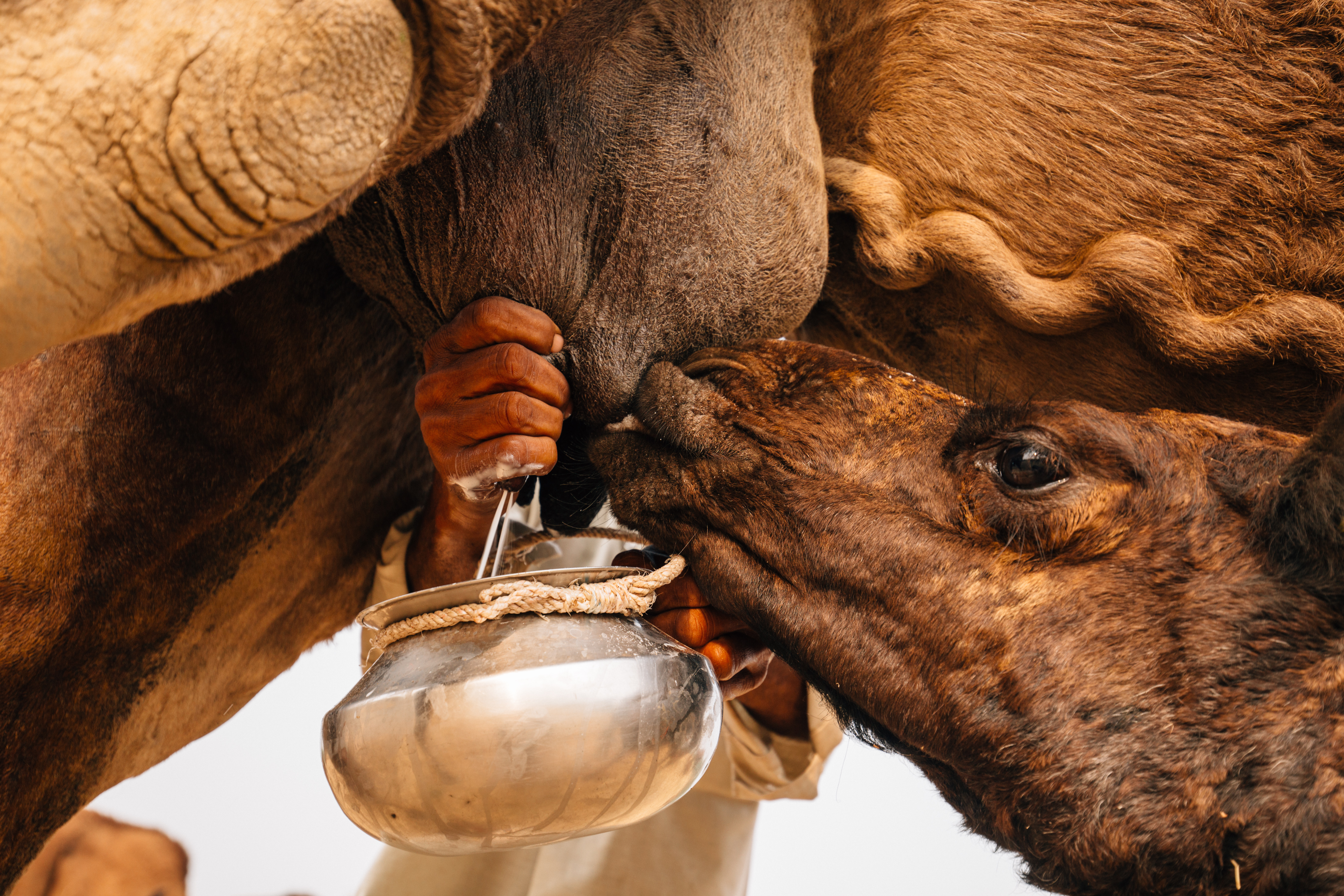
Drawing of camel milking in the Aravalli Hills of Rajasthan. Courtesy of Madan Meena and Camel Charisma

Today is the start of the International Year of Rangelands and Pastoralists (IYRP) – hoorrah! And this inspires this blog today which is a continuation of the last one in which I hypothesized that probably, because of their biological/physiological characteristics, camels are not suited for management in large confined holdings where they can’t graze/browse, and are fed with cultivated feed. Such enterprises are not only problematic from an ecological perspective, but also have a hard time making a profit.

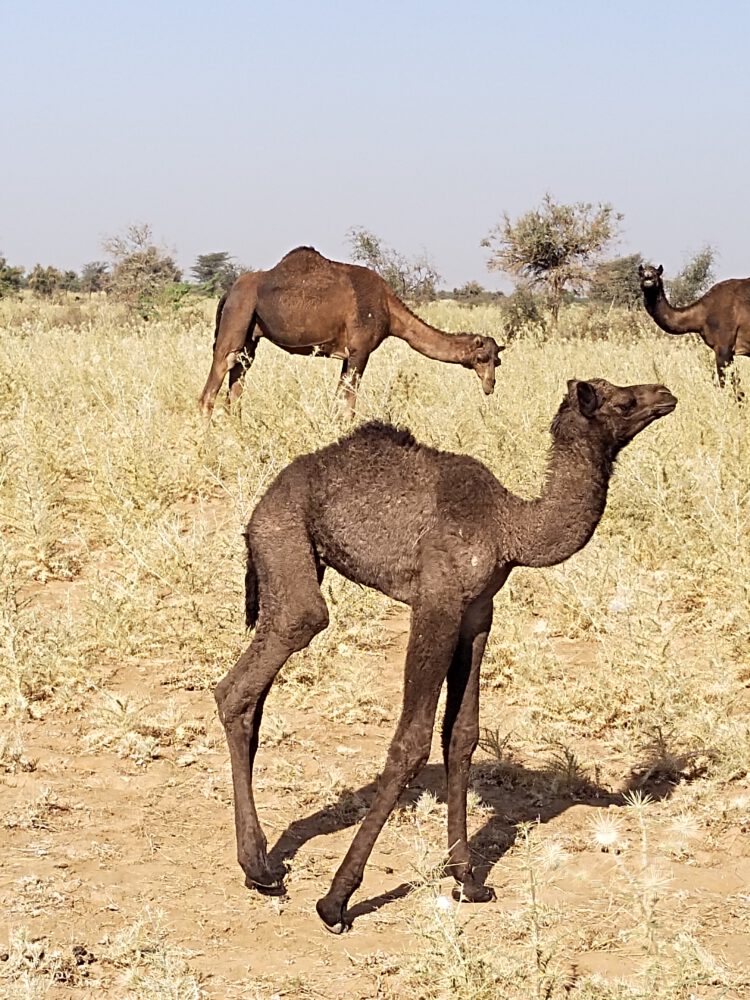
So what is the way forward for camel dairying? This of course depends on the local situation and such factors as the availability of land, accessibility of markets, and cultural attitude towards milk. But I feel very strongly that camel dairying must go along with efforts to regenerate land and restore landscapes (even if on a small scale) so that camels can forage and have something to do and explore, rather than just stand around, be bored, with their existence reduced to synthesizing milk.

I call camels ‘desert gardeners”, because they disseminate and support the germination of the trees and shrubs that they forage on.

Camel seeded nursery of sicklebush (Dicrostachys cineria) at Butibagh, on the premises of Camel Charisma.

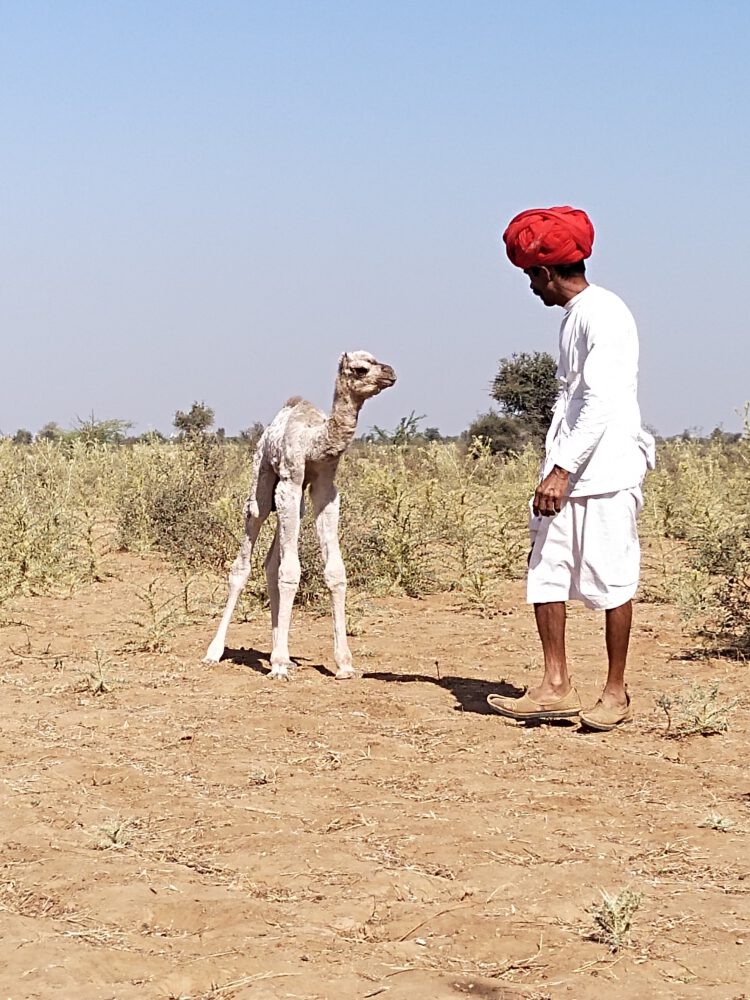
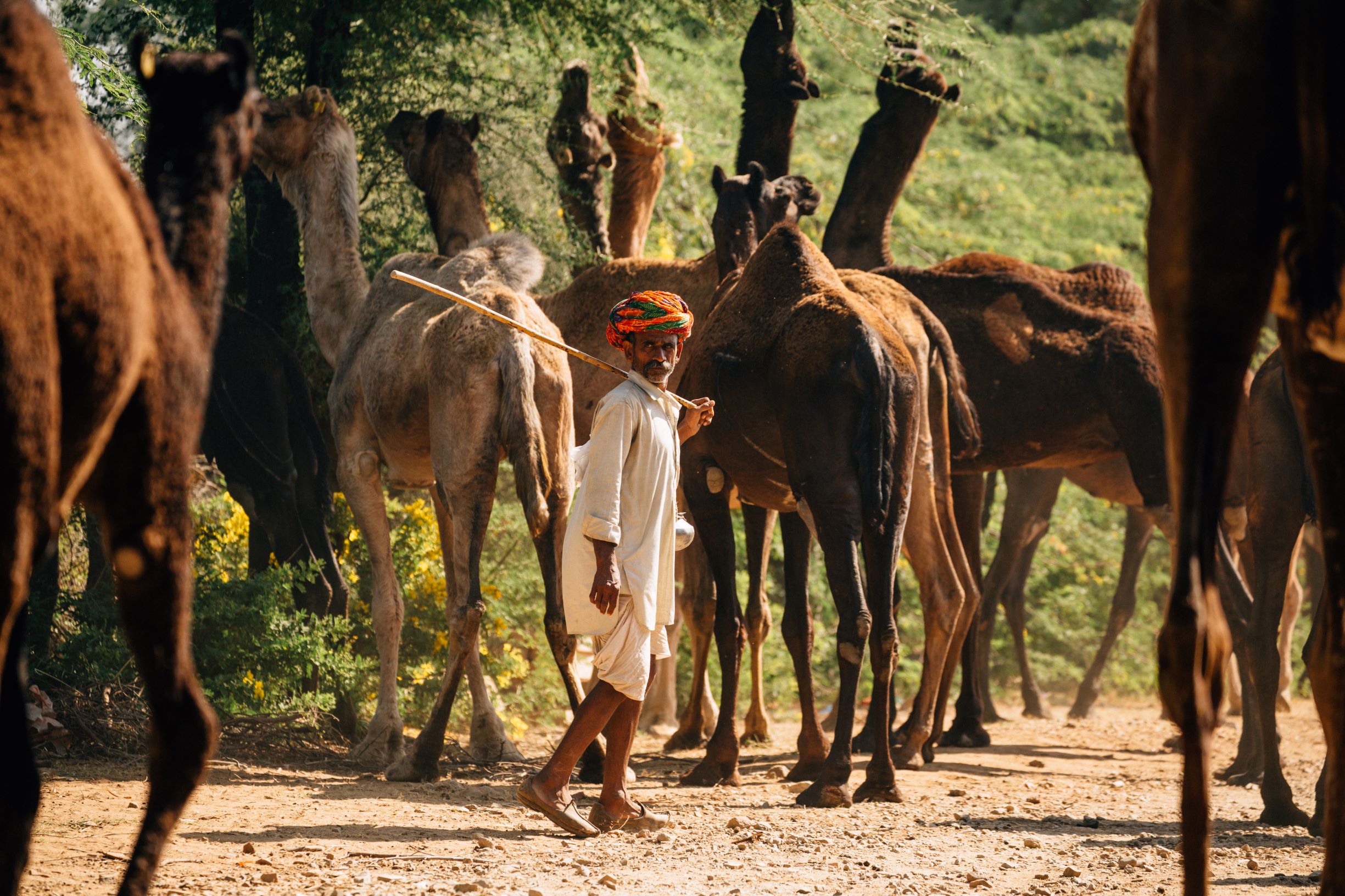
Have a look at the photo above. It is an abandoned paddock in which we kept some camels a few years ago until we realized that this stationay system did not work – the camels got infected with mange which we found impossible to control. The Raika told us that they had to MOVE and so we gave them to the care of a herder who wanders around with them.

At the time our small herd departed, there was only bare ground – but now, a few years later, all these shrubs have come up on their own, and – since the photo was taken – grown into a scrub forest. This dense ‘jungle’ can now once again sustain a a certain amount of browsing by camels or goats, representing a perfect circular system! It illustrates the ecological need for camels – and other herbivores – to stay in an area only for a limited amount of time and then move on – for their own health and that of the vegetation! Mobility Matters, as is the slogan for the International Year of Rangelands and Pastoralists by the International Land Coalition.

The ecology of camels is remarkably underresearched. There were longitudinal studies in the 1960s/70s by Hilde Gauthier-Pilters in the Western Sahara, and in the 1980s/90s by Birgit Dörges and Jürgen Heucke of feral camels in Australia. Gauthier-Pilters noted that camels do not destroy desert vegetation because they disperse widely and take only one bite from a plant before moving on. Doerges and Heucke reported minimal, if any, negative impact of the camels they observed although these were restricted to the same (large) area over years.

Since then, there has been hardly any research on camel ecology. Camel pastoralists of course have lots of observations and are goldmines of information, but, being only sporadically documented, this body of knowledge is difficult to access for most. In India, their observations often refute those of forest officials who blame camels for destroying vegetation, for instance in the Kumbhalgarh Wildlife Sanctuary and among the mangroves at the coast of Kutch. The Raika emphasize that browsing by camels has the same invigorating effect as pruning, causing trees to branch out and develop denser foliage. They also note that camels never go back to the same shrub on the next day, but leave it alone for longer intervals, allowing it to recuperate. With respect to mangroves, the herders believe that camels play a positive role and support regeneration by stomping the seeds into the ground. We need unbiased scientific research to understand and validate pastoralist knowledge before it is too late.

We should make it our New Year’s resolution to always accompany camel dairy ventures with efforts to protect and regenerate the kind of landscapes or browsing patches that camels feel at home in. If they have the option of at least temporarily (part of the day, or seasonally) forage on natural vegetation, it will do so much for their well-being, besides benefitting the quality of their milk – due to the phytochemicals that desert adapted camel forage plants are rich in. In addition, such initiatives will support carbon sequestration, create habitats for other animals, boost biodiversity – a multi-win situation! Silvopastoralism, the integration of livestock with forests, is big in South America – we need to take a slice from there and adapt it to camel countries!
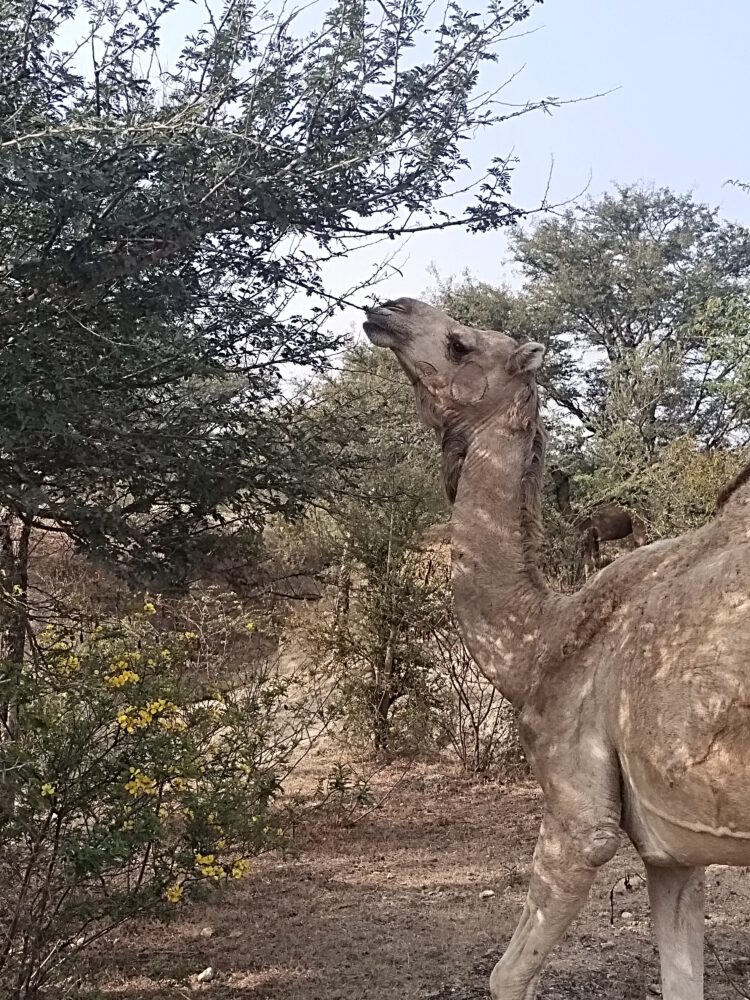
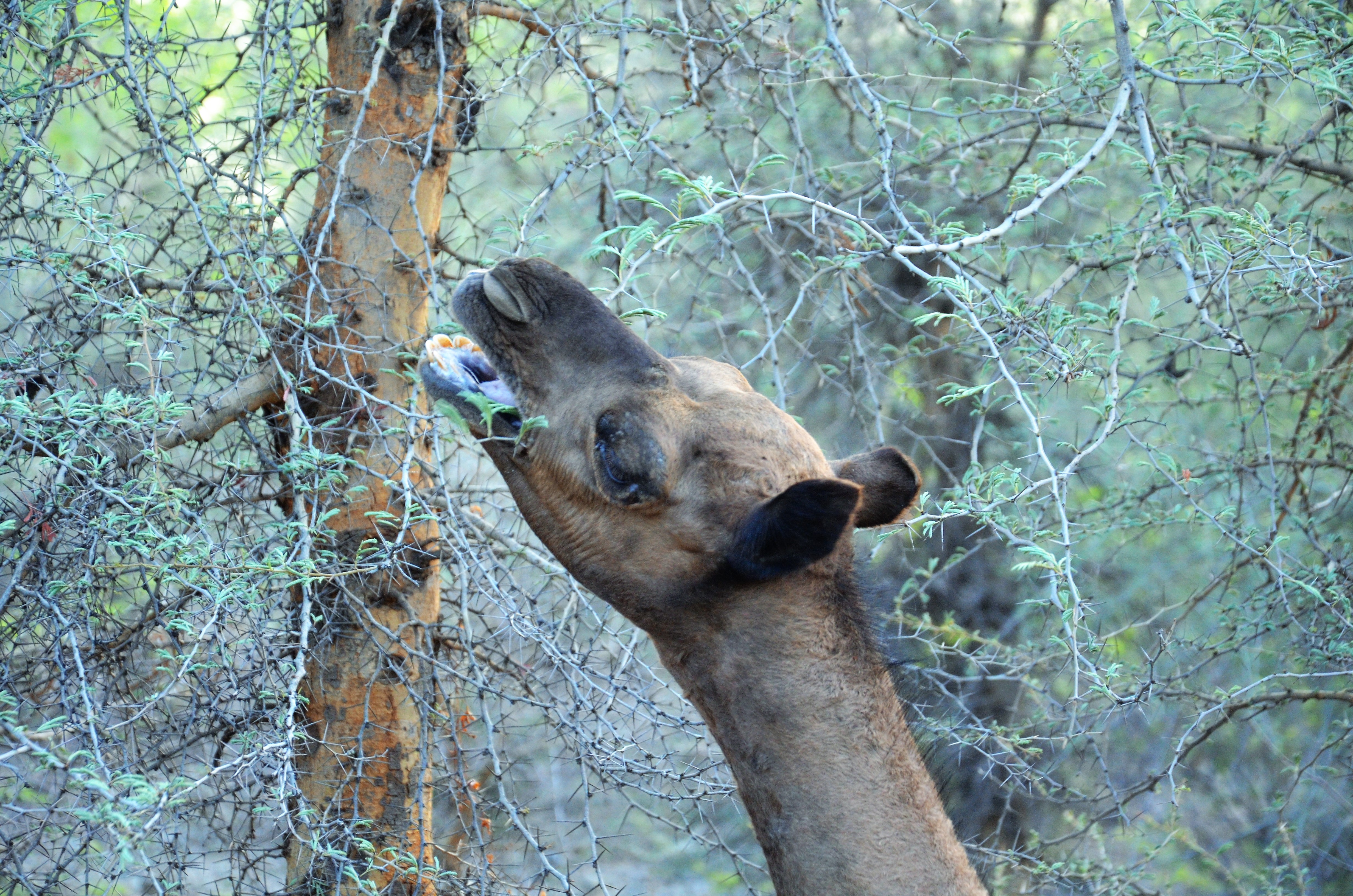
Camel browsing on Acacia senegal in Rajasthan.

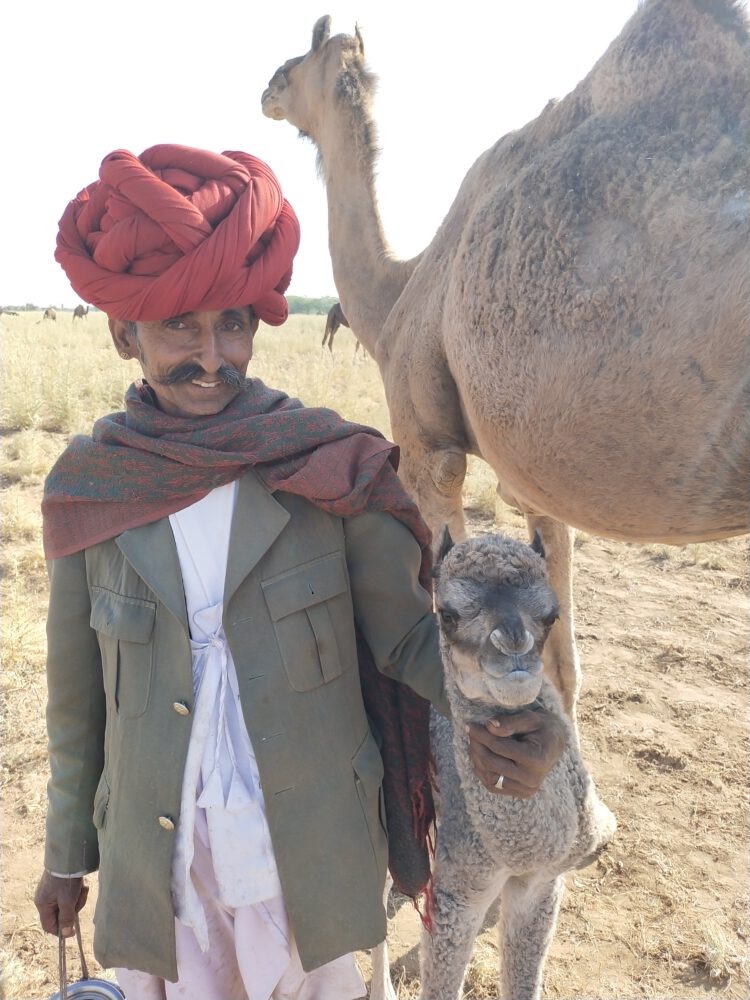
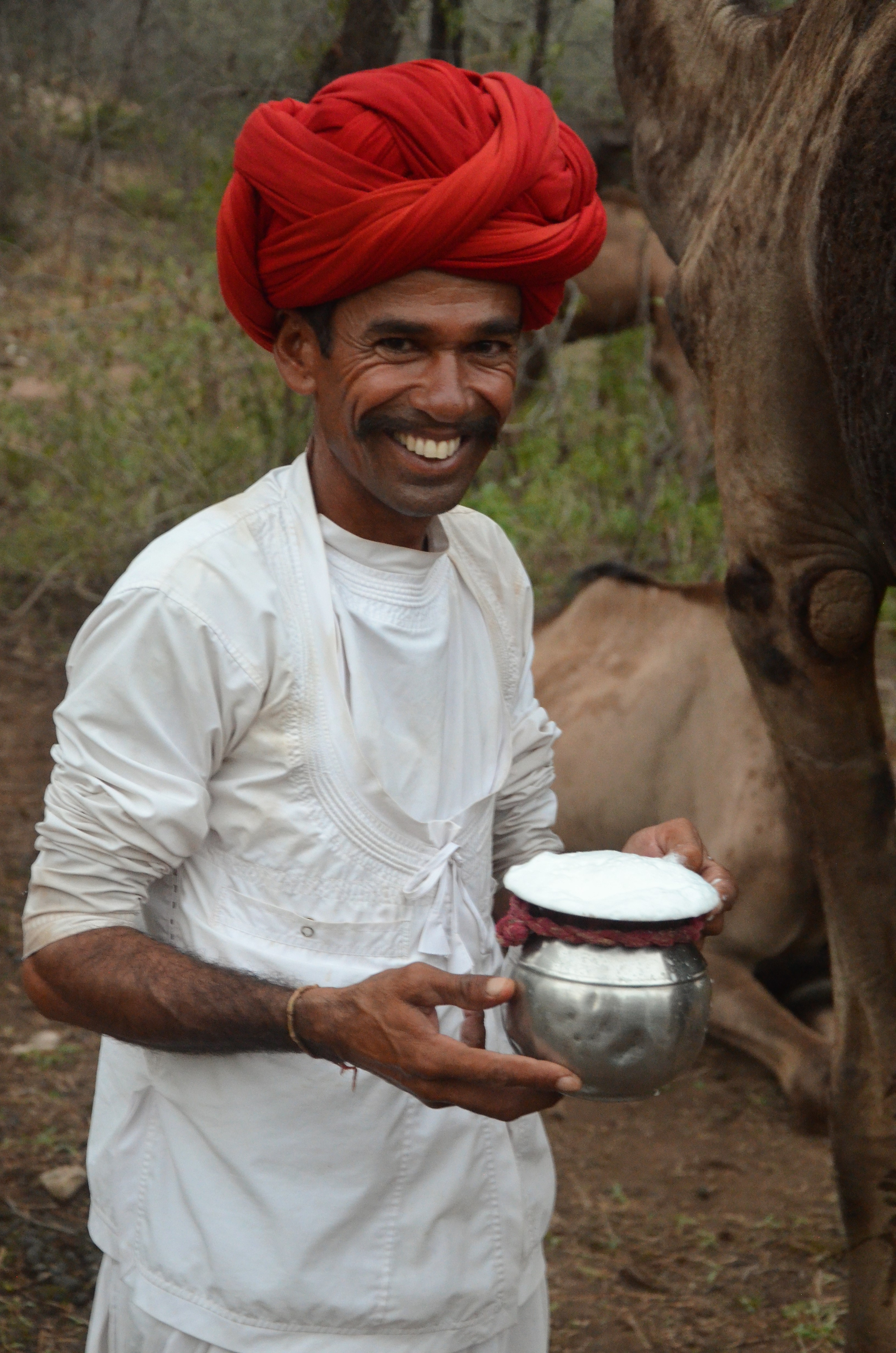
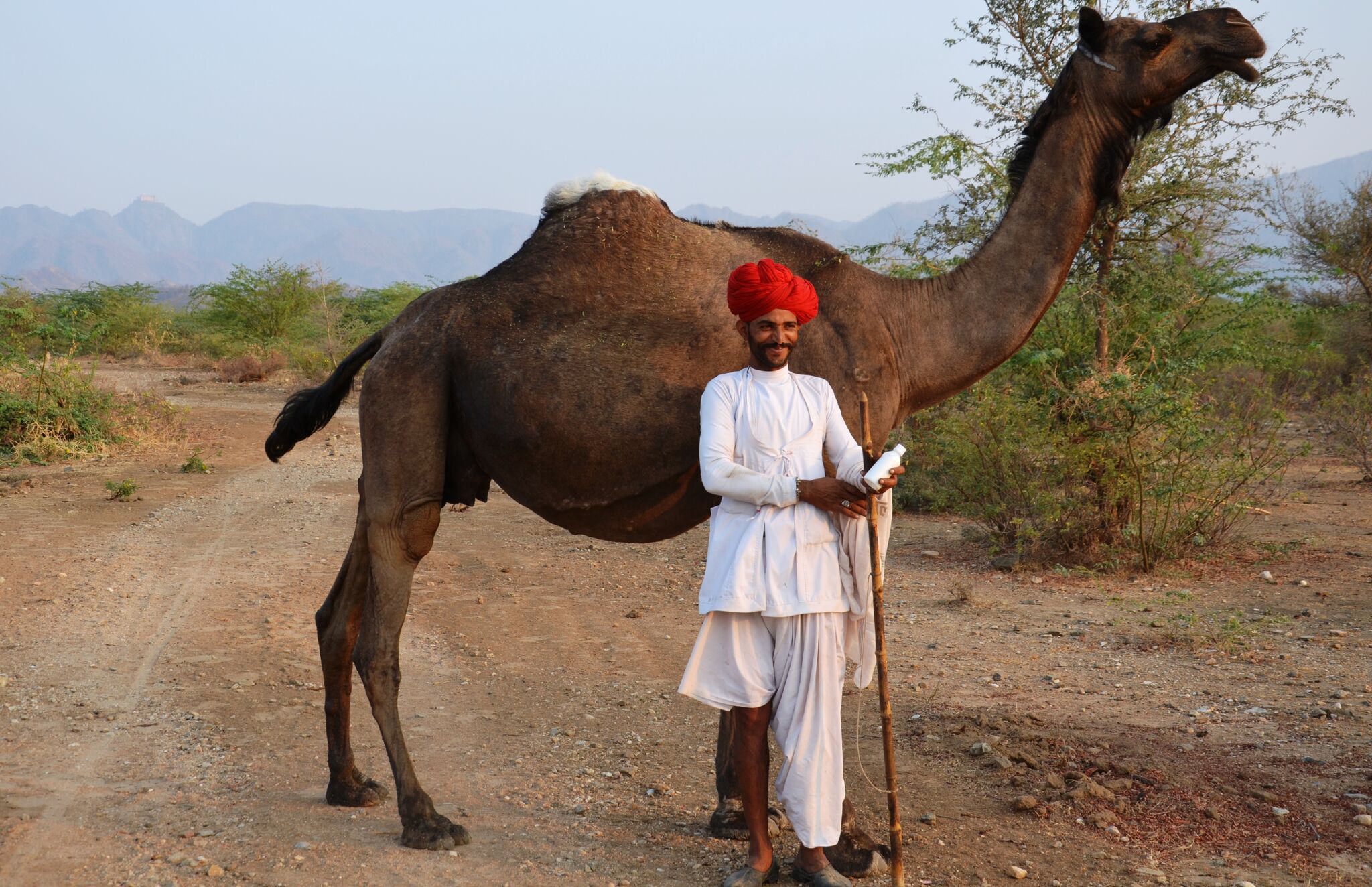
And while I am here, I want to give a shout out to the Raika herders whose camels provide the milk for our social enterprise/company Camel Charisma. They believe that camels browse on 36 different forage plants, all of which are known for their therapeutic qualities and described in the Ayurveda, India’s ancient medicine system. Imagine the goodness of this milk! A precious substance that is produced without any fossil fuels in a completely natural system! It cant get any better than that, and is certainly better than any vegan milk produced from monocultures of almonds, soy or oats.
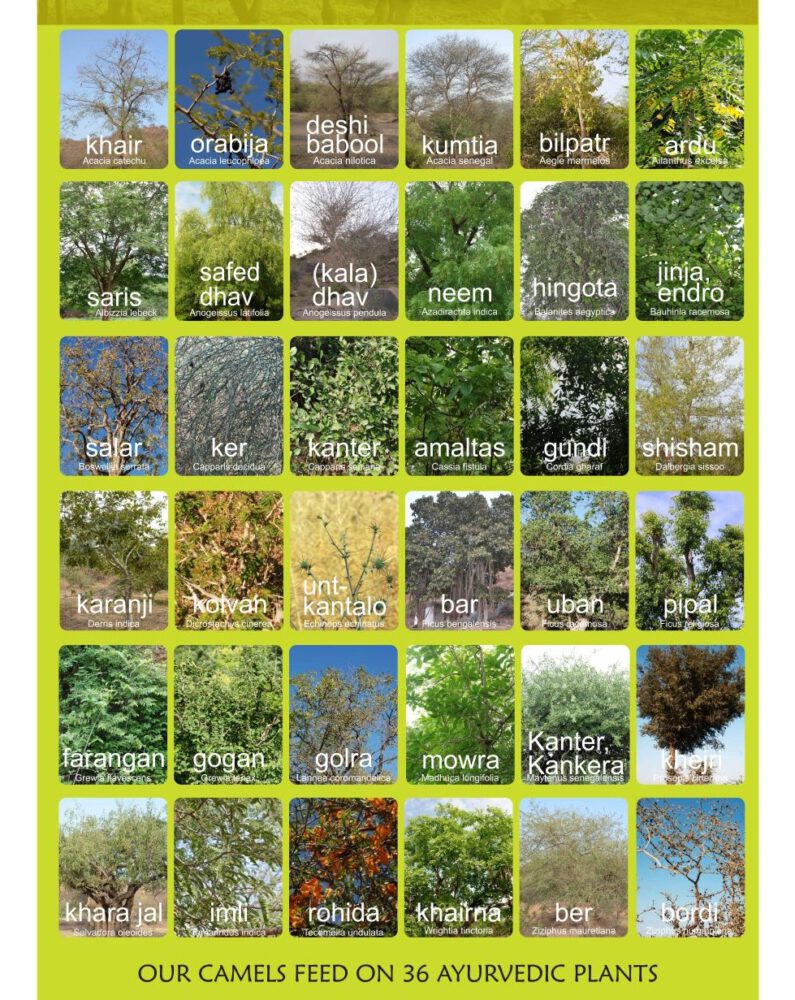
All camel milk should be produced by happy camels that have the option of going to a ‘park’ where they can stroll around and take a bite from a tree here and there. If our growing camel community adopts such an approach, rather than trying to emulate or compete with the cow dairy sector, then we will have carved out a unique path into the future for our favourite animal!

Lets strive for this in the International Year of Rangelands and Pastoralists 2026 !

Pastoral Alchemy, Palm oil, Net-Zero Dairy and One Health

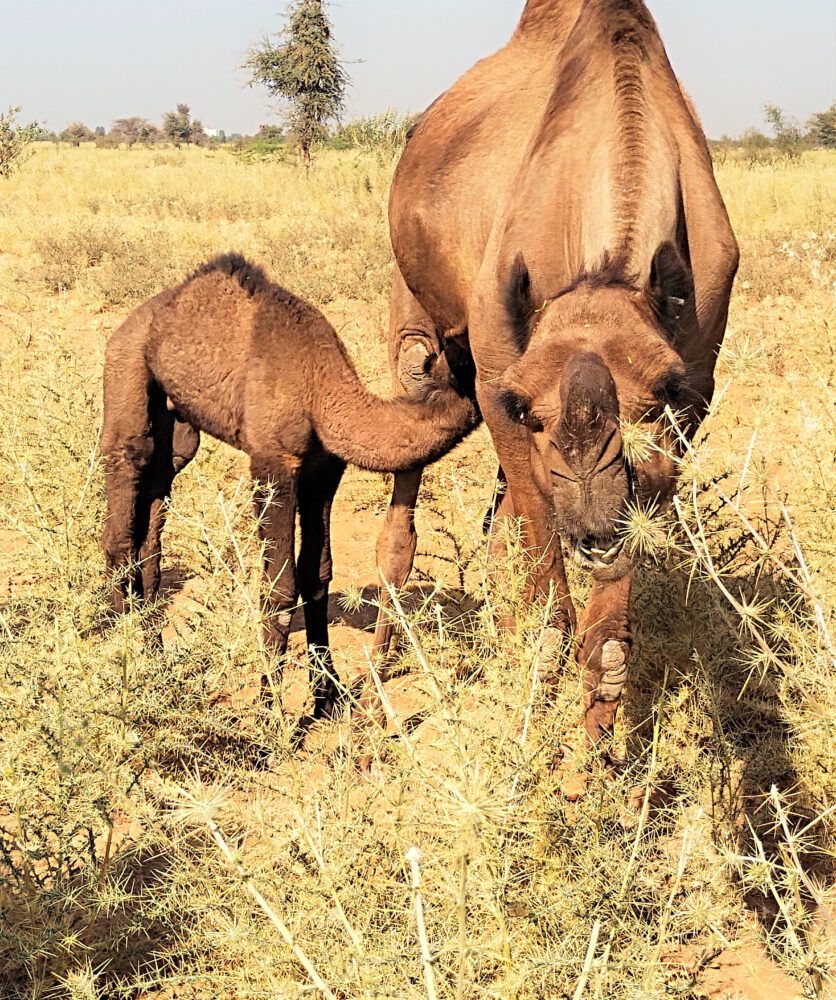
Feeding on the Indian Globe Thistle (Echinops echinatus), a plant with known medicinal properties, produces exceptionally sweet milk

‘There is a disconnect between what we feed animals and food science’

(Dr. Sylvain Charlebois @foodprofessor)

The camels that I work with and that supply the milk for the Kumbhalgarh Camel Dairy are said by their Raika keepers to feed on 36 different ayurvedic plants. It varies seasonally which plants they nosh on: forest trees and vines during the monsoon, and pods of acacia trees in the summer. At this time of year, in February, they are roaming around on fields that are totally covered in the Indian Globe Thistle – Echinops echinatus – a tall and spiky plant that no other livestock will touch. Locally known as unt kantalo (‘camel thistle’), it makes the milk incredibly sweet, as well as foamy. It tastes like ambrosia. Of course our camel breeders are addicted to the elixir, but even our esteemed visitor, Dr. Tatti from Prompt Innovations could not get enough of it during a recent visit!

After returning from the (thistle) field, I looked up Echinops echinatus and found out that all kinds of medicinal properties are ascribed to it: antifungal, analgesic, diuretic, reproductive, hepatoprotective, antioxidant, anti-inflammatory, wound-healing, antipyretic, and antibacterial properties. Its even good for your sex-life! (Is that why camel milk is regarded as an aphrodisiac?)

By indulging in thistles, camels actually provide three different kinds of services:

  • They de-weed which is appreciated by the farmers who own the land and who hate unt-kantalo, that creeps up during the time their land lies fallow.
  • They provide organic manure and deposit it precisely where it is needed
  • They produce this wonderful milk that I can only liken to ambrosia in taste.
  • They also produce offspring!

Its almost miraculous how the camels transform an unwanted material into a health tonic and at the same time replenish and fertilize the soil. Pure pastoral alchemy! And it exemplifies how livestock is best used, in sync with nature: pastoralism only gives, it does not take.

Canada’s ‘Buttergate’: palm oil in dairy feed

I can’t help but link this scenario to a scandal that is currently engulfing the Canadian dairy industry: the fact that butter no longer softens at room temperature, apparently due to cows being fed with supplementary palm oil. Palm oil, of all things! When it is known that a. its cultivation is one of the most biodiversity destroying activities and b. it has also been associated with negative effects on human health. The Canadian public is outraged, as many have been buying butter to avoid palm oil, and dairy farmers are well subsidized in order to produce healthy food, according to Dr. Sylvain Charlebois, senior director at Dalhousie University’s Agri-Food Analytics Lab. In an interview he also points at a disconnect between what animals are fed and how this affects human/public health. I think this is a crucial point that needs to be remedied urgently, because it is of such relevance to the much touted One Health approach, which considers human, animal and ecological health as interconnected. It would certainly help validate pastoralist food production!

Is pastoralism naturally ‘net zero’?

And there is another hot issue to which I would like to link the observations on the thistle field: The dairy sector is now feeling the heat from the anti-livestock propaganda and is making an earnest attempt to become ‘net zero‘ in terms of Green House Gas emissions by 2050. One of the approaches they are promoting is to process manure into fertilizer. I am wondering if pastoralists are not already there at ‘net zero’ dairy production, because their systems are entirely solar powered and they use practically no fossil fuels. At the same time, they reduce the need for chemical fertilizer (whose production is extremely GHG intensive) and also the need for weed killers. It would be great if a credible research organization could do a life cycle analysis of this particular camel dairy system, as well as other pastoralist production systems!

If you are interested to learn more about the unique camel dairy system described and would like to support it, please go to our Patreon page here.

Rajasthan’s unique and caring camel culture is on its deathbed….but we can still save it!

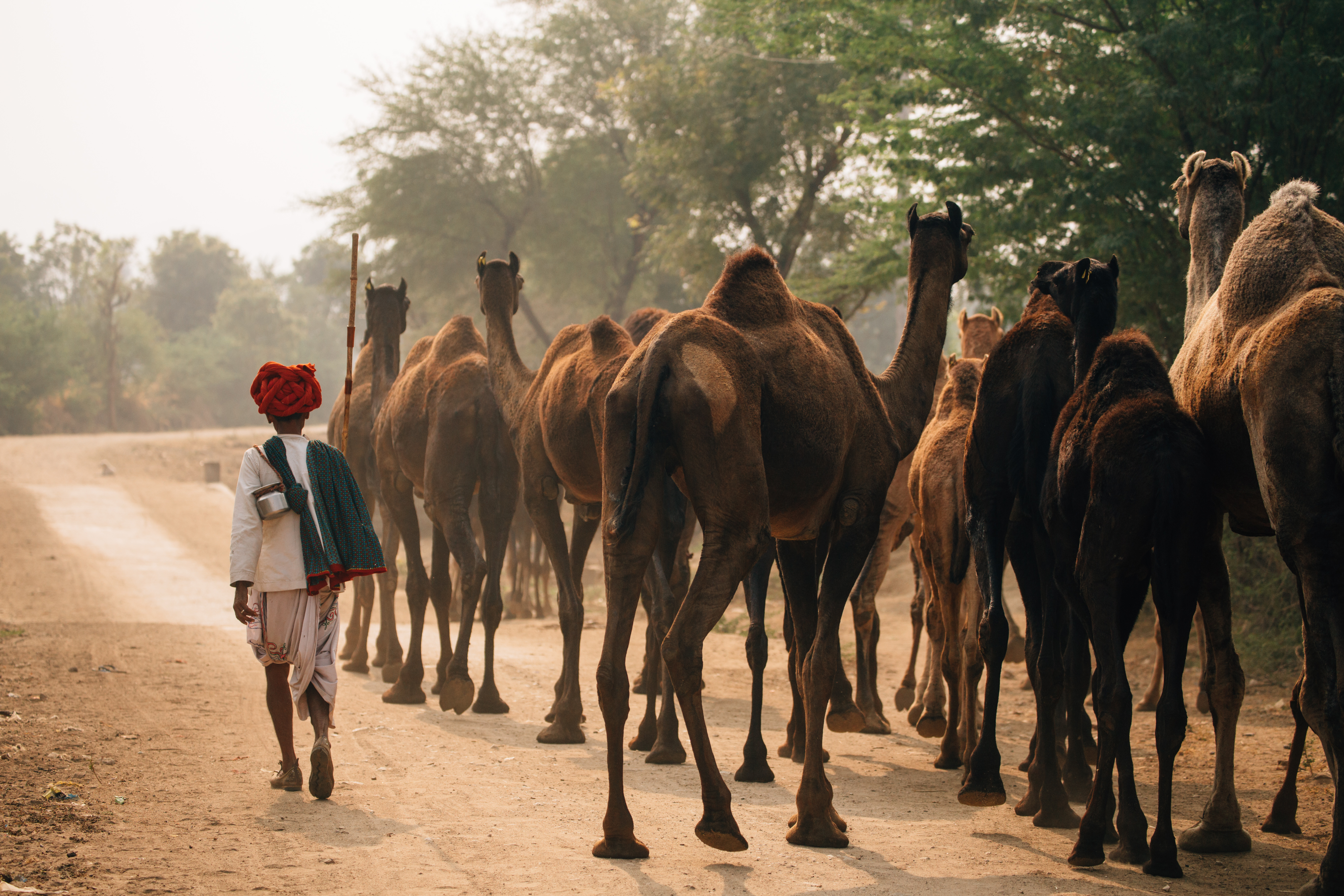
Photo by Sophie Matterson taken in 2017. This camel herd no longer exists.

The news about Rajasthan’s state animal is depressing and heart-wrenching: According to the just released official livestock census of India, the country’s camel population has decreased by 37.1% since the last survey in 2012 and is now down to 250,000 (compare that to 1.5 million camels in the late 1980s, and the fact that camel numbers doubled in the rest of the world!). This has happened despite various protection measures having been put in place by the Government of Rajasthan after the previous census in 2012, such as a law prohibiting slaughter and movement across state borders.

Photo by Sophie Matterson: Where will these camels end up?

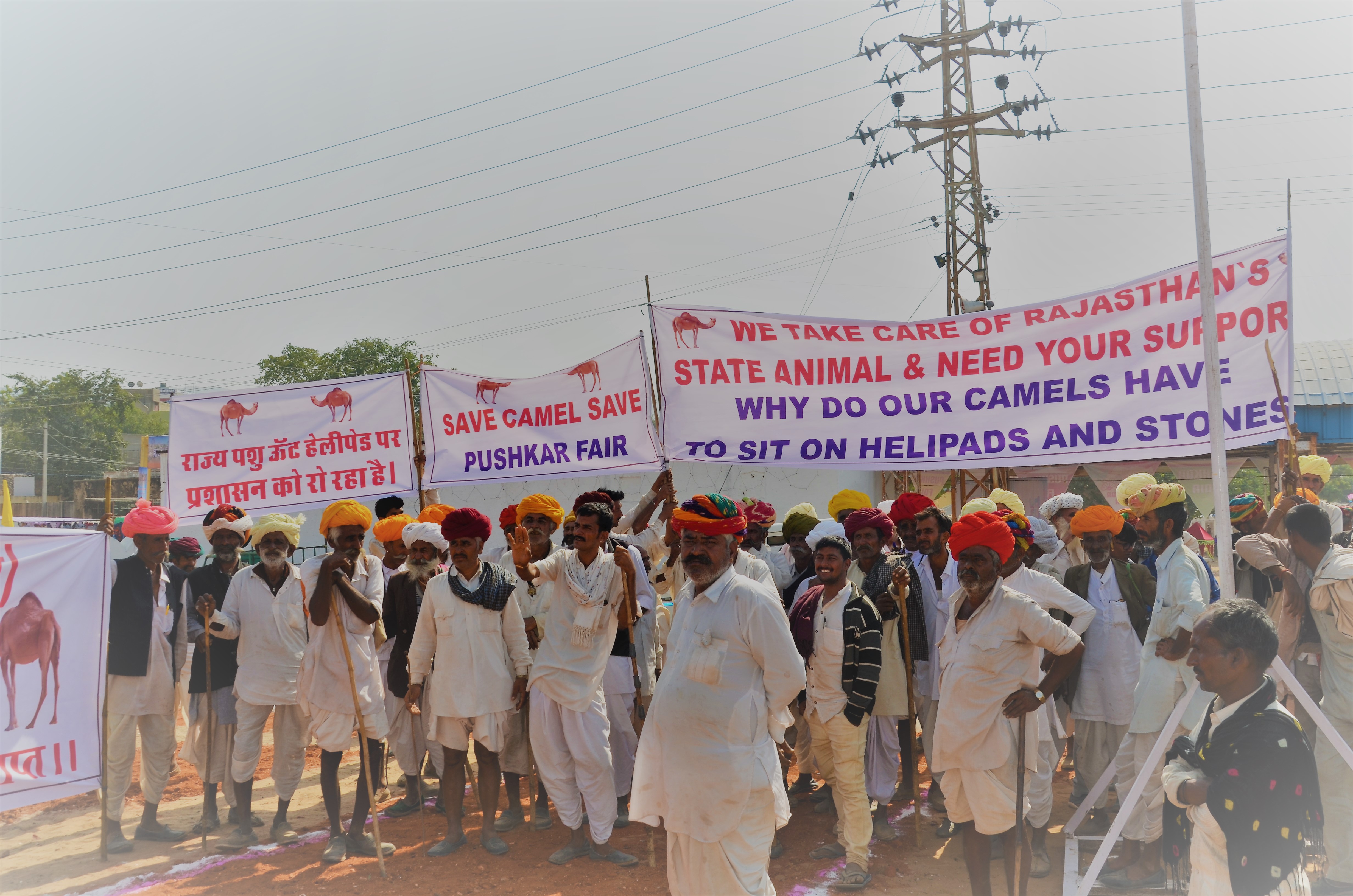
In less than two weeks, the Pushkar Camel Fair will attract thousands of tourists who come to visit what is still as billed the world’s largest camel fair, even though it has turned into a horse and amusement fair; the famous camel hill has been annihilated by helipads and resorts, causing the normally placid herders to stage a rally against these conditions.

Protest at Puskar Fair in 2018 against conditions. The rally was successful: District Collector and Fair administration provided access to water and tried to ameliorate the situation.

Nevertheless, hundreds of female camels – pregnant, lactating, with babies on foot – are currently being driven to Pushkar in order to sell them off for good. Its an arduous trek over many hundreds of miles and undertaken out of sheer desperation by traditional camel herders who have owned these herds since many generations, but who can no longer make a living from them. Although it breaks their hearts to sell off their ancestral herds, they get pressured by relatives to take this final step and exit herding. Its not just the camels and the livelihoods that are vanishing, but a whole eco-system of community knowledge and mutual support. It takes a community to raise camels!

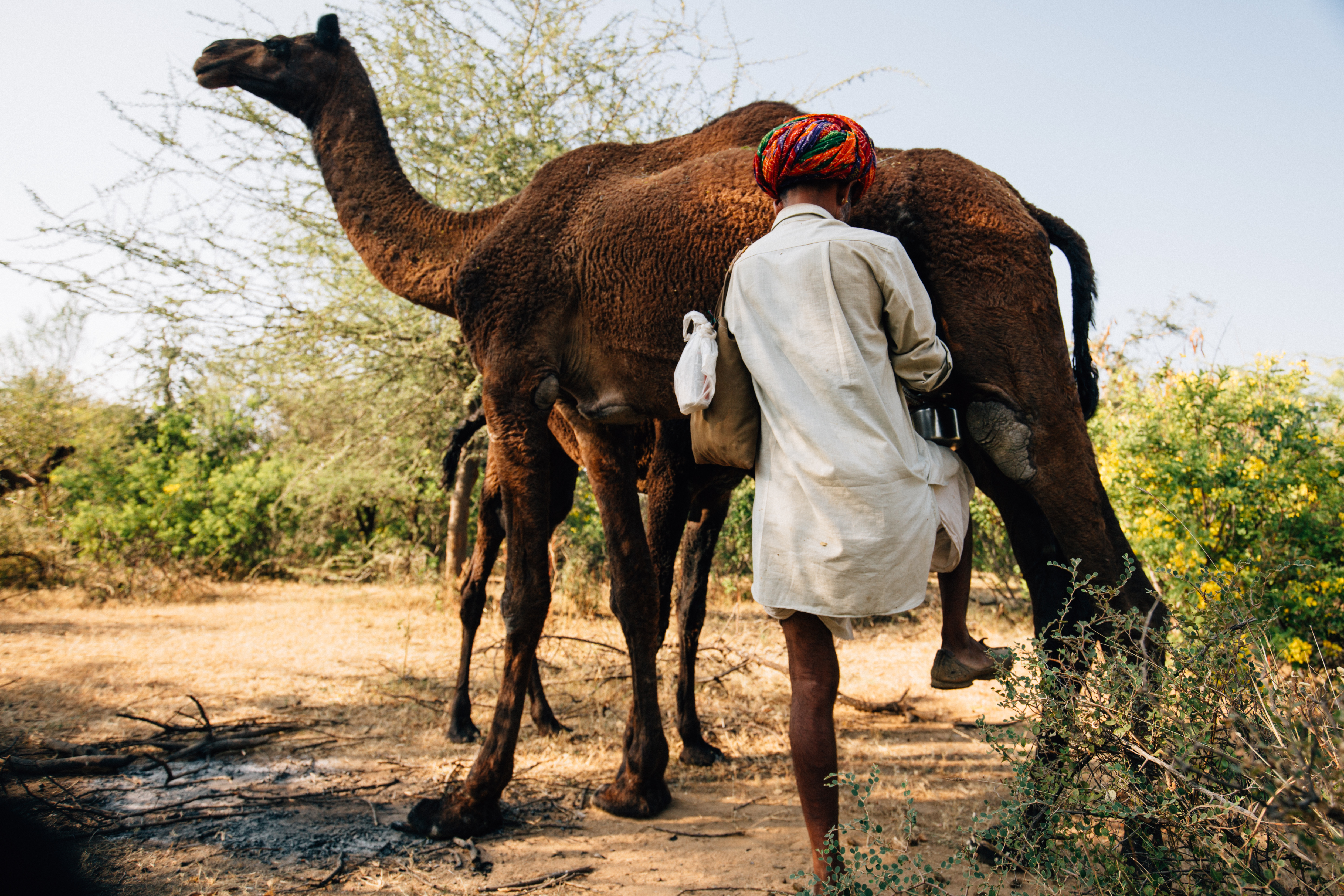
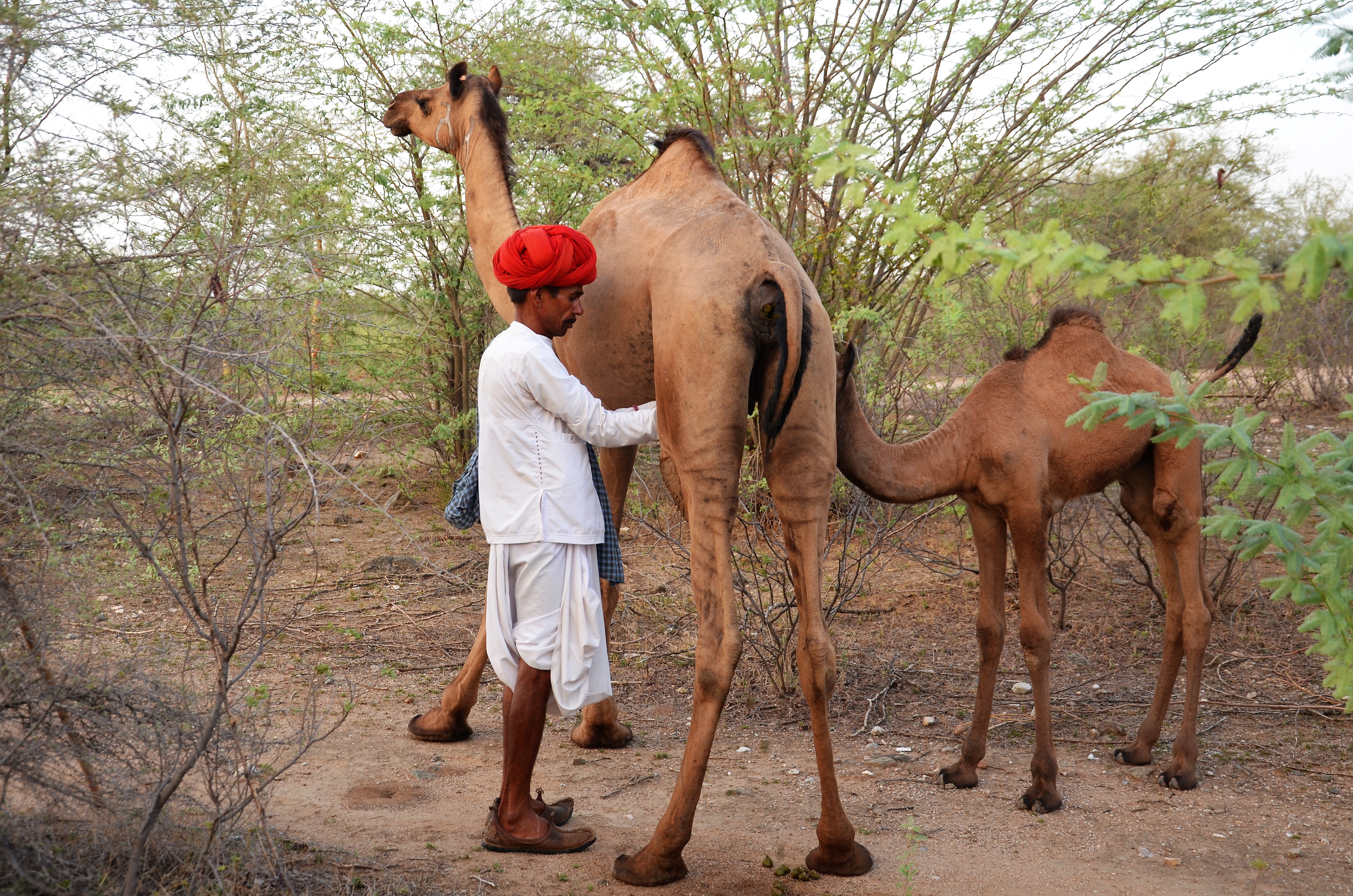
Photo by Sophie Matterson. Raika camels are so close to their keepers they are easily milked without need for restraint

Over the last few years many of them have held on to their herds hoping that a market for camel milk would develop. But this has not materialized, except for a lucky few who live close to the Kumbhalgarh Camel Dairy on the campus of LPPS in Rajasthan’s Pali district and of which I am a founder.  Since it was set up, we have been getting dozens of phone calls every week by Raika begging us to purchase their milk. But despite our best efforts, we have not been able to raise turn-over and only a handful of camel herders have benefited. The milk is marketed mostly directly to the end consumer (80% of them are parents of autistic children), frozen and shipped in ice containers.

Photo by Sophie Matterson: camel milk is a magic potion!

There have also been efforts to link up with supermarket chains, but this is expensive, and our start-up has not had the necessary resources, in addition to the logistical challenges. I am convinced that camels are the dairy animal of the future, given the steady rise of temperatures and sinking water levels in Rajasthan and many other parts of the world. They are worthy of investment by all the institutions that concern themselves with food security such as FAO, ILRI, IFAD, WFP.  Sadly, none of these is somehow in a position to help support a system that provides livelihoods, saves biodiversity and produces incredibly nutritious food that seems to be an antidote to industrial diets.

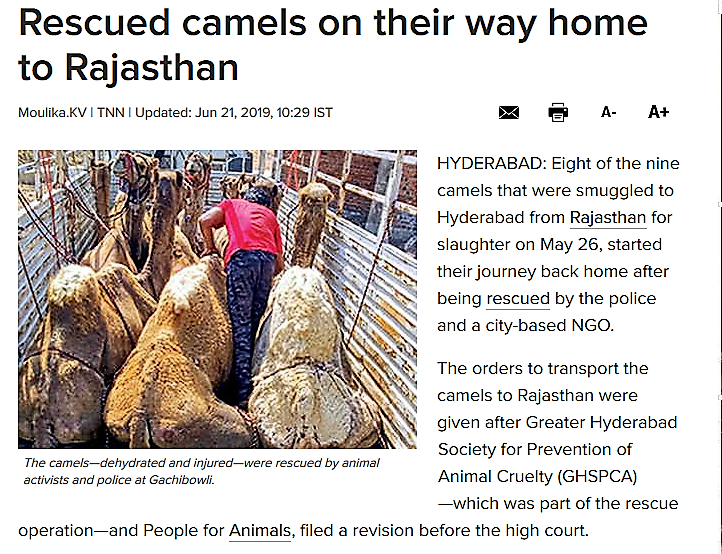
In the last few years, animal welfare organizations have spent a lot of money on confiscating camels from places such as Hydrabad and then trucking the poor camels back to Rajasthan ‘where they belong’, and this is the kind of story that gets a lot of media attention. But its not a success story – although the camels may be saved for the moment, what is happening to them in the long run? For sure, a dedicated camel shelter exists in Sirohi, but its resources are also limited, camels get picked up somehow and again may undergo a harrowing transport to a slaughter house. All this could be avoided! It would be so much more animal friendly, if the remaining camel herders could be PAID a living wage to continue taking care of their herds, at least for another year. Costs would be much less than rescuing and transporting the camels back to Rajasthan and provide for their care in a camel shelter. It remains to be seen if the dedication of animal activists extends to seeing the rationale of such an approach.

Camels get rescued in Hyderabad – AFTER they have been sold and trekked for thousands of miles. This could be prevented by a proper approach and supporting camel herders with a living wage.


Conserving Rajasthan’s camel herds is an investment that surely will bear fruit – socially, ecologically, and in terms of human nutrition and animal welfare – in the long run. There is also reason to believe that it will eventually be financially worthwhile, considering the significant amount of  research underpinning the therapeutic qualities of camel milk for diseases, such as diabetes and autism. The ‘magic of camel milk’ is the subject of a new book by American author and autism mother Christina Adams. There are also researchers who believe that camel milk is of special value for tackling air pollution, although this is still to be published.

Another important aspect of camel milk is its very high iron content, indicating that it could be of extreme value in alleviating Rajasthan’s high prevalence of malnutrition: anaemia is present in half of the pregnant women, and 23 percent of children are born with low birth weight.  Around 39 percent of children are stunted. If we could link Rajasthan’s camel breeders who sit on about 35,000 liters of unutilized camel milk with government nutrition programs, this would be a win-win situation for everybody.

But this will take time to set up. In the meantime it is urgent to prevent loss of Rajasthan’s camel breeding herds and to prevent unnecessary camel suffering by providing a living wage to camel herders and stopping the sell-out of their herds at this Pushkar Fair.

LPPS and LPP are about to start a crowd-funding effort for this purpose. Stay tuned!


Camel Milk Alchemy: Nature’s Antidote for Urban Lifestyles

Nomadic camel dairying: a system in which milk is shared between humans and calves.

Its World Camel Day on 22nd June and therefore time for an ode to this animal that is the product of ancient nomadic cultures, but rapidly accumulating admirers and supporters in the North.

I won’t bore you with the known and scientifically proven facts about camel milk and its therapeutic value for a range of “modern”, lifestyle diseases. After all, they are all over the place, hyped by a global, very active network of camel lovers, camel dairy entrepreneurs (of which I am one), and people who have experienced dramatic health improvements after they started consuming camel milk. Compatible with lactose intolerance, helpful for diabetes patients by reducing need for insulin injections, often beneficial for certain types of autism, are some of the well-established facts. (Contact me if you need references)

For me the wonder of the camel is associated with its nomadic origin in the vast deserts of the Arabian peninsula: Its ability to convert extremely spiky, thorny and fibrous trees or scant widely dispersed ground vegetation, sometimes with an extremely high salt content, into a delicious elixir that is ideally positioned to address the needs of the times. Here are the three points that need to get more attention in  future research and work on camels:

At the beginning of the camel dairy system are, in my nook of the world in Rajasthan: Extremely drought resistant trees and shrubs with deep roots that enable them to withstand years without rainfall. These trees, such as this Acacia leucophloea, are used in ayurvedic medicine, and full of phytochemicals and micronutrients absent from modern diets.


  1. An opportunity for creating a more animal friendly and more ecologically sustainable milk production system.

The emerging camel dairy sector should carefully avoid  the pitfalls of conventional dairying, such as hyper-bred cows needing expensive feed, throw away male calves, exploitation of farmers, and dismantling of milk into its constituent parts. Camel dairying must remain a system based on nature in which camels harvest leafs and pods of wild plants and convert this biodiverse biomass into a powerful, entirely naturally health elixir.  In start-up speak, camel dairying is a system to disrupt conventional practices and approaches to dairying.

  1. Climate change proofing.

With average temperatures inching up annually in the already hot parts of the world, no other animal is as well positioned to support dryland food production (“adaptation”). Camel milk production requires less fossil fuels than cow milk production. What other food producing strategy do you know that makes do without the plough, fossil fuels, fertilizers, harvesting machinery? And it is worth mentioning (although this part of the anti-livestock story is being debunked now) that they emit less methane than cows, maybe also because of their diet high in tannins (“mitigation”).

3. Camel milk chills

Is it the high amount of GABA in camel milk that gives it that chilling, relaxing effect?

Camel milk is good for your health, but from personal experience I feel it is not just about physical health but about something more: about peace of mind! Drinking fresh camel milk is almost intoxicating:  It helps you relax and focus.  It’s the perfect antidote for a hectic, constantly on-line, multi-tasking lifestyle. Its grounds you.

The scientific explanation for this might be its high content of  GABA (Gamma-Amino-Butyric Acid), a substance that blocks neuro-transmitters and reduces the number of neurons firing in the brain, thereby promoting relaxation, sleep and easing anxiety.

Apart from that I feel it helps you cope better with heat – which would only be logical. And a new research hypothesis holds that it can help your body dealing with air pollution. More about that hopefully soon.

Try it out – camel milk puts you into a Sufi mood!


Community Protocols: “Giving livestock back its soul”

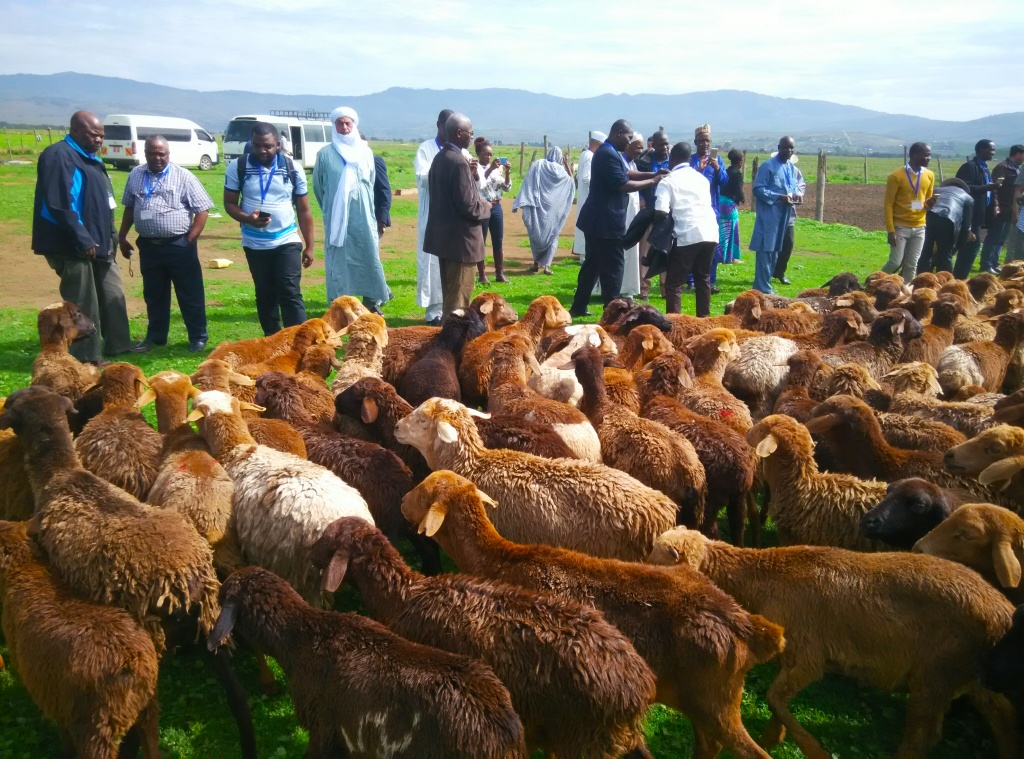
Workshop participants visit a flock of Red Maasai sheep and learn about the problems that their lady owner faces.

Recently I had the pleasure and privilege to participate in, and co-moderate, with my old friend Dr. Jacob Wanyama a workshop entitled “Making Access and Benefit-Sharing work for Africa’s Animal Genetic Resources”. It was organized by the African Union’s Interregional Bureau of Animal Resources (AU-IBAR) in Kenya and attended by about 40 participants drawn from three different groups:  National Coordinators for Animal Genetic Resources, National Focal Points for Access and Benefit-Sharing (ABS) and leaders of breeders’ organizations.

The purpose of the workshop was to develop a roadmap for establishing Biocultural Community Protocols for six African transboundary breeds, Red Maasai sheep, Dorper sheep, Muturu cattle, Azawak cattle, Kuri cattle, and the D’Man sheep.

An important part of the workshop was to inform about the rationale for Livestock Keepers’ Rights, a concept developed by civil society in the run up to the First International Conference on Animal Genetic Resources held in Interlaken in 2007, more than 10 years ago.

The second major aim was to learn how to develop Community Protocols, also known as Biocultural Protocols (BCPs). Community Protocols are a tool enshrined in the Nagoya Protocol on Access to Genetic Resources and the Fair and Equitable Sharing of Benefits Arising from their Utilization to ensure that benefits from genetic resources trickle down to the communities who have created and steward themThey are supposed to reflect and put on record the perceptions, traditional knowlede and preferences of the community in its own words. Therefore they are entirely different from the “breed descriptors” that AnGR experts are familiar with. To get this deviation from the “scientific” approach across is not that easy, but I was extremely gratified when a lady herder from Tchad expressed her takeaway as “Community protocols are about putting the soul back into livestock”. I think that was beautifully put!

The table below spells out some of the differences between a Community Protocol and a Breed Descriptor.

Difference between Community Protocol and Breed Descriptor

Breed Descriptor Community Protocol
What is documented ? A breed A biodiverse production system, including people/culture, livestock, environment
Focus is on Physical and production characteristics Traditional knowledge about breeding and biological diversity of feed/forage and medicinal plants
Type of documentation Measurements of body parts and production outputs, usually under controlled (research institute or government farm) conditions Perceptions about special characteristics of the breed, its value compared to other breeds, folklore, local stories
Who documents? Scientist/Geneticist Community, possibly facilitated by NGO
Purpose To obtain scientific description and record of a country’s animal genetic resources To claim community ownership over a breed and identify/put on record the pressures on a breed and the prerequisites for its conservation and continued sustainable use.
Relevance to Access and Benefit-Sharing none yes
Description of threats and opportunities no yes
Information about conservation needs no yes

Keeping livestock these days is a challenging task that requires passion in order to hang on to it instead of looking for an alternative livelihood. That was again beautifully illustrated on the last day of the workshop when we went on a fieldtrip to visit a Maasai lady keeping a flock of several hundred almost totally pure Red Maasai sheep. She shared her trials and tribulations with us. Her biggest problem was theft: sometimes gangs would drive up in SUVs and stuff as many sheep as they could into them. Another threat was from leopards who would sometimes go on a rampage among the flock. But throughout the dialogue with her what really shone through was her love and passion for her animals. Each of them had a name. Like all good pastoralists she knew exactly how each animal was related to any other in the flock. This was incomprehensible to some of the scientists who urged her to keep written records.

All in all, it is encouraging that AU-IBAR has adopted the BCP idea. So glad that Africa is taking the global lead in this! But Argentina is also gearing up, as you will see in an upcoming interview with Dra Maria Rosa Lanari who is the agrobiodiversity coordinator of INTA, Argentina’s agricultural research institute.

Registering Rajasthan’s Camel Herds: Laying the Foundation for Ethical Dairying

registering-dhungarrams-herd
Hanwant Singh Rathore, director of Lokhit Pashu-Palak Sansthan (LPPS) registering the herd of Dhungar Ram Raika

The news around camels in Rajasthan have been dismal over at least the last 15 years, with the population plummeting, the remaining camel herds suffering from neglect and no young people willing to enter the profession of camel herding.  Declaring the camel state animal in 2014 and the passing of the Rajasthan Camel Bill (Prohibition of Slaughter and Regulation of Temporary Migration or Export) in 2015 only added to the gloom and certainly did not achieve the intended effect of reversing the fates of camels and their breeders.

But now there is some light on the horizon! Two developments make me feel that, if everything comes together, the situation can be turned around and Rajasthan’s camel economy revived.  And maybe, maybe – I know this sounds highly ambitious – even a new model for ethical dairying developed: Milk production where the consumer knows where her milk comes from and is ensured that she purchases a pure and unadulterated product. Because you are what you eat, and it makes a difference whether your milk is produced by stall-fed animals fed on a diet of concentrate and milked for all their worth with the help of hormone injections or from animals that graze on biodiverse natural vegetation, let down their milk voluntarily and whose milk is “harvested” judiciously and with concern for the needs of the calves.

The first reason for my current optimism is that the demand for camel milk in India is on a steep rise, especially for the alleviation of autism and Diabetes. Camel milk has medicinal qualities for which consumers are willing to pay a premium and this creates a huge incentive for camel breeders to hang on to their herds or to even expand them. I have seen this happening in the last couple of months among the camel breeders that supply to the “Kumbhalgarh Camel Dairy” that is run by Camel Charisma and bridges the divide between urban camel milk consumers and camel breeders roaming around in remote areas.

bhanwarlal-milk-bottle
“Last year, I thought I would have to give up camel herding, but now I am increasing my herd to produce camel milk” says Bhanwarlal Raika

But how to make sure the milk is from happy herded camels and not diluted cow or buffalo milk? Unfortunately there is still no field test available that can provide the answer. The only solution is to know exactly which herders the milk comes from and the number of milking camels they have. And to have the herders committed to provide genuine unadulterated camel milk and not a white fluid amalgamated from milk of other animals, water and other ingredients.

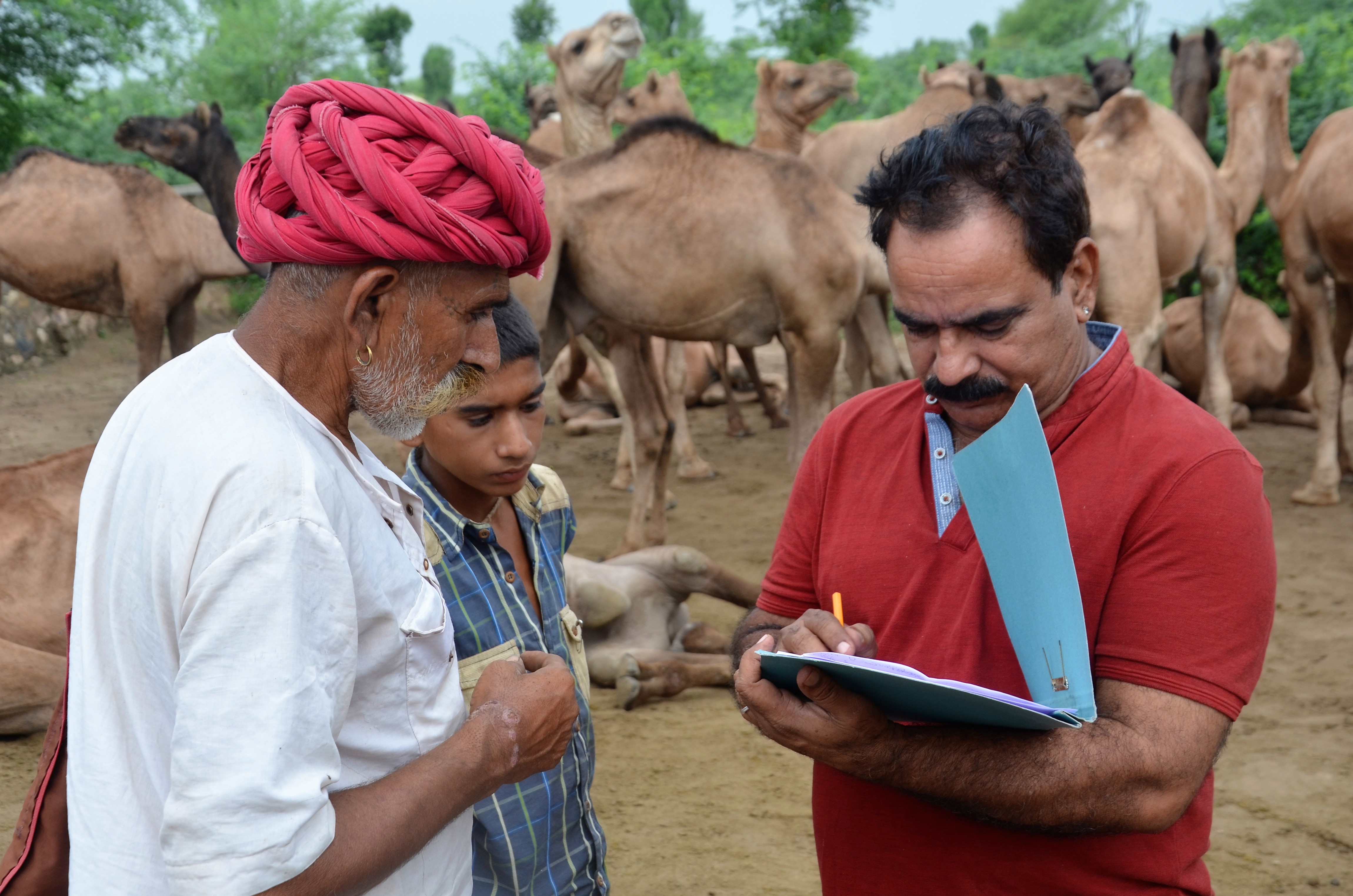
For this reason, Lokhit Pashu-Palak Sansthan (LPPS) is currently engaged in registering all camel herds in a 50 km radius from Sadri and educating the owners about the real opportunity for the survival of their camels and their own livelihoods if they commit themselves to providing a genuine product.

Meeting the herders is a humbling experience, seeing how the old Raika philosophy of “first the camels, then us” is still alive, the hardships and hard work they perform to keep their camels healthy, how many farmers appreciate the manure that the camels deposit on their fields as organic fertilizer, how closely the herdsmen observe nature and the effect of camel browsing on the trees of the Aravalli Hills. One can feel how camels are a crucial part of the agro-ecological web whose disappearance would undermine both local food production and ecology.

But most satisfying of all is to see how there are still young Raika keen to herd and look after camels if only it provides a decent income.

dsc_0592
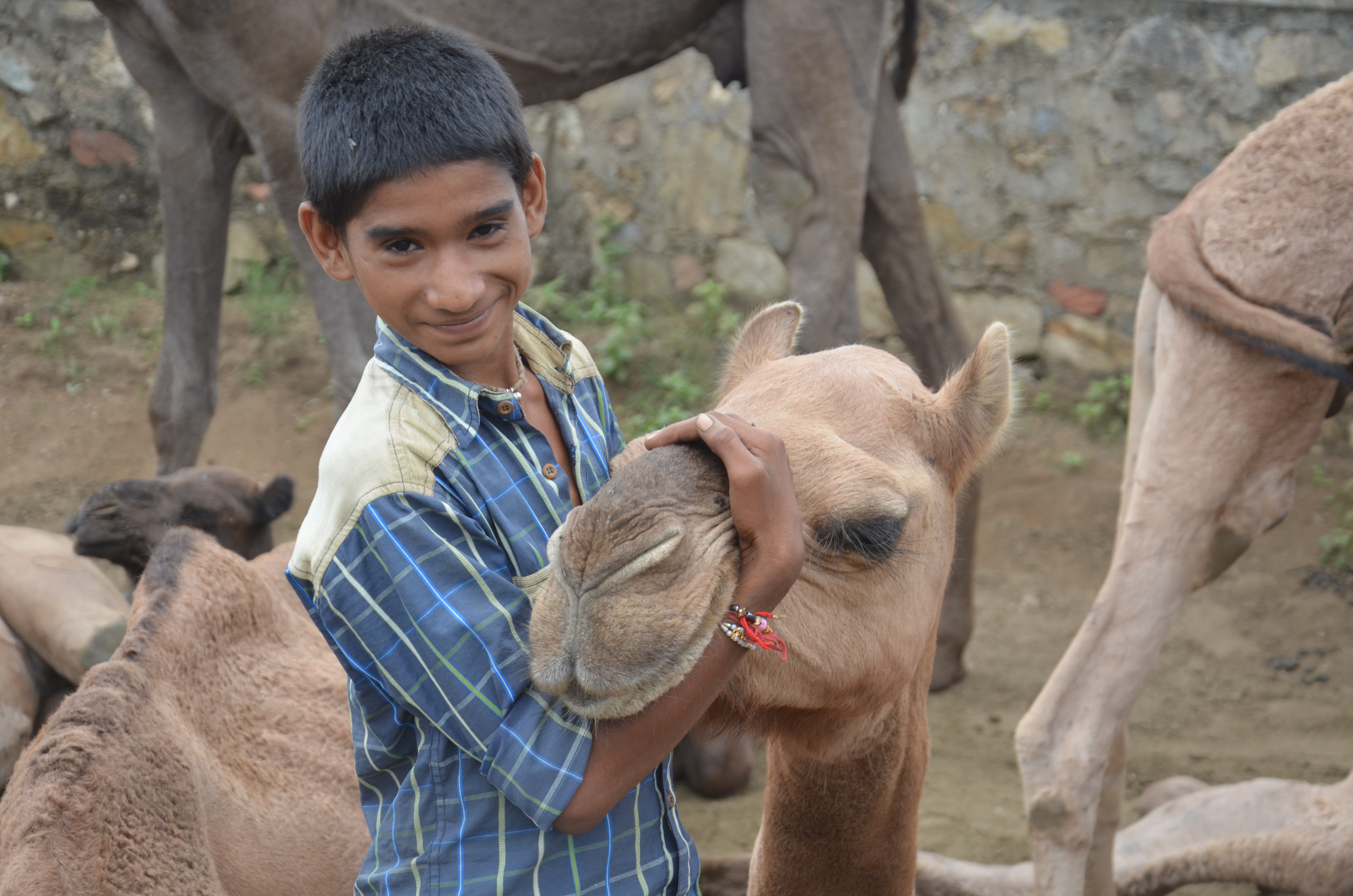
“I want to be a camel herder when I grow up” says the youngest son of Dhungar Ram

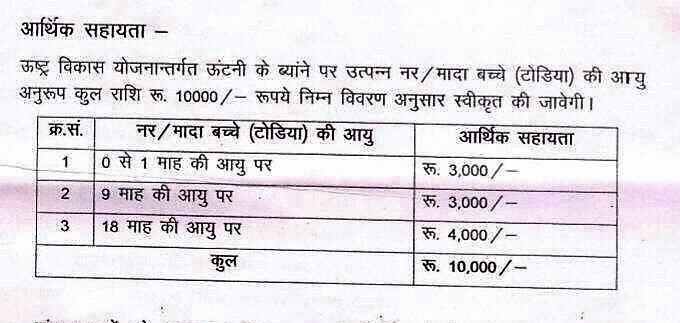
Diligent registration of herds is an absolute must for camel dairying to grow into an ethical and profitable business. Its also a must for the successful implementation of a just announced scheme by the Rajasthan government to provide a Rs 10,000 subsidy for all new camels born, in 3 instlments and over an 18 months period. This scheme can only succeed on the basis of proper herd registration, otherwise it will flounder and be abused as so often happens with well-intended schemes.

rajasthan-camel-scheme-cropped
Official announcement by Rajasthan government for a scheme to support breeders with Rs 10,000 for new born camels.

Both these developments – emergence of a market for a premium camel milk market and the subsidies for new-born camels – have the potential to provide a decisive boon to camel herders, both morally and financially. And if they would be embedded into a proper “Camel Policy” adopted and implemented by the Rajasthan, then we will be on the right track for conserving Rajasthan’s globally unique and ethical camel pastoralist system for the future!

Love of Bulls in Tamil Nadu

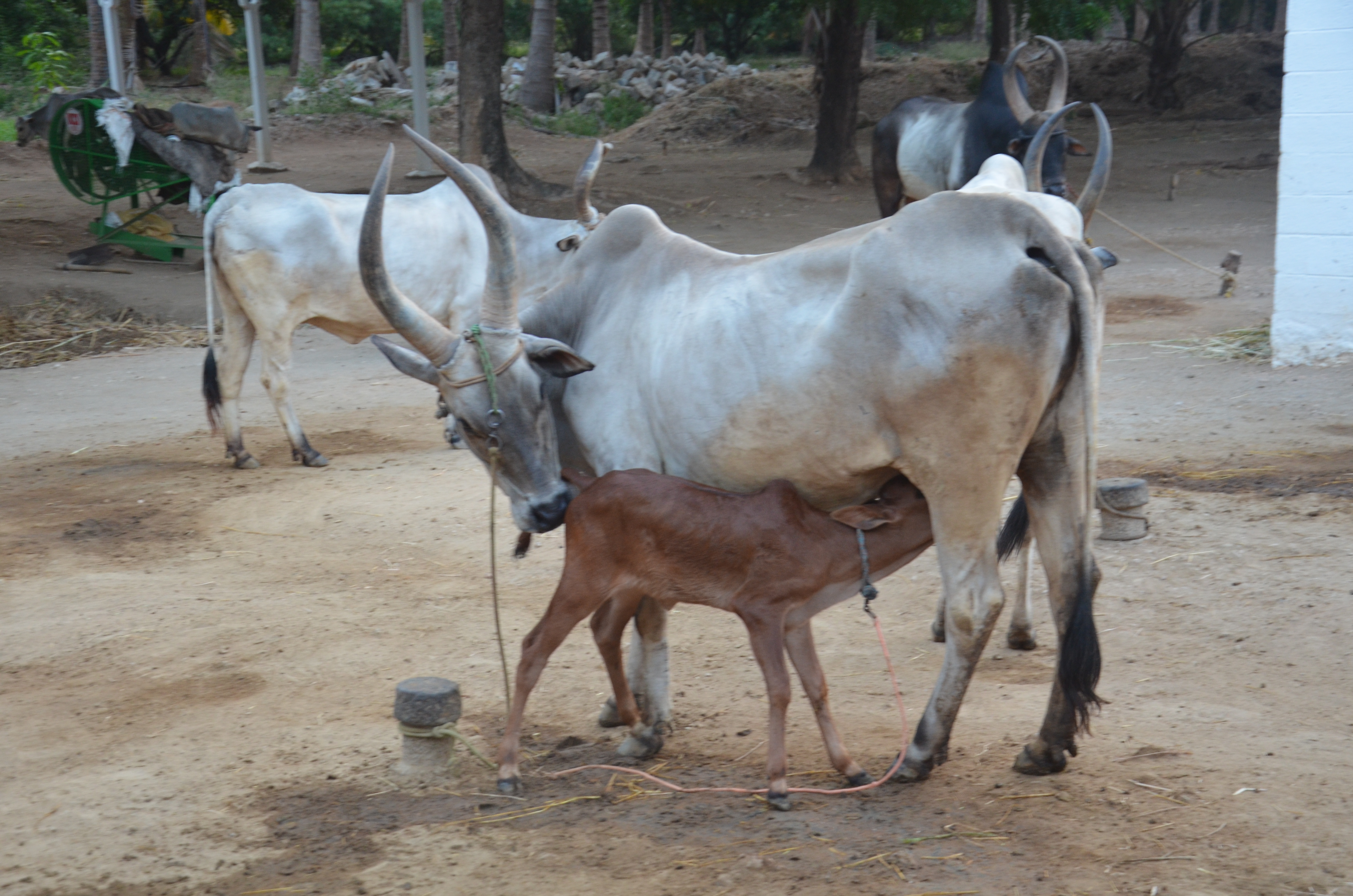
One of the Kangayam cows conserved at the Sivasenaapathy Kangayam Cattle Research Foundation

India is famous for its veneration of the cow as Gau-mata (although with the recent rise of Gau-Rakshaks, self-appointed cow protectors, it is also in danger of becoming somewhat infamous in this respect). That is also has a very ancient bull-culture is much less known. The last couple of days I have been spending in bull country, in Tamil Nadu, surrounded by passionate supporters of  Jallikattu, the Indian response to bull-fighting as practiced in Spain, but which is more correctly described as “bull-embracing”. Its a practice that dates back to the Indus Valley Civilization, some 4000 years ago, as indicated by ancient seals showing bulls that throw people into the air.  Jallikattu is entirely different from the Spanish version. Basically, village boys attempt to embrace the hump of a bull during a 15 m run. If they manage to do this, they are given a reward by the bull owner who gains prestige from having a bull too ferocious to allow this to happen. The sport was and is enormously popular, and the bull is never harmed, in fact if just one drop of blood the event is immediately stopped.

dsc_0604

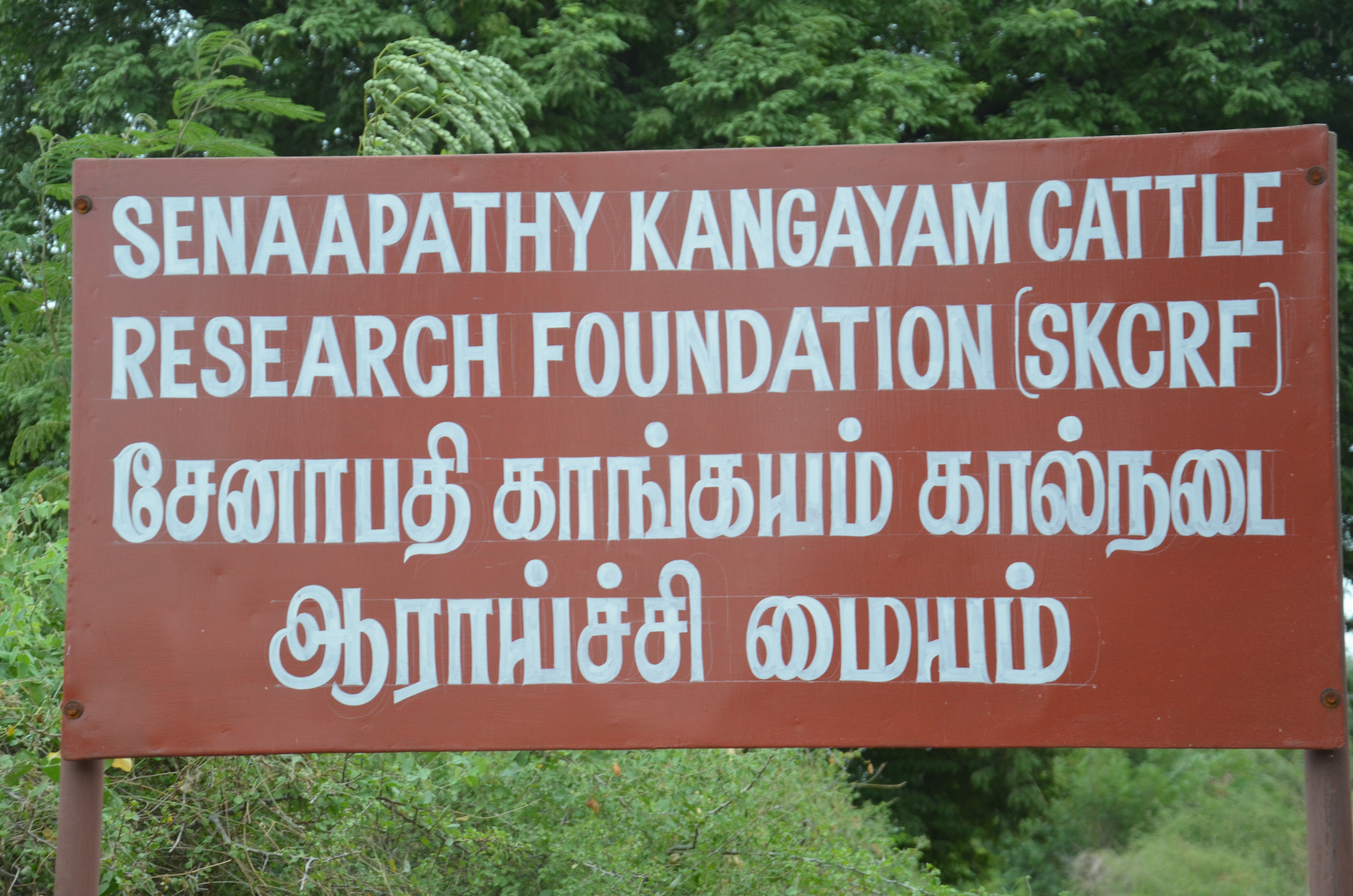
I am staying once again  at the Senaapathy Kangayam Cattle Research Foundation (SKCRF) in Kuttapalayam in Erode helping them to put together a Biocultural Protocol for the Kangayam cattle breed. The Kangayam cattle, a medium sized draught breed usually of white or grey colour, once was – and continues to be to an extent – the backbone of the local agro-ecology. Every farming family owned a pair of them for ploughing, pulling water, hauling the harvest, and powering carts for personal transportation. This cattle was raised on privately owned pastureland, the Korangadu, a very bio-diverse and extremely drought resistant sylvo-pastoral system. The Kangayam cattle was also essential for rituals and in religious life. Each village had a temple bull that provided free stud services. During Pongal, a Tamil harvest festival, the cattle was elaborately decorated and, on other occasions, bullock cart races known as Rekhla provided entertainment to and prestige to the owners of the winning bullock pairs.

But, like many local livestock breeds, the Kangayam cattle is now under threat, due to a number of factors such as a change in the farming system, availability of motorized transport, and the loss of Korangadu pastureland, mostly due to its high  real estate value.

The SKCRF is at the forefront of conserving the breed, keeping a herd of about 40 animals, educating farmers about the use of organic manure, organising competitions and fairs, and raising awareness of students and the general public about the Kangayam cattle. Sadly there is practically no government support for these efforts, even though India is a signatory to the Interlaken Declaration and the Global Plan of Action on Animal Genetic Resources.  While the country can boast a well-staffed and well-funded National Bureau of Animal Genetic Resources,  this institute is oriented at research rather than practical conservation. And although there are various government conservation programmes with huge budgets they do not benefit the people at the grassroots who actively conserve by looking after livestock even if it is unprofitable.

Grassroots people who are taking care of threatened breeds do not benefit from existing conservation programmes

Furthermore, there seems to be no awareness among decision makers that indigenous breeds cannot be dissociated from their respective agro-ecosystems, in this case the Korangadu pastureland, and neither can be conserved without the other.

But the biggest ire of the cattle aficionados I met is the ban on jallikattu and rekhla precipitated by the animal welfare movement that has pronounced these traditional “biocultural” sports as cruel to animals. This means that one of the last remaining incentives of breeding Kangayam cattle has evaporated and that there is harly any utility for male animals besides slaughter. The ban has had enormous repercussions on the rural economy, as was explained to me in detail by Mr. Balaram Sonu, a photographer, animal lover, and author of the book Cursed Heaven  that develops a conspiracy theory for the motivation of the animal welfare people against jallikattu.

The legal tussle around the ban on cattle sports is on-going and I don’t want to go into the political ramifications. But I was told that about 90% of Tamilians are in favour of retaining these sports. Certainly they play a huge role on the conservation of India’s indigenous cattle breeds, and should there be any harm to animals involved, then they should be regulated, rather than banned.

On 18th of September, the SKCRF and Kangayam cattle breeders are hosting a huge cattle show in Erode. Besides the wonderful cattle, you will be able to encounter the famous singer Hiphop Tamizha who will be honoured by the organizersfor his music video Takkaru Takkaru in support of Jallikattu that has garnered 2.7 million hits on Youtube. ENJOY!

Animal genetic resources and “Access and Benefit-Sharing”: not made for each other?

ITWG sign

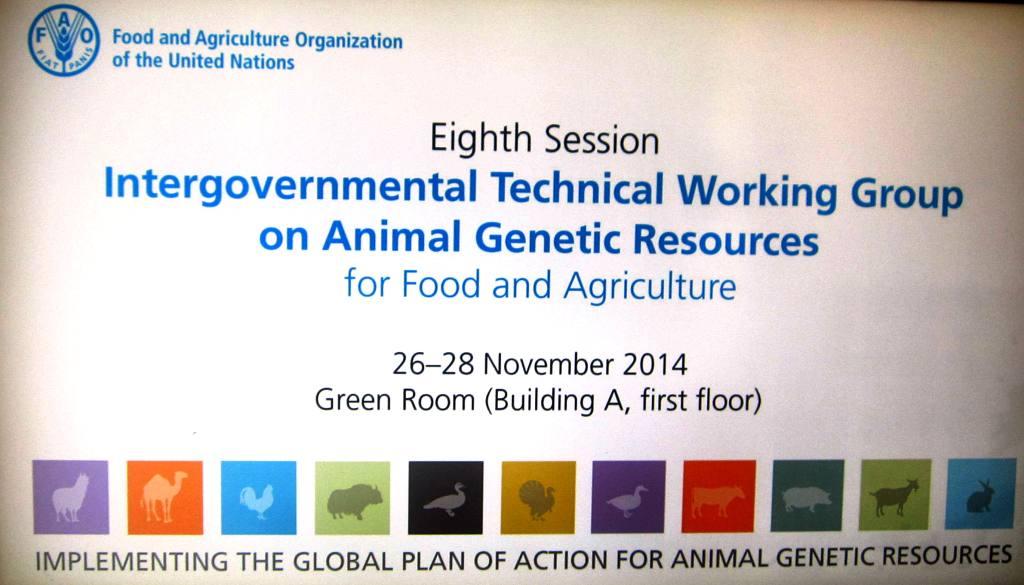
During the eighth session of the Intergovernmental Technical Working Group on Animal Genetic Resources (ITWG-AnGR 8), the confusion of delegates about how to apply the concept of “Access and Benefit-Sharing” to animal genetic resources (AnGR) was palpable. Developed countries such as USA and Canada argued that nothing should interfere with the free flow of AnGR. Of course they have the interests of their genetics companies in mind. Developing countries such as Bolivia expressed their fear that the indiscriminate import of exotic breeds destroys their locally adapted ones. There is also the latent fear of biopiracy especially of climate resilient local breeds, although at a side-event by WIPO and FAO about the patent landscape in the livestock sector it was stated that there have been no patent applications on genetic material from any indigenous breeds.

Francois Pythoud from Switzerland argued for brainstorming the issues and “thinking out of the box”, but unfortunately nobody picked up the suggestion. LPP and LIFE Network tried to make the case for community protocols, but this elicited neither any response nor support despite a side-event on the previous day that sought to bring across the point  that locally adapted breeds are often low-input and high output. And that this can be made visible by means of the Community Protocols that feature importantly in the Nagoya Protocol on Access and Benefit-Sharing that recently entered into force.  Our side-event was chaired by Poland’s National Coordinator, Dr. Elzbieta Martyniuk and featured presentations by Elizabeth Katushabe of Uganda about community documentation of Ankole Longhorn Cattle, by Rao Abdul Qadeer from Pakistan about the significance of Pakistan’s genetic resources for the camel dairy industry in the Gulf countries and by Dr. Maria Rosa Lanari of Argentina on the low-input but high-output indigenous livestock production systems of Patagonia.

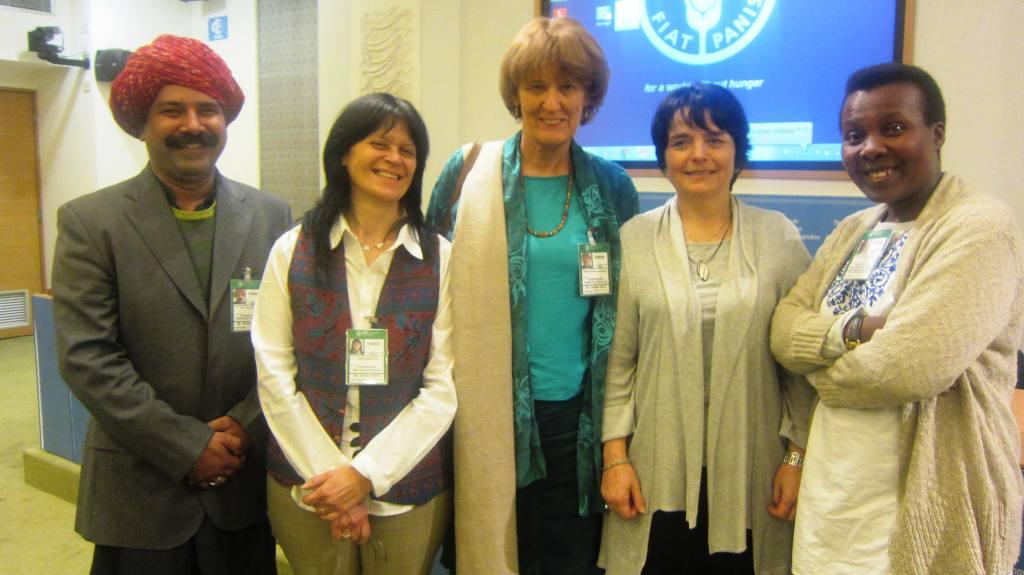
Rao Abdul Qadeer, Maria Rosa Lanari, Ilse Koehler-Rollefson, Elzbieta Martyniuk, Elizabeth Katushabe (left to right)
Trying to get across the value of locally evolved food production systems and adapted AnGR during an LPP/LIFE Network side-event at the ITWG-Angr 8 on 26th November: Rao Abdul Qadeer, Maria Rosa Lanari, Ilse Koehler-Rollefson, Elzbieta Martyniuk (chair), Elizabeth Katushabe (left to right)

In order to move forward, I think we really need to get back to the basics and remind ourselves of the rationale of Access and Benefit-Sharing in the first place: to provide positive incentives for the conservation and sustainable use of biodiversity. Now, in the case of AnGr, it is quite clear that there is currently not much of a commercial interest in locally adapted AnGR because they do not really fit into the industrial systems for which the genetics companies work. On the other hand, it is just the spread of industrial systems that poses the danger to livestock biodiversity as they contribute to the destruction of native livestock based food production systems – which are often much more productive than is evident, or worse: which have never been documented and remained invisible.Thus the community protocols that are mandated by the Nagoya Protocol have an extremely important role to play in changing perceptions about local systems and providing at least moral support and empowerment to the local livestock keepers that continue to be the backbone of food production in many countries.

I have tried to explain this in a study, co-authored with Hartmut Meyer and published by the ABS Capacity Building Initiative and LPP, entitled Access and Benefit-Sharing of Animal Genetic Resources: using the Nagoya Protocol as a Framework for the Conservation and Sustainable use of Animal Genetic Resources and which can be downloaded here.

Can the Nagoya Protocol become a game changer for animal genetic resources and livestock keepers?

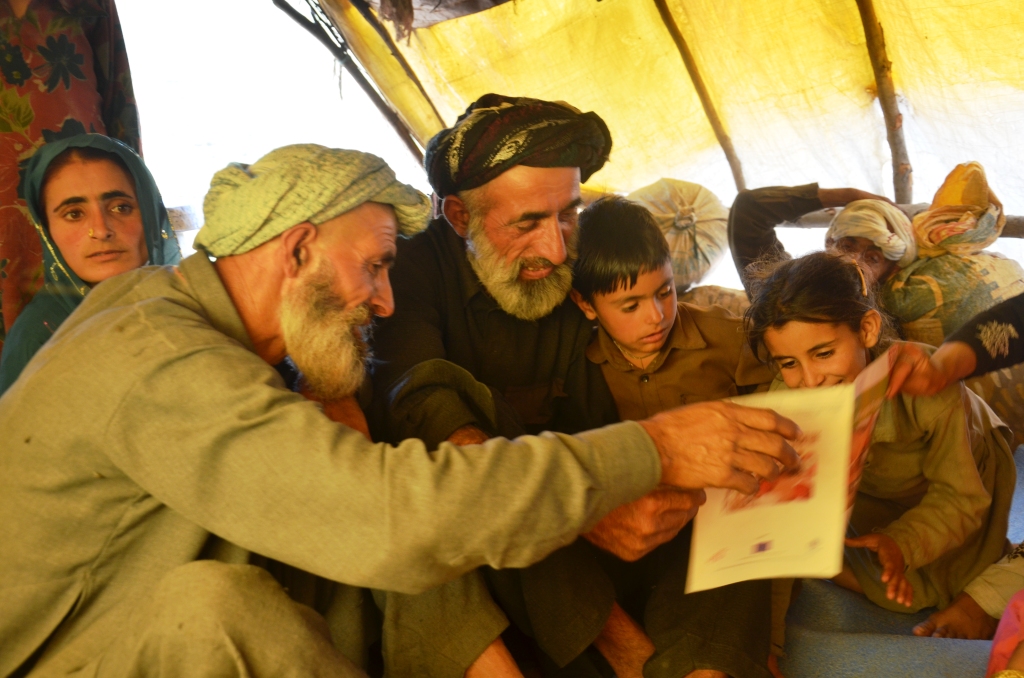
Bakkarwal herders from Kashmir looking at photos of breeds in the Raika Biocultural Protocol

In October, the Nagoya Protocol on Access and Benefit-Sharing entered into force. This legally binding add-on to the Convention on Biological Diversity places special emphasis on obtaining “prior informed consent” not only from governments but also from local and indigenous communities when accessing their traditional knowledge with respect to genetic resources.

It mandates in its Article 7, that parties, “in accordance with domestic law, take measures, as appropriate, with the aim of ensuring that traditional knowledge associated with genetic resources that is held by indigenous and local communities is accessed with the prior and informed consent or approval and involvement of these indigenous and local communities, and that mutually agreed terms have been established.

In Article 12, parties are urged to, in accordance with domestic law take into consideration indigenous and local communities’  customary laws, community protocols and procedures, as applicable, with respect to traditional knowledge associated with genetic resources. Furthermore it is stated that “parties shall endeavour to support, as appropriate, the development by indigenous and local communities, including women within these communities, of Community protocols in relation to access to traditional knowledge associated with genetic resources and the fair and equitable sharing of benefits arising out of the utilization of such knowledge“.

Well, pastoralists and other keepers of locally developed breeds certainly qualify as “indigenous and local communities” under the CBD. As reader’s of this blog know,  several of them have already developed “Biocultural Protocols” for their breeds and communities.

And this is where the potential lies: in community documentation of animal genetic resources and of local production systems. For, even in the absence of any party requesting “access”, such documentation will make visible the existence, the significance, and the meaning of livestock production based on local breeds whose economic contribution is routinely underestimated or even entirely ignored.

Visibility of these systems would be the first step towards putting livestock development – conventionally based on “high yielding” introduced genetics and higher inputs from outside – on a more sustainable path, both ecologically and socially.

I am very pleased to report two events:

1. On 26th November, there will be a side-event at the FAO, during the 8th session of the Intergovernmental Technical Working Group on Animal Genetic Resources with reports from the field about the importance of community documentation and BCPs by Elizabeth Katushabe from Uganda, Dr. Maria Rosa Lanari from Argentina and Rao Abdul Qadeer from Pakistan. The event will be chaired by Dr. Ela Martyniuk, Poland’s National Coordinator of Animal Genetic Resources.

2. Just a fortnight ago, the Rainfed Livestock Network in India kicked off a project on developing BCPs for several communities and/or breeds, including the Bakkarwal pastoralists of Jammu and Kashmir, the Golla pastoralists in Odisha, the shepherds of the Deccan Plateau, and the Kangayam cattle breeders of Tamil Nadu

So all these are small, but important steps forward towards getting more visibility – recognition should then follow – for the long neglected “traditional” livestock production systems based on locally evolved animal genetic resources. Recognition should then follow – hopefully quickly enough to support and save some of these precious systems!

How can you make the camel state animal without asking your livestock keepers how to protect it?

Quo vadis, camel of Rajasthan? Will it be good to be "state animal"?
Quo vadis, camel of Rajasthan? Will it be good to be “state animal”?

Ever since the government of Rajasthan has decided to make the camel state animal, the phones have been ringing non-stop. Its mostly journalists that want to get some insight information or opinion on this issue, or even enquire “what is the latest scandal concerning the camel, madam?”. Confusion is reigning supremely, as nobody seems to know what it means for the camel to be state animal. Is it going to be given the same protection as the peacock (India’s national bird) or the chinkara gazelle and black bucks whose hunting is severely punished with jail ? Or is it to get a status equivalent to that of the cow whose slaughter and trafficking across state borders is strictly prohibited? According to the media, the government is preparing just such an act, but nobody really seems to know the details – it is kept under tight wraps and everybody is guessing, including the people who are in the centre of this hullabaloo and on whose continued involvement everything depends: the camel breeders themselves.

The camel breeders are not amused. Not surprising with some headlines announcing that “camel safaris are likely to end“because of their animal now being “protected”.

“If the camel is state animal, this means that we are no longer the owners of our camels and that the government has appropriated them” is the fear of Amanaram, a well informed member of the camel breeding community who brings out a newspaper (Dewasi shreejayte) for his people. He had recently participated in a ‘dharna’ (sit in) staged by the Raika outside the Legislative Assembly in Jaipur to voice their concerns.

Amanaram Dewasi from the traditional Raika camel breeding community is wondering what it means if the camel becomes 'state animal'.
Amanaram Dewasi from the traditional Raika camel breeding community is wondering what it means if the camel becomes ‘state animal’.

While I assured him this would not be the case, I also remembered a newspaper article earlier this year, stating that the government was planning to patent camel milk, and nobody else would be able to sell it.

What a strange and weird idea! For one, camel milk as a natural product is not patentable. And even if it was, whom would it benefit if only the government could sell camel milk? It would be the final death knell for the camel in Rajasthan if the camel breeders could not even sell the milk of their camels. For this is where the future lies: only if a camel milk market is developed, will the camel survive outside zoos.

So far the details of the planned legislation have not been discussed in the current session of the Legislative Assembly, although this was expected. The government of Rajasthan now seems to be grappling with the question of what steps to take. Notably, it has not made any attempt to reach out to the camel breeders themselves and appears to depend for its advice on some bureaucrats sitting in Jaipur who have never gone near a camel, nor have an inkling about the problems of camel breeders.

Last week, representatives of Rajasthan’s two camel breeders’ associations and Hanwant Singh from Lokhit Pashu-Palak Sansthan (LPPS) met with MLAs and made their suggestions on how to go about saving the camel. They met with much positive response. You can read the letter written to the Chief Minister by the camel breeders and by LPPS here.

I sincerely hope that this letter will be heeded – for everybody’s benefit – the camels’, their keepers’, the public and the government itself.


Earlier this