Jaisalmer Camel Breeders put on record rights and resources

Checking facts and text
Checking facts and text of the draft document

Jaisalmer is one of the fastest developing districts in Rajasthan , or even India. The once empty desert spaces are now being mined – for wind energy, solar energy, oil, stone, etc. This development if good for some, especially the large corporations behind these activities, but the majority of the local people, with their dependence on livestock keeping are losing out. For this reason, Lokhit Pashu-Palak Sansthan is supporting the Jaisalmer Camel Breeders Association to develop their Biocultural Community Protocol under the United Nations Convention on Biological Diversity. In this they put on record their role in conserving the local camel breeds as well as the associated rangeland biodiversity – many traditional practices exist or existed to conserve the enviornment, but – as is also becoming clear – they are erdoding rapidly and will soon be forgotten. Camel breeding has lost its status and attraction for young people.

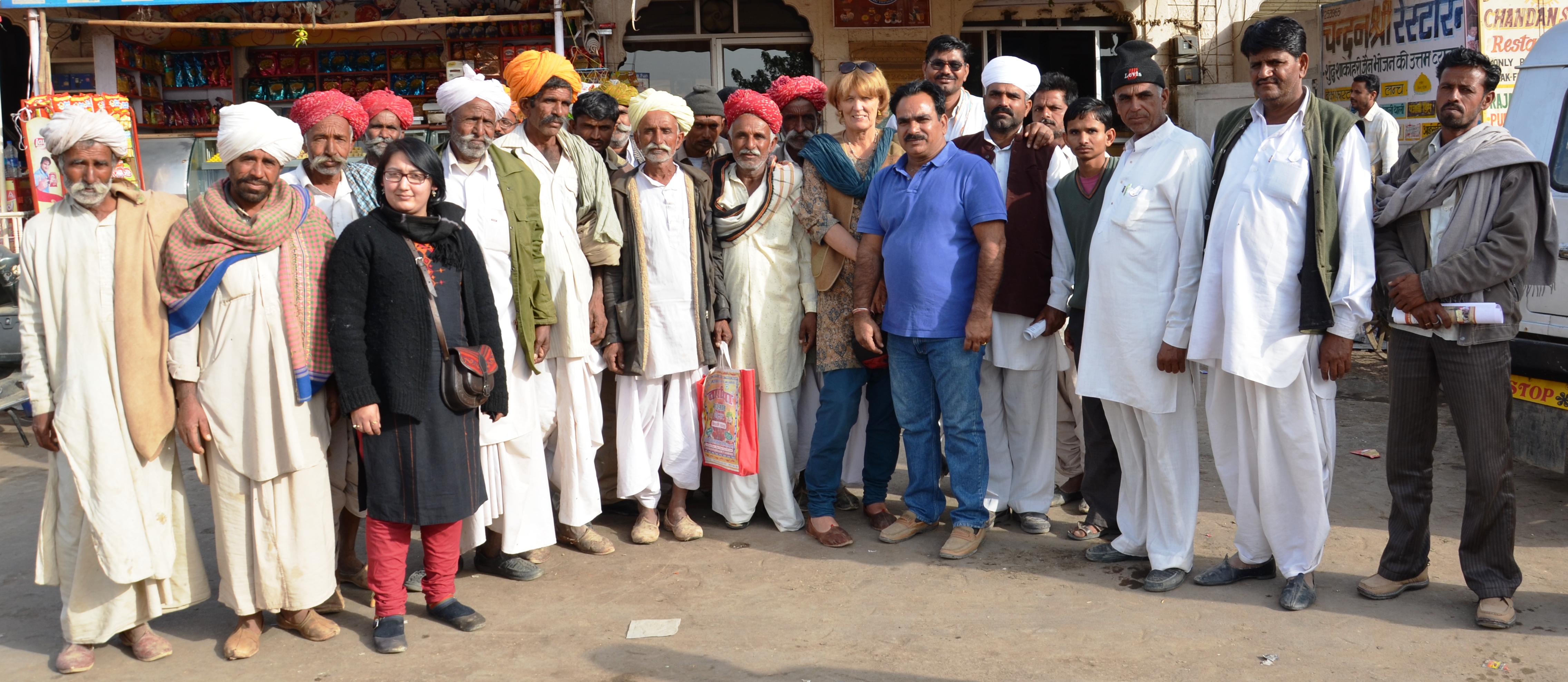
A group photo of Rajput, Bishnoi, Muslim, Raika camel breeders.

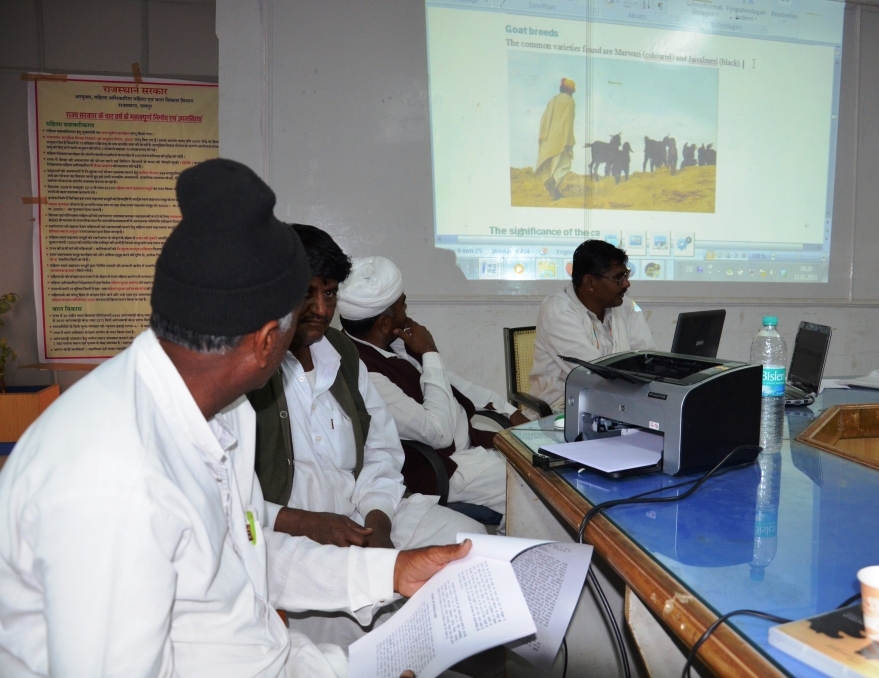
The process to develop the BCP was already initiated some time ago, but now it was time to check the facts and focus on the essential points. So about 35 camel breeders assembled in the meeting hall of Jaisalmer’s rural development authority and went through the draft document. Many bits and pieces were added, but further checking will be required, as at least seven different castes and communities have a common identity as camel breeders. Each one has a slightly different take on issues.

Hopefully this process will be completed in the next couple of months, so that the BCP can be released and shared with officials and the public at large.

Good shepherds – and successful livestock keepers – are highly mobile

Raika good shepherd.compressed

We – Hanwant Singh (director of LPPS), Raika leader Dayalibai, and I – just returned from a visit to a group of migrating shepherds  – locally referred to as dang – which had set up their temporary camp somewhere between Udaipur and Chittorgarh (in southern Rajasthan).  It was an enlightening experience and a lesson in sustainable, eco-friendly animal husbandry that is quite profitable to boot. But an easy life it is not! For 8 months out of the year these people are on the move, only for the four months of the rainy season do they return to their villages. For the rest of the year, men, women and small children, are out of doors and subjected to the vagaries of the climate, without even making use of tents. But, for all those who think this way of life is anachronistic and passé: While our hosts complained a lot about dangers from theft and increasing harassment from villagers, they uniformly agreed that this way of life was more than a rung above working in Mumbai sweatshops or doing unskilled labour.

This particular herding group was composed of 6 nuclear families with a couple of thousand sheep and they move every few days, grazing their herds almost entirely on fallow land, cultivated with jowar and ajwein.  All decisions of the dang are made by an elected leader, the patel, who is in charge of negotiating with land owners, police and all outside agencies, so spends much time nurturing contacts and sorting out disputes. But the rest of the chores ares done in teamwork , with  everybody having an assigned role. The adult sheep are taken out to graze early in the morning before sunrise, at about 6 a.m., return at around 10 a.m., then rest for a few hours, before again going out to feed until after sunset. The young lambs are tied up in loops, allowed to drink when the mothers return from their feeding sorties. What a noisy event – there’s a cacophony of bleating when thousands of ewes are trying to connect with their very own lamb and the shepherds are busy for about an hour carrying around lambs and enabling them to suckle their meals from their own mums and not any other lactating sheep!

The sheep and a much smaller herd of goats were all in very good condition, with clean coats and clear eyes, despite just having weathered an outbreak of Foot and Mouth disease which is doing the rounds currently. They were in much better shape, and are also much more productive and profitable than those kept in sedentary conditions.

The cast was completed by 8 camels for carrying the luggage, as well as around a dozen donkeys that also do their share in transporting household goods. Plus associated wildlife – a herd of nilgai was roaming around, small flocks of drongos were taking a ride on sheeps’ backs or even frequently perching on the heads of goats.
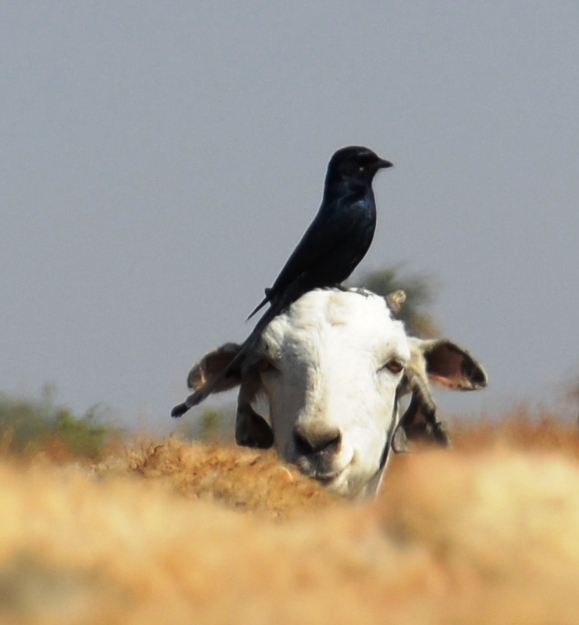
Drongo on goat head

One could go on waxing away about harmony between people and animals, but more significant in this day and age when there are worries about how to feed people (especially with meat), how to do this sustainably, and how to increase “natural resource use efficiency” (see www.livestockdialogue.org), is probably the ecology and economy of this type of animal husbandry. What strikes me is that these mobile shepherds basically create food out of resources that would otherwise go entirely to waste or not be used. They only use what is left over from crop cultivation and metabolize it into arrange of products, thereby adding enormous value. From a herd of 250-300 sheep, they sell around 50 animals per year for meat. (As mutton is not popular in northern India – here people only want goat meat – it is likely exported to the Middle East.) They also milk the sheep and make ghee and/or curd from it which forms no small part of their diet. And they produce copious amounts of organic fertilizer – a significant feat when alarm is starting to build about the world’s depleting phosphorous resources! This fertilizer is also very much appreciated by some of the land owners who reward the dang with 80 kg of wheat or another  grain for every night they spend on their field, in addition to 2 kg of sugar and 250 g of tea leaves.

How much longer is this demanding, but rewarding food production system going to continue? That’s a question that we can’t answer at the moment, but we will try to make monthly visits to the dang to better understand the trials, tribulations and comparative advantages of this way of life.
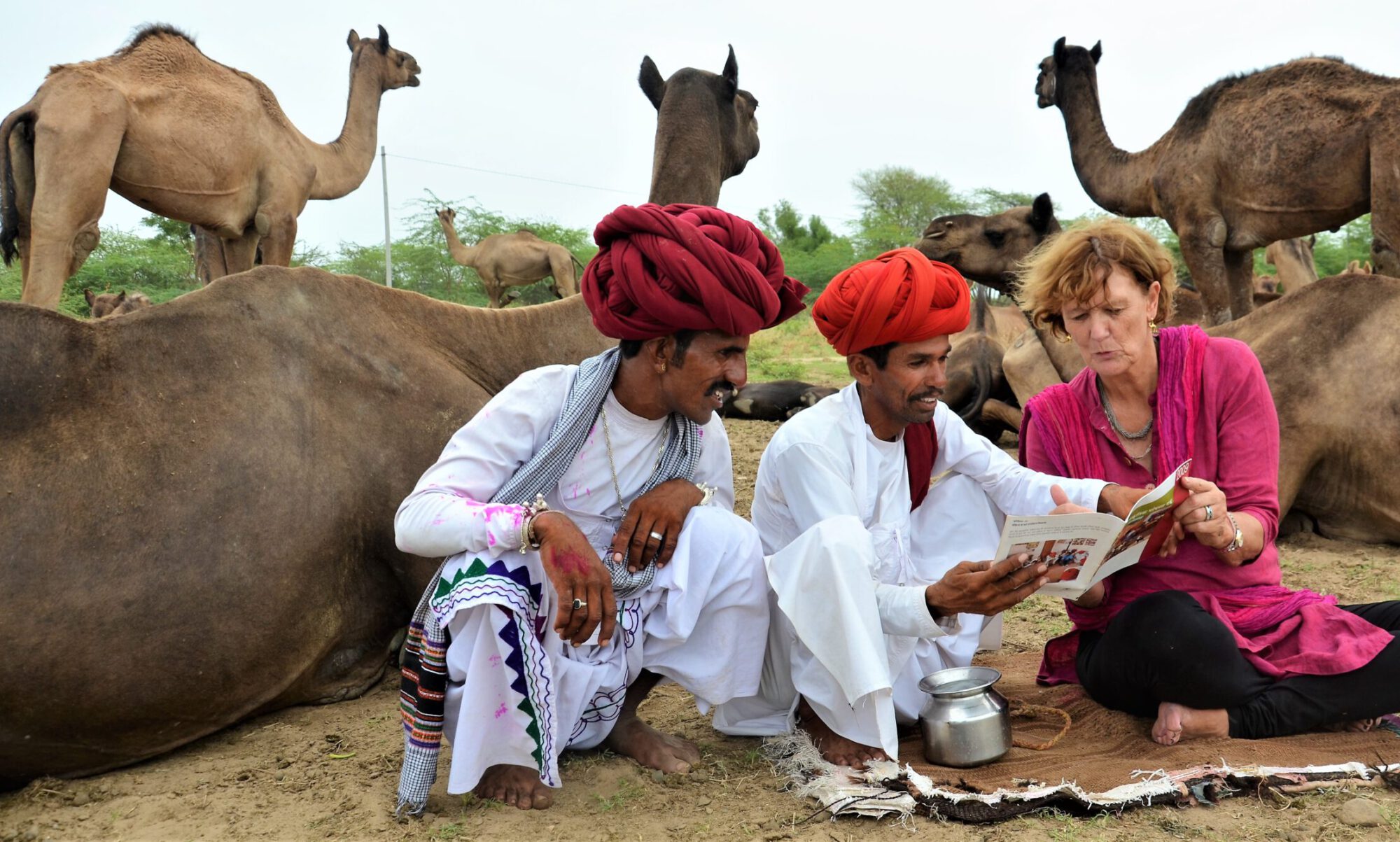
Livestock keepers will participate in the launch of the Sustainable Livestock Agenda

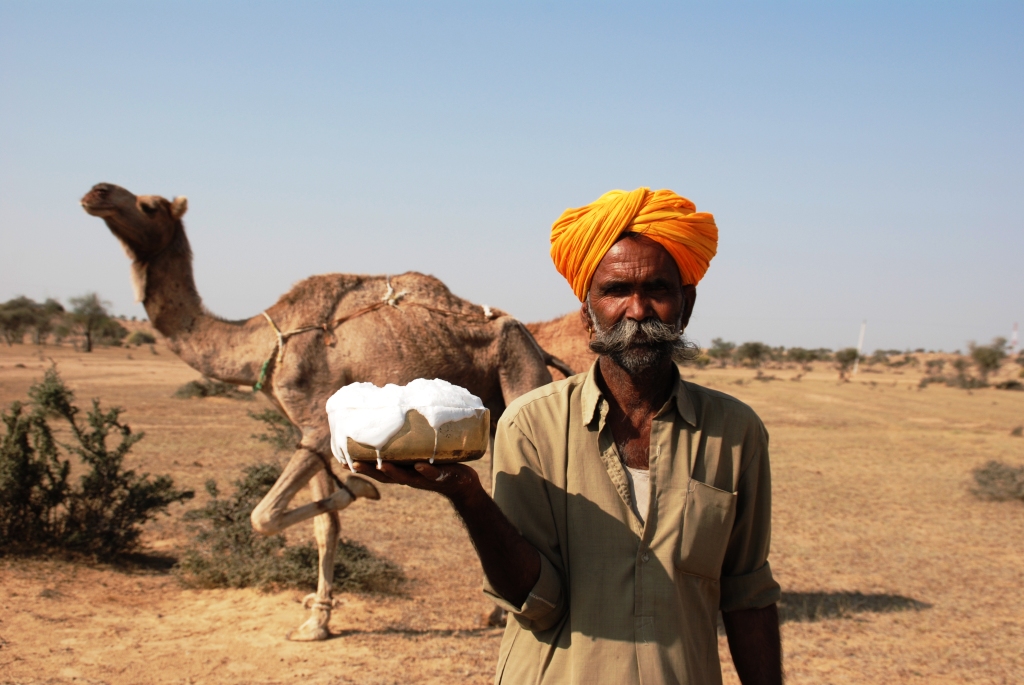
Livestock keepers, such as this camel milk producer from the Thar Desert, will have a voice in the Sustainable Livestock Agenda (SLA).

Good news at the start of the New Year! The FAO is fully supporting participation of four livestock keepers ‘ representatives in the “third Multi-Stakeholder Platform meeting” for a Sustainable Livestock Agenda (SLA). This meeting will take place in Nairobi from 22-24th January and you can find more information at www.livestockdialogue.org.

We are elated that livestock keepers are getting due consideration as a separate stakeholder group and look forward to their inputs to the interesting and challenging process ahead!

Just to recap: The rationale of the SLA is the need for “accommodating demand growth for livestock products within the context of a finite natural resource” and the need for a “change in habits and practices from all stakeholders”. The common parameter to focus on is “natural resource use efficiency” –  the rate of conversion of critical natural resources like land, water, nutrients, and energy into livestock products and services, and emission intensity of Green House Gases (GHG).

This sounds good! Our only concern is that certain other angles whose metrics are not that easily grasped don’t get left out of the calculation. Such as biodiversity conservation (both wild biodiversity and domestic animal diversity), animal welfare, nutritional quality of livestock products, and of course rural livelihoods. If we do ignore these angles, then high input and industrial livestock production may come out on top in terms of “natural resource use efficiency”, but if we take a more holistic perspective, then my guess is that pastoralist and other “decentralised” modes of livestock production will certainly win. But lets wait and see!

For the time being, lets be grateful that there is at least one policy relevant process that has taken the lead in letting livestock keepers have a voice. We very much hope that other institutions will follow this example, thereby not only inching closer to adhering the concept of Livestock Keepers’ Rights, but also taking a step towards making their work more relevant and benefitting from a treasure trove of knowledge and experience.

Happy New Year once again!

Biocultural protocols: livestock keepers confirm the importance of this tool

Kutchi camel breeders presenting the results of their analysis about the value of BCPs. Photo by Dipti Desai

Lokhit Pashu-Palak Sansthan (LPPS) recently organised an experience sharing workshop about Biocultural Protocols for those groups of livestock keepers that have already undertaken such an exercise. So far there are only a handful of them, and the ones that made it to the meeting were the Raika, the Banni buffalo breeders, the Kutchi camel breeders and the Jaisalmer camel breeders. The Kuruba shepherds of Karnataka were also represented by Nilkanth Mama and a colleague.

Nilkanth Mama (“Mama” is a honorific and means maternal uncle in Hindi) from the Kuruba shepherds gets across a point.

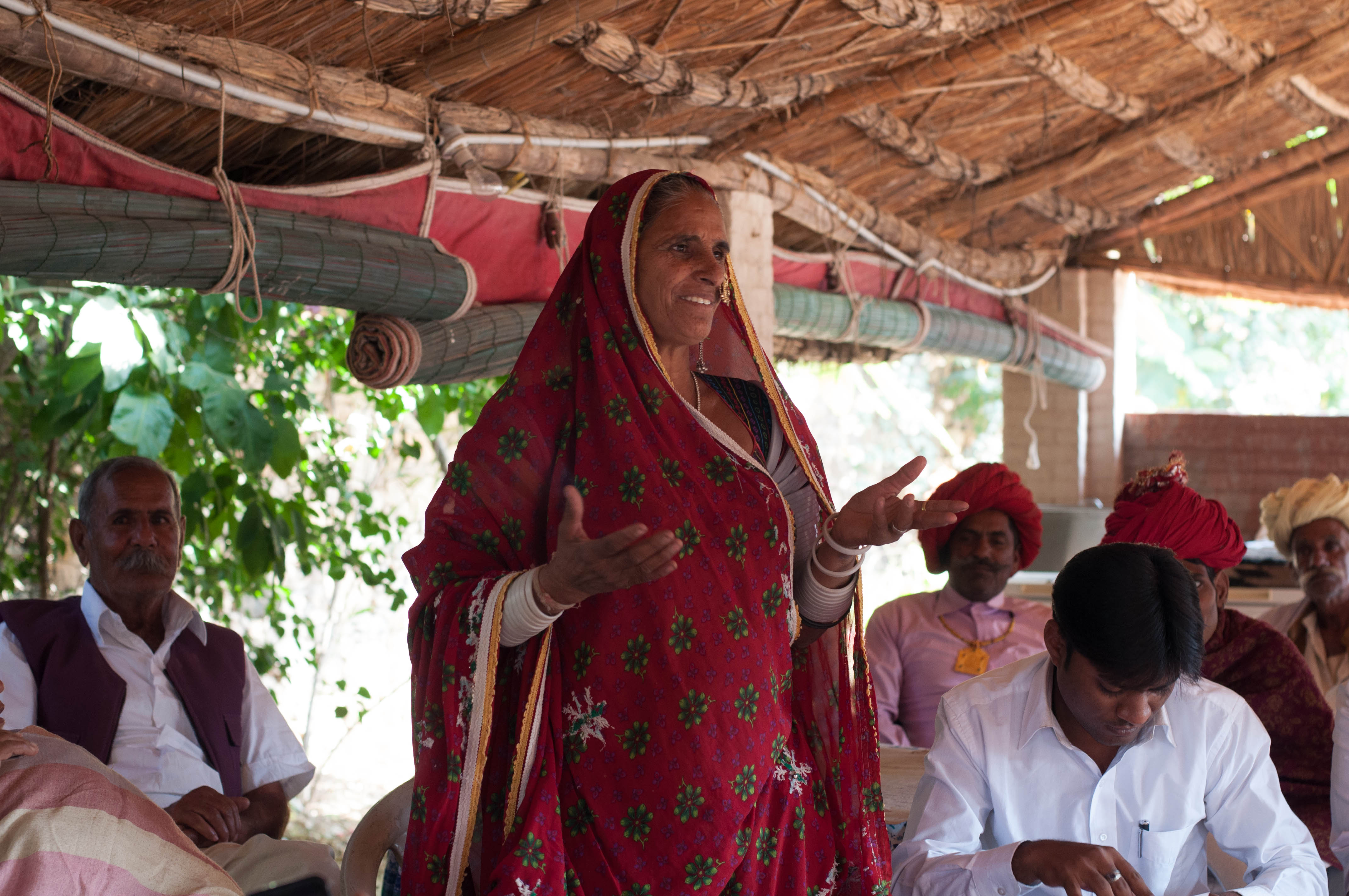
While the pastoralists unanimously underlined the importance of BCPs, it was also quite evident that a lot of uncertainty still surrounds the concept and that undertaking the process is by no means easy or fast. It requires time, resources and commitment for it to be of value. Nevertheless, BCPs are a crucial and even essential tool – for groups of marginalised people that traditionally have not attached that much importance to land ownership and are now losing out rapidly. The Raika, for instance, never really tried to claim land rights after Independence, since they believed there was plenty of it and they preferred mobility for their animals, even placing taboos on building permanent houses. Now they are suffering from this ignorance, as Dailibai Raika elaborated.

The incomparable Dailibai Raika – inveterate women leader. Photo by Dipti Desai.

Biocultural Community Protocols were originally conceived in response to the Convention on Biological Diversity (CBD) and as the basis for Access and Benefit Sharing agreements with communities. However, they have developed since then and other legal frameworks than the CBD may be even more important reference points – such as the Right to Food.

The essential elements of BCPs are documentation, awareness raising and knowledge about rights under national and international loegal frameworks. How best to implement them, what methodologies to use, how to ensure their integrity – these are the questions that are currently being adressed by various non-government organisations. However, the communities themselves also need to get into the action and push the processes.

Supporting and facilitating this will be a major strategy of LPP and its partners in the near future – because without decentralised small-scale livetsock keepers, livestock keeping will never become sustainable. See the photostory about this subject by Greenshoots and stay tuned about the more detailed report about the BCP Experience Sharing Meeting that will be put on line shortly!

In the meantime more photos by Dipti Desai about the meeting can be seen at this link.


A bit more respect for livestock keepers, please!

Whose knowledge is more useful? Scientists’ or livestock keepers’?

Recently I had the privilege to attend a “high-level” meeting between ICAR (Indian Council of Agricultural Research and ILRI (International Livestock Research Institute) bureaucrats and scientists. While interaction between such major institutions is important and necessary, I became a bit concerned about the underlying tenor of many of the presentations. For instance there were remarks about farmers/livestock keepers having no concept of animal nutrition and not being able to “calculate rations”.  And there is this general attitude of believing that the farmer/livestock keeper is backward, illiterate and in need of guidance by scientists. Well, nothing wrong with science, but how many of the interventions developed by scientists are actually taken off the shelf and being put into use? And, considering that India is not only the largest dairy producer in the world, but also all set to become the global leader in beef exports , must the country’s livestock keepers not be doing many things right? Especially since this development has happened without any noteworthy extension activities, without animal health services reaching the more marginal areas, and without India (yet) becoming dependent on imports of feed stuff from other countries?

In fact, in my view, India’s livestock development trajectory is exemplary, as compared to a country such as China which, in the course of its Livestock Revolution, has become heavily dependent on import of soy and maize to feed its farm animals. This is because India’s non-poultry livestock production is still largely in the hand of small farmers and pastoralists who make optimal use of locally available feed and fodder resources – both crop by-products and natural, very bio-diverse, vegetation – with their indigenous breeds and by means of their extensive experience and willingness to innovate. Let’s ensure that it remains that way – in the interest of national food security, rural employment opportunities and conservation of biodiversity!

In this context, I must applaud the many members of India’s LIFE Network that work on these lines by respecting and highlighting the value of traditional knowledge, rewarding saviours of local livestock breeds and supporting the struggle for continued access to the Commons and for Forest Rights.  See, for instance the tireless work of Dr. Balaram Sahu, Vivekanandan of SEVA, Karthikeya of the Senaapathy Kangayam Research Foundation, Hanwant Singh of LPPS, and many many more.

I send my happy Diwali greetings to all of them and wish them all the best in their  endeavours that are so crucial for putting livestock development on a sustainable path!

(Biocultural) Community Protocols officially accepted

Its official: The report of the 7th Session of the Intergovernmental Technical Working group on Animal Genetic Resources (ITWG-AnGR) that was just concluded makes reference to “the need to consider community protocols in relation to access to traditional knowledge associated with animal genetic resources“.

The Working group also invited FAO to “develop agreed definitions for what constitutes sustainable production and consumption, and sustainable management, in the livestock sector“. This is an important decision and development, considering that “Livestock sector sustainability” is such a crucial issue that is also taken up by the Global Agenda of Action towards sustainable livestock sector development (GAA). As far as I know, the term of  livestock sector sustainability has never been properly defined.

By the way, the launch of the GAA has now been scheduled for 22-24th January in Nairobi. We are very pleased and grateful that the GAA Secretariat has offerend to support the participation of four livestock keeper representatives. This was another pleasant development during my three days in Rome.

Now I am back in Delhi and looking forward to returning to Rajasthan shortly to prepare for Camel Charisma‘s exhibition sale during the Pushkar Camel fair at the end of November!

Animal genetic resources: the theme of the hour!

Raika community members taking the stage at a side-event during CBD COP 11

The outgoing chair of the Intergovernmental Technical Working Group on Animal Genetic Resources (ITWG_AnGR), Francois Pythoud from Switzerland started his speech with the remark that animal genetic resources really had hogged the limelight during the Convention on Biological Diversity held in Hyderabad, India, earlier this month. He was impressed by the number of side-events on the subject that had taken place, as well as an exhibition of India’s indigenous breeds at the side-lines of the event.

With Access and Benefit-Sharing being on the agenda here in Rome, things are heating up. African countries are promoting Biocultural Community protocols, but its still a new subject for many others. The above picture from the LIFE Network’s side-event in Hyderabad was graciously shared by Polish animal scientist Dr. Ela Martyniuk, and it symbolizes for me how far we have come in the last decade. At the beginning of the new millenium, livestock keepers were not even considered as stakeholders in the conservation of animal genetic resources, but now there is probably consensus that they are the key-actors!

Animal genetic resources and Access and Benefit-Sharing (ABS)

I’m here in Rome for the 7th Session of the Intergovernmental Technical Working Group on Animal Genetic Resources. Agenda-items include the preparation of the second report on the state of the world’s animal genetic resources, the role of small-scale livestock keepers, and Access and Benefit-Sharing. The latter is a subject that requires a lot more thought, although in a side-event hosted yesterday by the governments of the Netherlands and of Brazil, three of the stakeholder groups outlined some initial ideas. Cleopas Okore from the Kenyan government reported about his country’s experience with developing Biocultural Community Protocols (based on the Samburu Biocultural Protocol), while Dawn Howard from EFFAB (European Forum of Farm Animal Breeders) represented the industry perspective.  I had been invited to present the results of the Working group on Biocultural Protocols and ABS held during our Bonn Conference.

There will be more discussion on this today in the plenary. It will be interesting to see what the various regions and individual countries will have to say! I will keep you posted!

Today is World Food Day

Camel Milk – also known as the “white gold of the desert”

Today is World Food Day, a time to remember the enormous role of livestock keepers in food production! Not just in terms of quantity, but also in terms of quality, as we are trying to highlight in our Ark of Livestock Biodiversity project. And a role that could be vastly increased and improved if “small-scale livestock keepers” (a somewhat unwieldy term that includes pastoralists, family farms, and smallholders) woud be given the policy support that they deserve.

Unfortunately, research and subsidies continue to be directed towards supporting high-input and industrial livestock production – a scenario that undermines livestock biodiversity, livelihoods, sustainability and – in the final reckoning – even food security, as more and more grain and soybeans are fed to livestock.

How to change this situation? Well, of course consumers have a major role to play by choosing products that come from extensively raised “pasture fed” animals. But it is also the livestock keepers themselves that must get organised and make their voices heard. One of the reasons for their neglect by policy makers is also that pastoralists and other small-scale livestock keepers are dispersed, busy with their animals, and have no institutional representation.

However, at the recent – actually still on-going -11th meeting of the parties to the Convention on Biological Diversity (CBD)  in Hyderabad, they made an impressive show of strength, demanding their grazing rights in the forest. This fills us with much hope for the future!

Pastoralism: pretty to outsiders, but no longer practical and feasible?

People are as fascinated by pastoralists as they are disgusted and taken aback by conventional livestock production.  Film makers, photographers, tourists, students go crazy about traditional livestock keepers herding their flocks through scenic landscapes, while most people avoid being confronted with the stark and uncomfortable technical realities under which their food is produced. Nevertheless, pastoral systems are waning, while the industries are proliferating.

In order to address this issue, LPP is hosting an international conference in Bonn next month in which we are trying to provide “small-scale livestock keepers” with the opportunity of projecting their perspective. Today I received a very sombering note from Argentina by Gabriel Palmili who has spent almost 28 years working with communities and families of nomadic herders in the Northern Neuquen province, Argentina, in the provincial government. I quote:

“I am sure that, if there is not important changes in the government’s policies (national and provincial) and in the concientización and empowerment of the pastoralists themselves on his dramatic situation, this productive system is going to disappear….Transhumants families from the province of Neuquen are getting worse: Their lands are being privatized, young people migrate to the city leaving alone the elderly; government agencies overwhelm them with a lot of regulations (on trade, health for livestock); their traditional transhumance roads disappear as a result of fencing, construction of roads, the growth of population centers. Even nature punishes them with severe droughts like never before they have met. Added to this is that, being a minority among minorities, their situation is overlapped by that of millions of livestock keepers specially of Asia and Africa.

He also adds this comment:

However, this bleak picture contrasts with the reality of many professionals and officials who theorizing about the particular have written and published many works, presented thesis, get doctorates, have progressed in their careers, have discoursed at conferences and meetings, etc.

Let’s hope this conference will serve effectively to begin to reverse this extreme situation being experienced by not only transhumants families from Neuquén’s province but many more livestock keepers families in the whole world.

Yes, Gabriel is right. Nevertheless, we should not give up. Establishing policies that make pastoralism an attractive and rewarding livelihood option would not only revitalize rural areas, but have so many more positive externalities: increased food security, biodiversity conservation, healthy food and less disease problems and pandemics.

Lets hope that our conference will not just talk, but also identify some concrete steps towards reaching the goal of making livtstock keeping more sustainable – both ecologically and socially!