Using Camels to Regenerate Land and Produce High Quality Camel Milk !

Drawing of camel milking in the Aravalli Hills of Rajasthan. Courtesy of Madan Meena and Camel Charisma

In my last blog, I concluded that probably, because of their biological/physiological characteristics, camels are not suited for management in large confined holdings where they can’t graze/browse, but are fed with cultivated feed. Such enterprises face problems making a profit.

So what is the way forward for camel dairying? This of course depends on the local situation, the availability of land, accessibility of markets, and cultural attitude towards milk. But I feel very strongly that camel dairying must go along with efforts to regenerate land and restore landscapes (even if on a small scale) so that camels can forage and have something to do and explore, rather than just standing around, be bored and their existence reduced to synthesizing milk.

I call camels ‘desert gardeners”, because they disseminate and support the germination of the trees and shrubs that they feed on.

Camel seeded nursery of sicklebush (Dicrostachys cineria) at Butibagh

Have a look at the photo above. It is an abandoned paddock in which we kept some camels a few years ago until we realized that they had to move (we could not control their mange) and gave them to the care of a Raika herder. At the time, there was only bare ground – but now, a few years later, all these shrubs have come up on their own, and – since the photo was taken – grown into a dense jungle-type of scrub – that actually needs a bit of browsing by camels or goats, at least for a limited time. It represents a perfect circular system! And underscores the ecological need for camels – and other herbivores – to keep moving, for their own health and that of the vegetation.

The ecology of camels is remarkably underresearched. There were longitudinal studies in the 1960s/70s by Hilde Gauthier-Pilters in the Western Sahara, and in the 1980s/90s by Birgit Dörges and Jürgen Heucke of feral camels in Australia. Gauthier-Pilters noted that camels do not destroy desert vegetation because they disperse widely and take only one bite from a plant before moving on. Doerges and Heucke reported minimal negative impact of the camels they observed although these stayed in the same (large) area over years.

Since then, there has been hardly any research on camel ecology. Camel pastoralists have lots of observations and are goldmines of information, but this body of knowledge is only sporadically documented. I have noticed that, in India, their observations often refute those of forest officials who blame camels for destroying vegetation, for instance in the Kumbhalgarh Wildlife Sanctuary and among the mangroves at the coast of Kutch. The Raika emphasize that browsing by camels has the same effect as pruning, causing trees to branch out and develop denser foliage. They also note that camels never go back to the same shrub on the next day, but leave it alone for longer intervals. With respect to mangroves, the herders believe that camels play a positive role and support regeneration by stomping the seeds into the ground. We need unbiased scientific research to understand and validate pastoralist knowledge before it is too late.

What we really must embark on is accompanying camel dairying initiatives with efforts to protect and regenerate the kind of landscapes or browsing patches that camels feel at home in. If camels have the option of at least temporarily (part of the day, or seasonally) forage on natural vegetation, it will be beneficial for their well-being and it will also benefit the quality of their milk due to the phytochemicals that desert adapted camel forage plants are rich in, it will support carbon sequestration, create habitats for other animals, boost biodiversity – a multi-win situation! Silvopastoralism, the integration of livestock with forests, is big in South America – we need to take a slice from there and adapt it to camel countries!
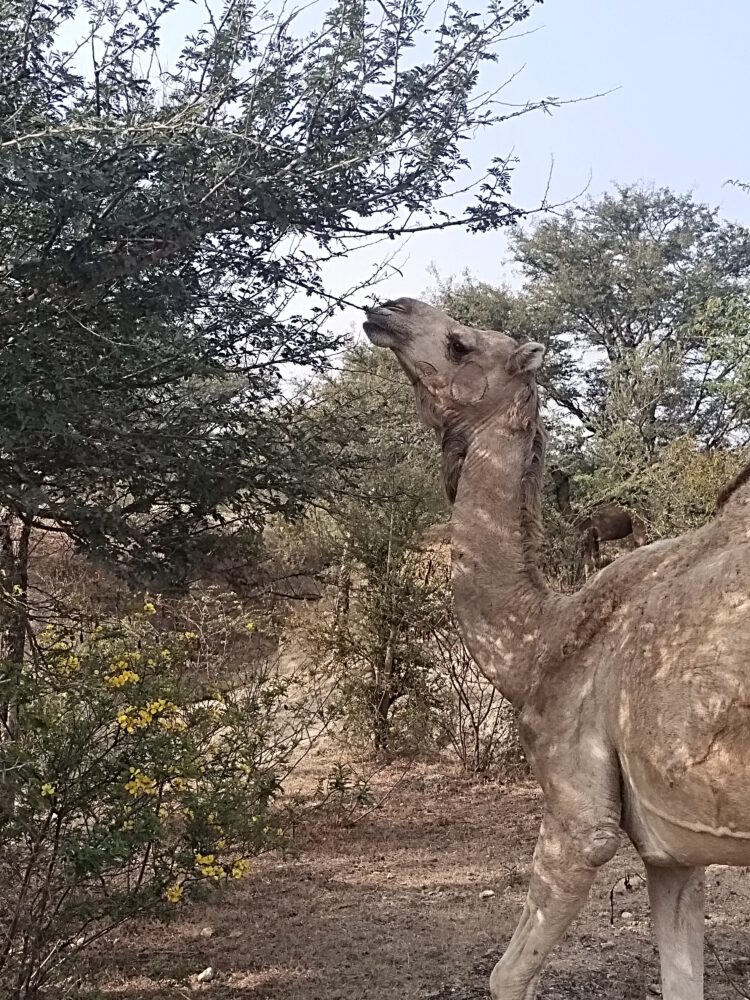
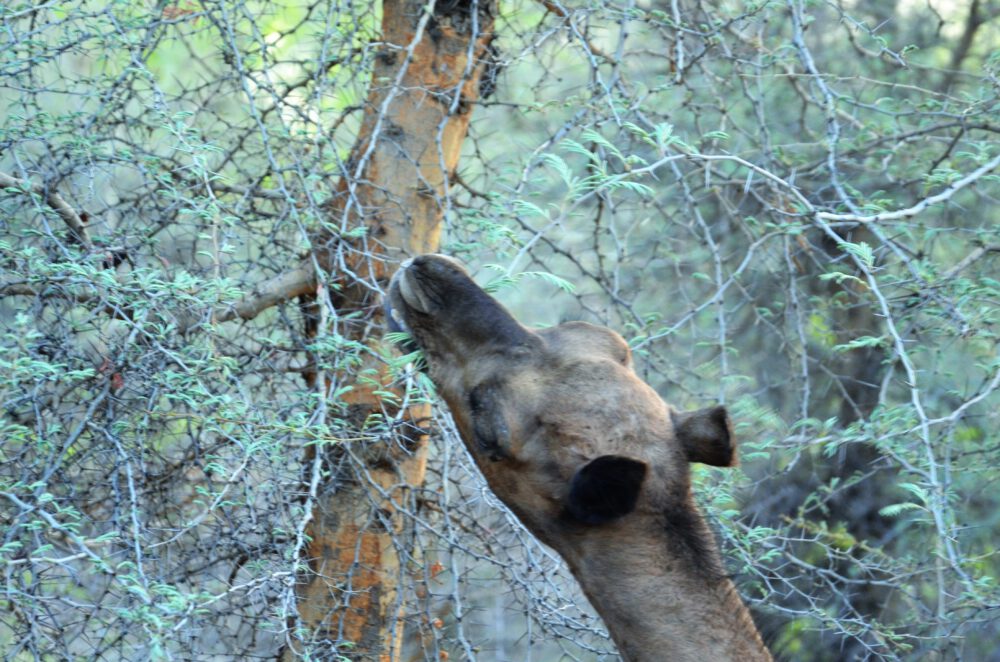
Camel browsing on Acacia senegal in Rajasthan.

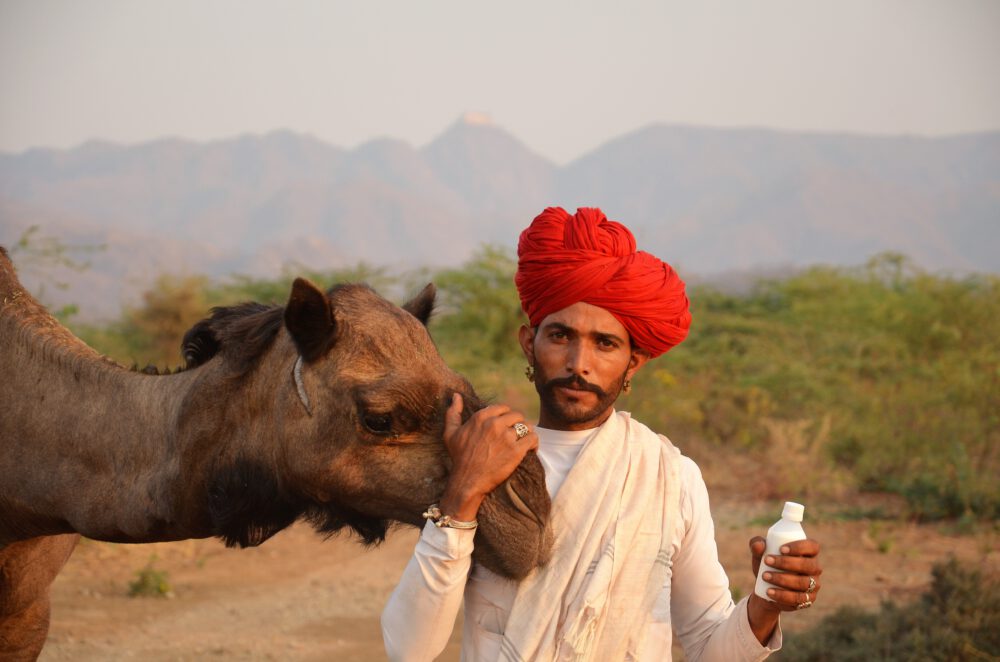
And while I am here, I feel obliged to promote the Raika herders whose camels provide the milk for our company Camel Charisma. According to their belief, camels browse on 36 different forage plants. All of these are known for their therapeutic qualities and described in the Ayurveda, India’s ancient medicine system. Imagine the goodness of this milk!
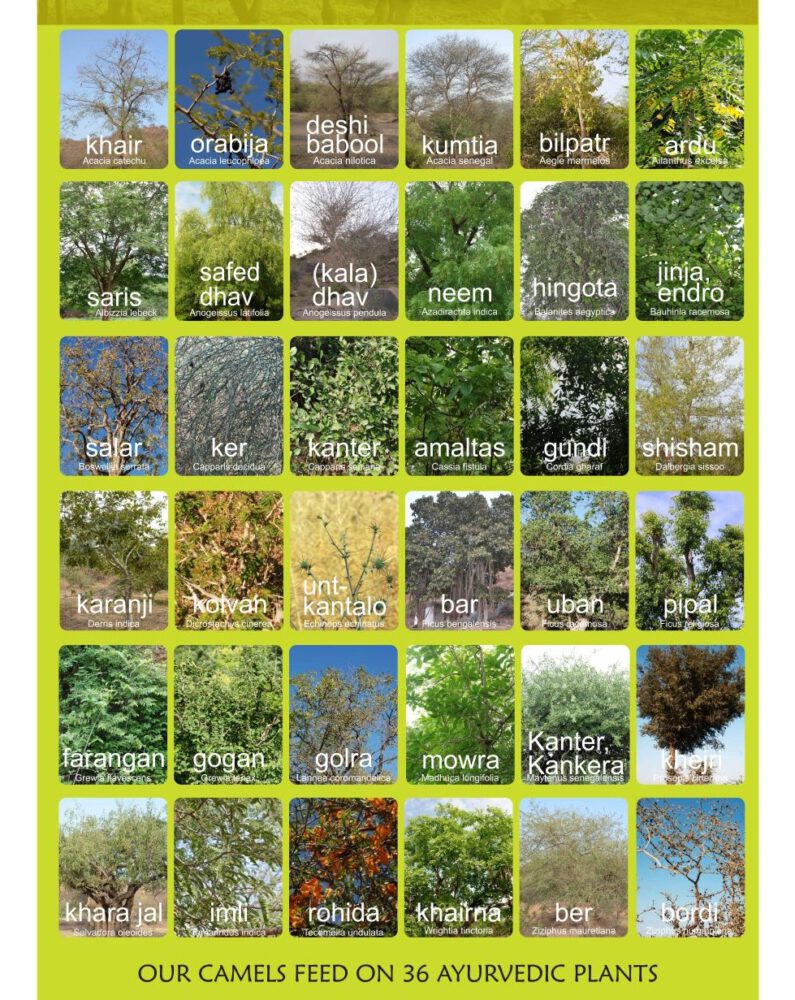
All camel milk should be like that – produced by happy camels that have the option of going to a ‘park’ where they can stroll around and take a bite from a tree as to their liking. If we manage to instil this approach into our camel community, ratherb than tryig to compete with the cow dairy sector, then we will have won and carved out a unique path into the future for our favourite animal!

Lets strive for this in the International Year of Rangelands and Pastoralists 2026 that starts tomorrow!

Do Camels Resist Industrialization….and only Thrive in a Moral Economy? (Part I)

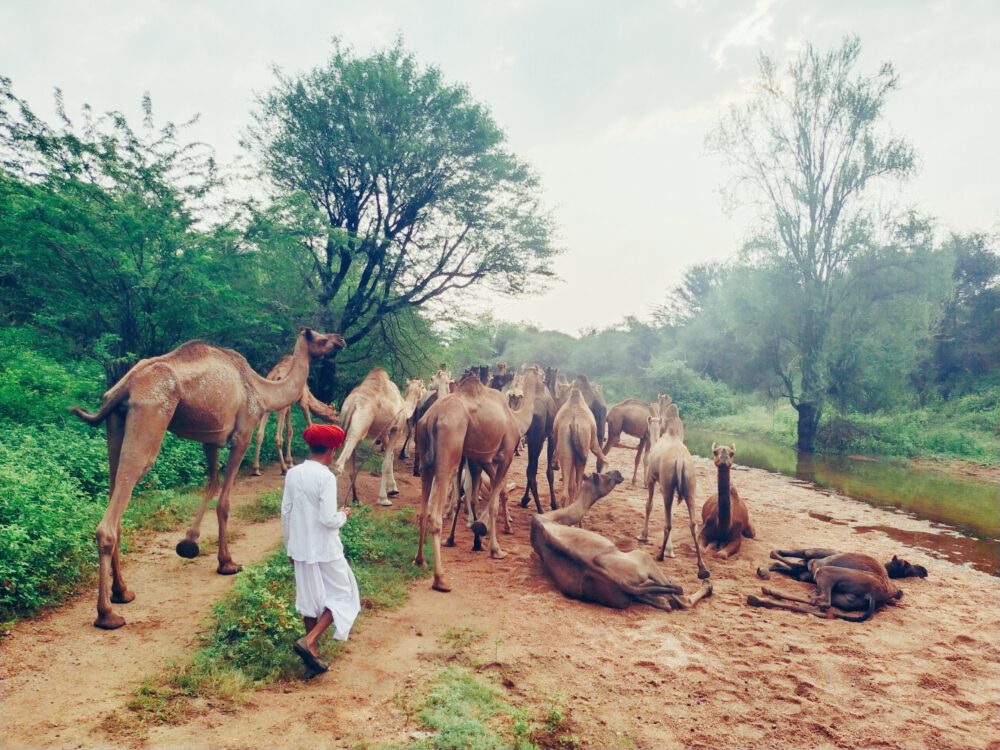
Camels in Rajasthan (India) taking their morning sand bath en route to their browsing area in the Aravalli Hills

Camel milk is hyped because of its health value, and as a consequence camel farms have sprung up globally, including smaller ones in Europe, medium sized ones in Australia and huge mega-farms with many thousands of camels in the oil-rich countries. It seems like a race is on to increase milk yields, to select for standardized udders that fit into milking machines, and to promote camel dairy products…… catching up with the cow dairy sector so to speak.

But does it work? Is it financially sustainable? I am beginning to have my doubts after listening to camel dairy owners from various countries that I visited or met on-line recently. I have begun to wonder and ponder whether this is the right way forward. My growing suspicion is that camels are not made for sedentary farming. For one, they are inordinately slow reproducers and they have a looong interval between calvings. Normally they do not lactate while pregnant, so in order to benefit from one lactation, you have to feed the camel for two years – an expensive endeavour if you have to buy the feed.

Camel browsing on Acacia senegal in Rajasthan.

Secondly, camels are made to walk long distances – feral camels in Australia walk 70 km per day to feed themselves on thinly dispersed vegetation. Fundamentally, they are adapted to scarcity and can not cope that well with abundance.

This brings us to the third point: camels LOVE spiky, thorny, salty vegetation, such as acacias to browse on and are not really keen on bland food at all. My good friend, the global camel expert Dr. Raziq Kakar, once compared them to South Asians, who like only spicy food. Sure, they eventually get used to alfalfa hay or other cultivated feed, but how does this affect their health (and the quality of the milk) ? Do we have data on the longevity of camels under different management systems?

Then there is the widely acknowledged problem of the lack of a market for camel milk, except in countries like China and Kazakhstan. Selling the milk produced seems to be a big challenge, because of the price for one, but also for cultural reasons.

So why do it? Why go to the trouble and expense of setting up a farm when the milk does not sell? Even in a country like the United Arab Emirates where camels are beloved and deeply embedded in popular culture, camel milk makes up only 0.4% of total milk consumed, at least according to official data.

On the other hand, there is the success story of camel milk in East Africa where camel milk is produced in a moral economy as described by Dr. Taheera Mohamed. Here camel dairying thrives, due to a number of factors. Somali people have a cultural affinity to camel milk and prefer it over cow’s milk, so there is a ready market. They also have a taste for fermented milk which lessens hygienic requirements. Women play a crucial role of connecting producers and consumers, and camels are kept either in pastoralist or peri-urban systems. They might be confined while lactating but move around when pregnant which is good for their health andd reduces costs. These informal systems work! This is reflected in the growing camel population numbers in the Horn of Africa where previously cattle herding communities switch to camels to weather the droughts and climate change. Marketing camel milk according to ‘western’ standards may not work, but the role of camels in local food security is enormous.

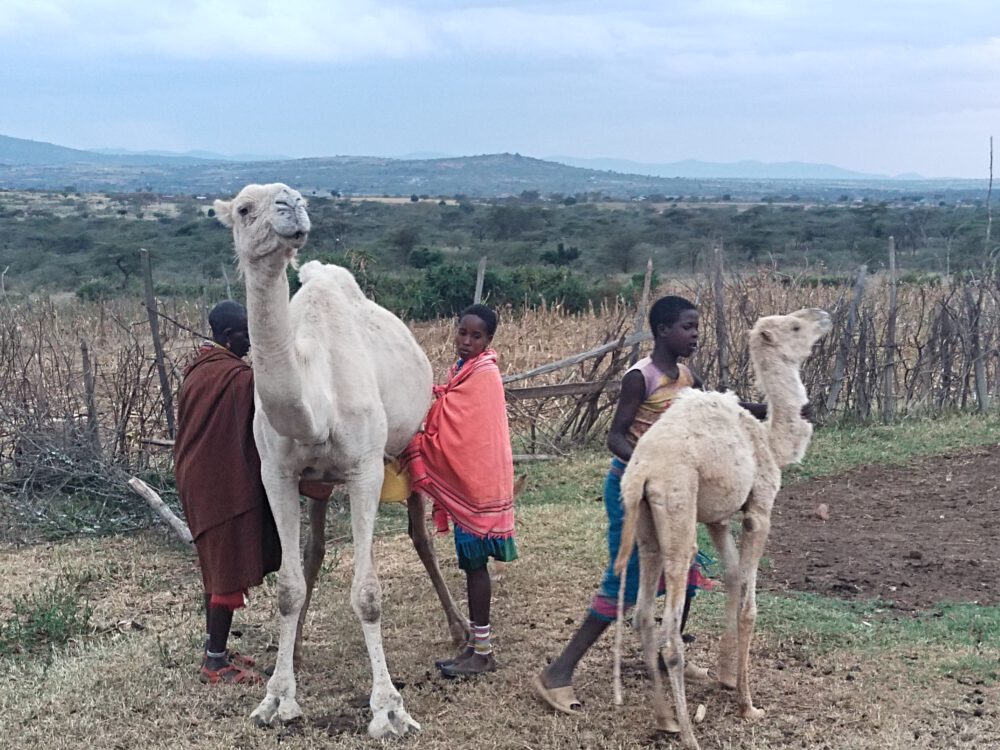
A mother and daughter-in-law milking near Maralal in Northern Kenya. They share the milk between them.

I am writing about this based on my own experience of setting up a small camel dairy in Rajasthan that has the goal of creating income for Raika camel herders and conserving both Rajasthan’s camels and unique camel culture. We have learnt many things the hard way. We gave up keeping camels on site in a paddock because mange became impossible to control, and there was a problem of feeding them. Our Raika partners insisted that the camels needed to move and we had to let them go to certain grazing areas at particular times of the year. Now all the camels that produce milk for our dairy are herded, keep moving from place to place, and feed on natural vegetation.

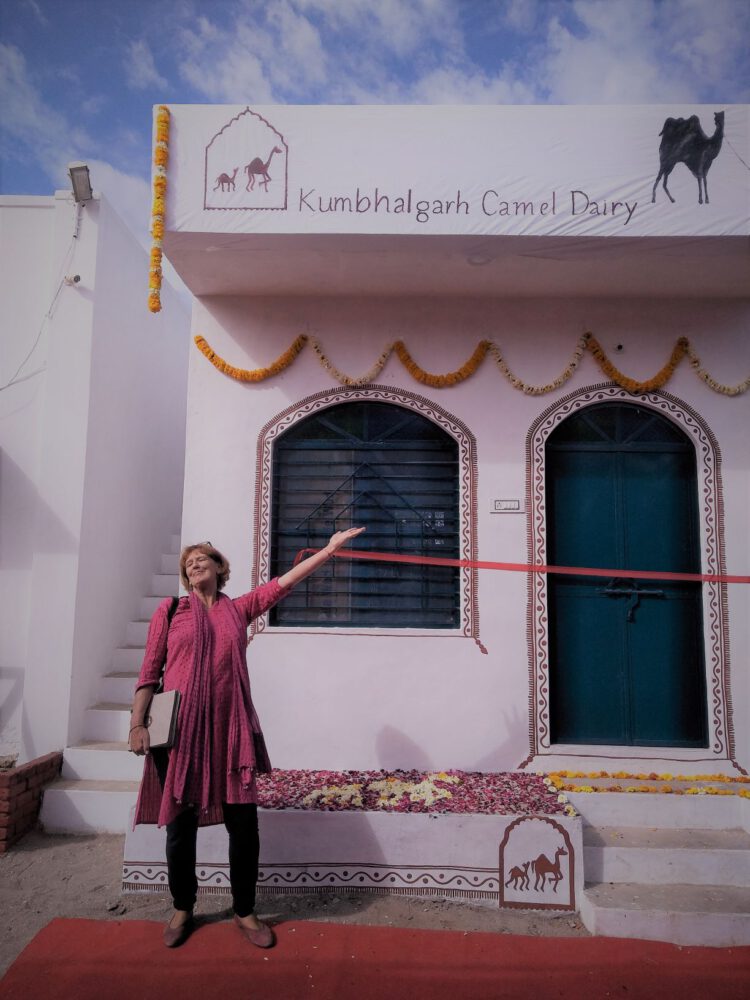
The Kumbhalgarh Camel dairy which creates income for Raika herders and has revived the local camel population. It markets its products under the brandname Camel Charisma .

But the problem of marketing the milk has only partially been solved. There is a lot more milk available than we can sell. And even though it the price is high, it does not even cover the costs. Only people with health problems who buy it for medicinal reasons are willing or able to go to the expense.

So what is the solution? I will expand on this in my next blog. For now I had to air the idea that camels, as natural ascetics adapted to scarcity, are probably not made for capitalist systems of abundance.

What do you think? Comments are very welcome!

Will science ever acknowledge that livestock can be both ‘good’ and ‘bad’?

Livestock is a beautiful thing. It is literally the staff of life for tens of millions of people especially in marginal areas. It has accompanied humans for some 10,000 years and is an indelible part of countless cultures.

But that should not lead us to a blanket endorsement of all livestock. We need to acknowledge that if livestock is managed in confinement, solely oriented at maximising yields, it causes massive damage to the environment, eliminating biodiversity, polluting air, water and soils, posing public health threats and involving cruelty to animals.

So livestock as such is neither good nor bad – it is all a question of management.

It is vexing to observe at the on-going Climate COP in Baku how livestock concerned people divide into either pro or contra.

Contra are the the parties that are betting on plant based products, exemplified by the TAPP Coalition of vegan companies, ostensibly dedicated to ‘fair pricing’ of meat and dairy.

In favour are the usual suspects for whom livestock can do no harm, and it is all about working towards net-zero. A chief protagonist here is the IICA – the Inter-American Institute for Cooperation on Agriculture- which represents the interests of the meat and dairy industries.

Thus we have two interest groups pitched against each other: animal versus plant based industries, while independent science seems to be sadly absent. The CGIAR has a Food and Agriculture pavilion, but the programme is all about finance, undoubtedly to mobilize funding for less emissions from livestock, rather than fundamentals.

I hope it is uncontroversial to say that one of the fundamental requirements for sustainable food production is for it to mimic nature as much as possible. And, as we all know, nature is composed of both plants and animals. Therefore, we should not thrive for food systems that are either/or. Instead, we need a balance between the two, to achieve recycling of nutrients, without depending on fossil fuels. I can’t speak for the crop people, but animal science generally looks at livestock in isolation, pre-occupied with raisng performance, without considering its relationship to plants. And its mainstream seems to have been captured by industrial interests. Only that can explain the almost totemistic fixation on livestock’s Green House Gas emissions, speak methane, that has taken over research and funding.

Yes, ruminants emit methane which warms/heats the atmosphere – but this is part of a natural cycle. This kind of biogenic methane is recycled CO2 that is circulating in the atmosphere anyway. It is a different thing than the CO2 added to the atmosphere by extracting fossil fuels and which we desperately need to control. Yet, while the livestock crowd is on fire about reducing methane, it is strangely silent about the fossil fuel that is required for sustaining industrial livestock production with its massive energy requirements for planting, fertilizing, protecting from pests, harvesting and transporting feed. Sure, there are lifecycle analyses and, there is GLEAM, the Global Livestock Environmental Assessment Model, but these are so complicated I wonder if anybody ever uses them for guidance when designing livestock systems.

This pre-occupation with methane directly plays into the hands of industrial interests, because it ignores their massive use of fossil fuels and justifies all kinds of new technologies to decrease methane. Apart from that, reducing livestock’s environmental impact to methane emissions, conveniently ignores all the other negative impacts of livestock industries on biodiversity, public health, soil, water and air.

Current mainstream livestock development is leading us into a cul-de-sac, wasting precious resources, and making matters worse, instead of focusing on fundamentals and searching for models that are in tune with Planetary Boundaries. But looking at the efforts of the leading institutions in the field – here I am looking at you, FAO and ILRI – , this is not happening.

At the same time, those livestock dependent people who have, for hundreds of years – and longer – managed livestock as part of nature and without any fossil fuels, the world’s pastoralists, are under pressure practically everywhere, especially from mining and green energy projects. Why are these issues not taken up by the organizations that supposedly care about livestock and poverty alleviation? One wonders to what extent their research agenda is determined by corporate rather than public interest.

Ethical Camel Dairying

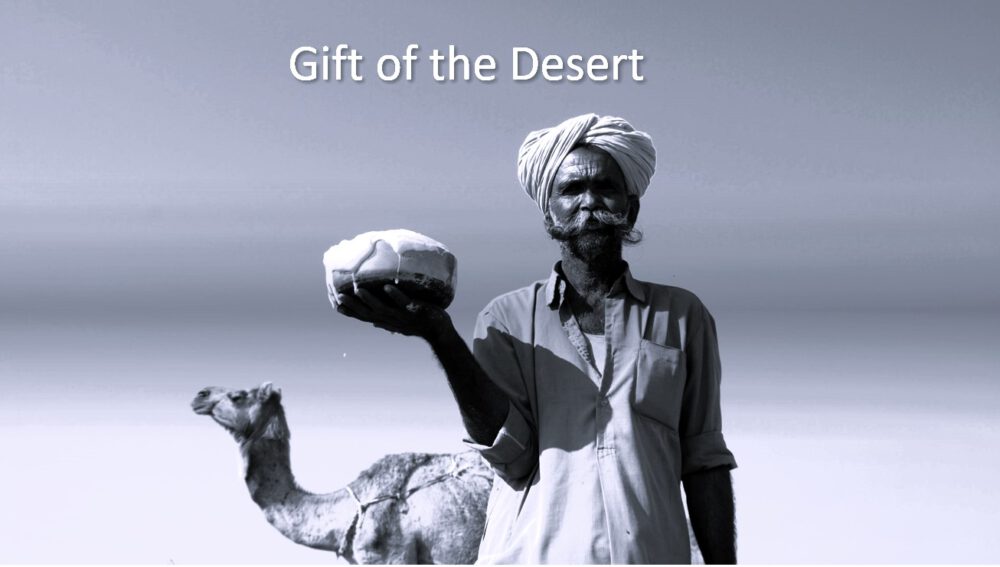
Camel milk is a gift of the DESERT, and it does not make ecological sense to produce it in industrial systems.

The current buzz around camel milk causes a rush of people to enter the emerging camel dairy sector in the belief that it is a lucrative business. This is not necessarily beneficial for camels – nor does it even generate the expected profits – as these new entrants automatically follow the model provided by cow dairies: they search for camels with the best possible yields, confine them somewhere, buy feed, and invest in a milking parlour, with the intent of maximising production. Such industrial scale camel dairies are springing up in oil-rich Arab countries and elsewhere.
Keeping them in confinement subverts the nature and biology of camels – long-legged creatures that have evolved in the most sparsely vegetated environments and are designed to cover huge distances daily to find enough forage to satisfy their nutritional needs under these frugal conditions. We know from the now almost forgotten studies conducted by German biologists Birgit Dörges and Jürgen Heuck in the 1980s and early 2000s, that feral camels in Australia routinely walk up to 70 km per day. Another adaptation of camels to a desert environment is their slow reproduction with a calving interval of two years in most places (it can be less in the Horn of Africa because of two rainy seasons). The camel’s digestive system is aimed at metabolizing extremely thorny, fibrous, salty plants and that is what these animals thrive on and where their ecological advantages lie: producing food in drylands, and without use of fertilizers and fossil fuels.
Camels in Kutch in India where forage plants are quite salty.

Coupled with their tolerance of high ambient temperatures, their ability to cope with droughts, and their congenial disposition, camels are evolution’s gift to humanity and a priceless asset in light of the record temperatures that the Earth is currently experiencing in the Indian subcontinent and elsewhere.

This year we are celebrating the International Year of Camelids, for which the FAO has picked the official slogan the heroes of deserts and highlands that nourish people and culture. Camelids are certainly remarkable, but even bigger heroes are the people that have been stewarding them for thousands of years in extremely inhospitable environments, who have adapted their ways of life to the needs of their camel herds, rather than dominating them.

https://umap.openstreetmap.fr/en/map/world-map-of-camelids_1005278#3/11.87/0.00

It is from these societies that we can learn how to keep camels in a way that is basically ethical and long-term sustainable:
  • Good for camels by letting them move, keeping them in natural social settings without separating mothers and babies, allowing them to choose their own menus and an environment in which their senses are stimulated.
  • Good for people by securing livelihoods, producing healthy food, and not contributing to antimicrobial resistance.
  • Good for the environment by nurturing biological diversity, recycling nutrients, replenishing the soil and avoiding the pollution that confined livestock production is associated with.
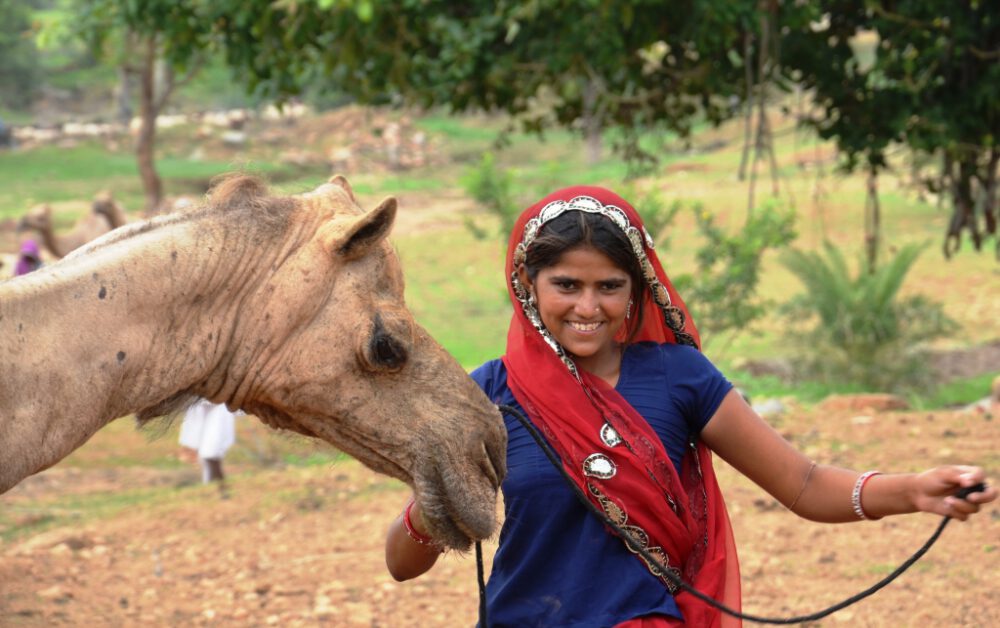
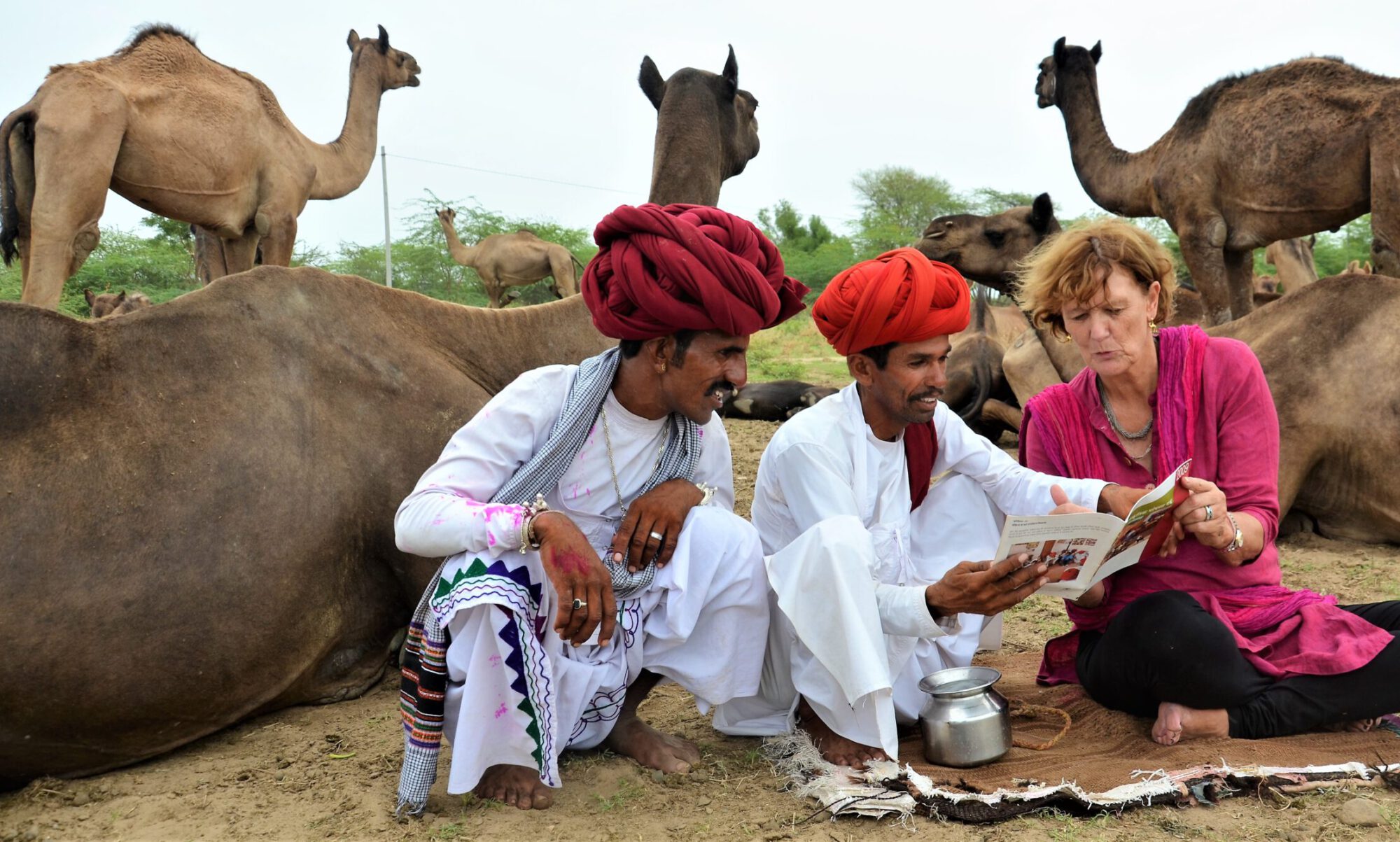
The Raika are the traditional camel herding community of Rajasthan in India

Of course, pastoralists are not perfect, especially since they are under a lot of pressure in most locations, but their principles of raising camels are basically sound and ethical and the model to follow.

Learning from the Raika camel herding community in Rajasthan, the social enterprise Camel Charisma that I co-founded, is building on their hereditary principles, with some innovations. We support the traditional nomadic system, pay a decent sum to the herders for their milk, and make an effort to provide the most hygienic milk to our customers across India. You can learn about the rationale for the dairy in this official FAO video .

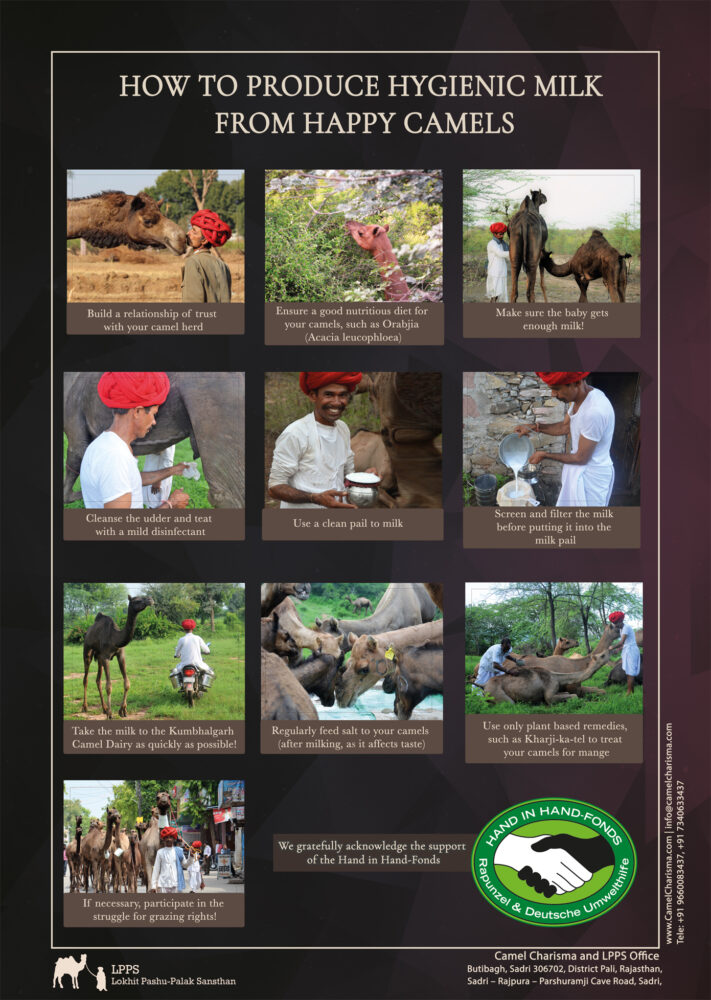
Standard Operating Procedures of Camel Charisma in Rajasthan (India)

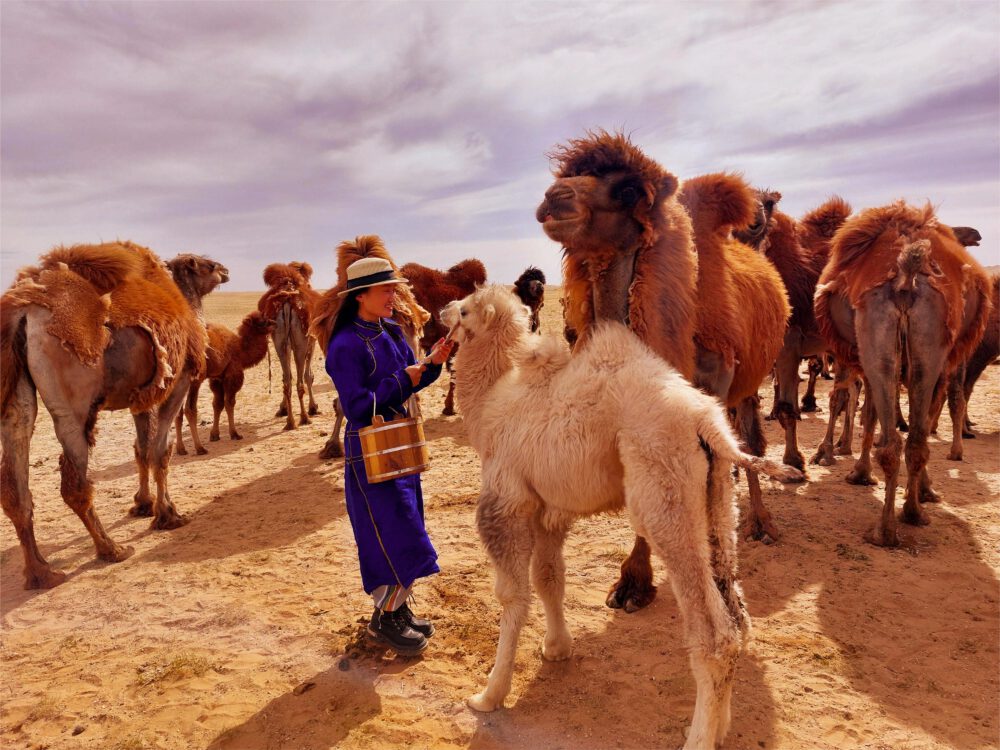
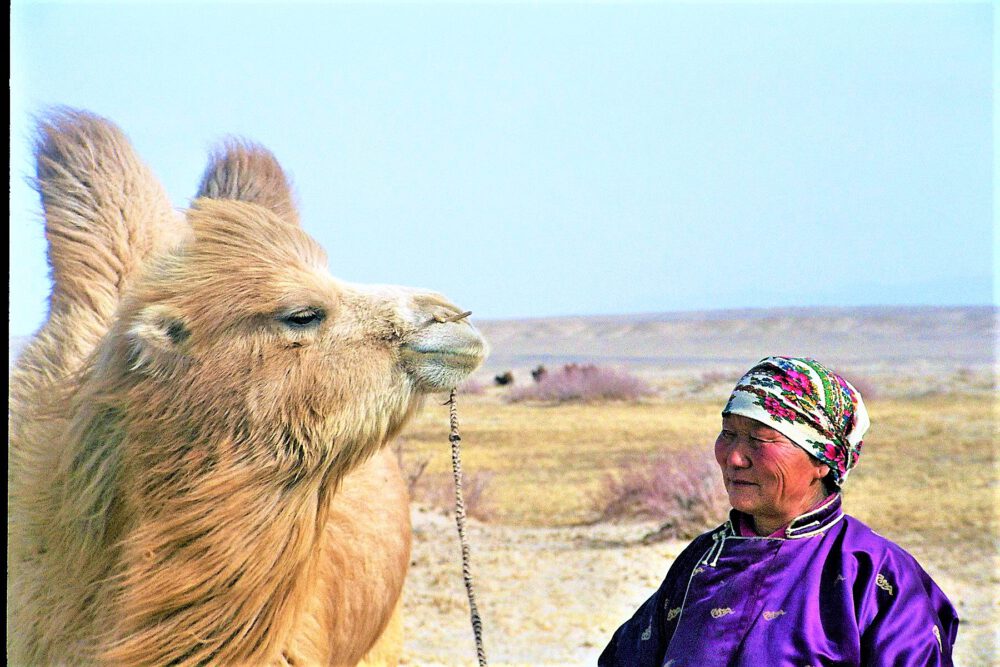
There are other people and communities who have the same approach, for instance Khandaa Byamba and her family in Mongolia who keep Bactrian camels. Even in countries where camels were not traditionally kept, such as Australia, Europe and the USA, efforts are made to keep camels in a more natural, non-industrial way.

Mongolian camel herder and advocate for ethical camel keeping Khandaa Byambaa

Coming back to the on-going International Year of Camelids, its main aim should be to find ways of supporting camel pastoral systems, rather than just focusing on increasing productivity and efficiency. We need an approach that does not see camels in isolation, but in their social and environmental contexts.

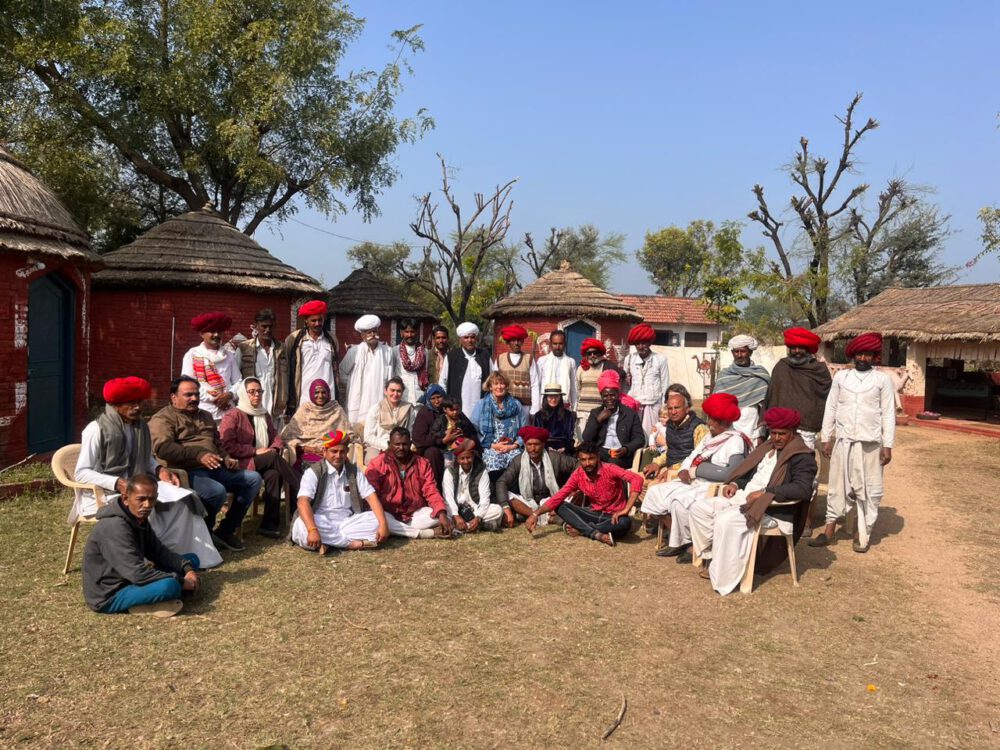
The participants of the International Workshop on Camelid Pastoralism in January 2024

In January 2024, camel pastoralists from several countries met in India to exchange experiences and chart out their future work. In their workshop statement they ‘rejected the extractive model of animal production that was superimposed on many camelid-keeping countries in colonial times and is now leading to the capital-intensive industrialisation of camelid keeping, which depends on fossil fuels, chemical inputs and imported feed. At a time when greenhouse gas (GHG) emissions must be reduced to prevent further global warming, fossil-fuel-free camelid development that is solar powered, makes optimal use of local resources and is in tune with planetary boundaries is the need of the hour’.
These are wise considerations and one hopes that the people, research institutions, donors that are involved with camels and development take them to heart.

For ‘Livestock Transformation’ we need to transform Animal Science…and move away from ‘efficiency’ as sole guiding principle

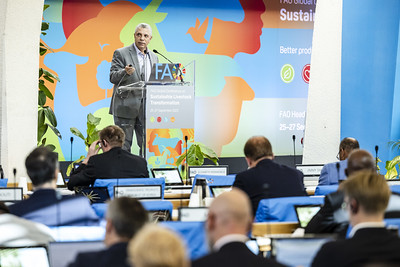
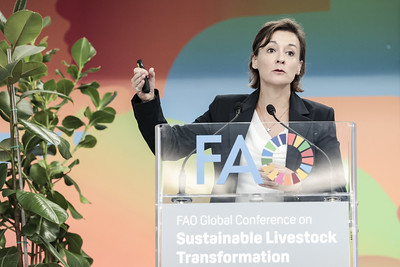
The International Livestock Transformation Conference that took place at FAO Headquarters in Rome from 25-27th September provided plenty of fodder for thought. While it remained hazy which direction the transformation should take – except effecting better production, better nutrition, better environment and better lives – there were many good presentations and one could sense unease with the current thrust of livestock development, especially with respect to antimicrobial resistance and with animal welfare. There was a great presentation by Robyn Alders about the importance of smallholders and how to enhance their access to services and markets. It was also satisfying to see the prominence that was given to pastoralism. Hindou Oumaru Ibrahim of the Association of Indigenous Women and People of Tchad talked about the significance and practical applications of their traditional knowledge, while Mounir Louhaichi of ICARDA emphasized their role in sustainable land managment and that ‘it is not the cow, but the how’ that determines the environmental impact of livestock.

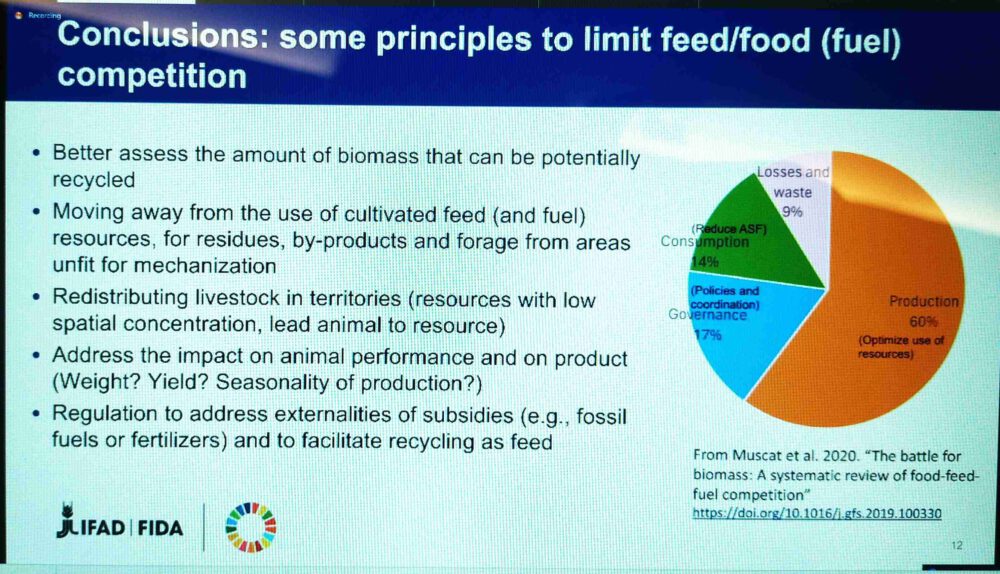
Then there was a noteworthy paper by IFAD’s Anne Mottet about ‘circularity’ with which I could not agree more. In her conclusions, she recommended better spatial distribution of livestock and even ‘leading animals to the resource’ which is basically an endorsement of pastoral systems that embrace both dispersal and mobility.

Circularity! This means reintegrating livestock with crop production to mimic as much as possible natural eco-systems in which herbivores cycle much of the nutrients they uptake from plants back into the soil. In practice, this entails sustaining animals on natural pastures or feeding them with crop by-products, rather than on especially grown feed requiring fossil fuels and chemical fertilizer. In such systems manure once again turns into a very valuable asset rather than the toxic burden it has become in concentrated animals feeding operations.

We must adopt circularity as one of the guiding principles for the design of sustainable livestock systems! It needs to replace the mantra of ‘efficiency’ which merely focuses on product output versus feed input, and ignores the fact that nutrients must be recycled by all means in order to avoid their depletion in the feed producing parts of the world and their toxic accummulation in the feed receiving countries. Arguably, the blinkered focus on efficiency is at the root of the current crisis of Dutch farming. While the Netherlands may have developed (one of) the most ‘efficient’ dairy farm systems in the world, this has also led to the unacceptable levels of nitrogen pollution in soil and water that have caused the current political crisis. They are a result of importing most feed from afar, as the Dutch Minister for Nature and Nitrogen Policy, Christianne van der Wal-Zeggelink pointed out.

In this context of transforming the livestock sector, a statement by 17 Civil Society organizations at the occasion of the upcoming International Year of Camelids 2024 is noteworthy. Besides calling for ‘Investing in decentralized infrastructure, such as networks of mini-diaries and local processing facilities1 to link camelid herders in remote areas to value chains, while also respecting and supporting our traditional ways of processing,for an alternative vision for the future of livestock, it also advocates for ‘Carving out an alternative, cruelty-free development trajectory for camelid herding that conforms to the worldview of traditional camelid communities and avoids industrialization‘.

Side-event on the International Year of Camelids

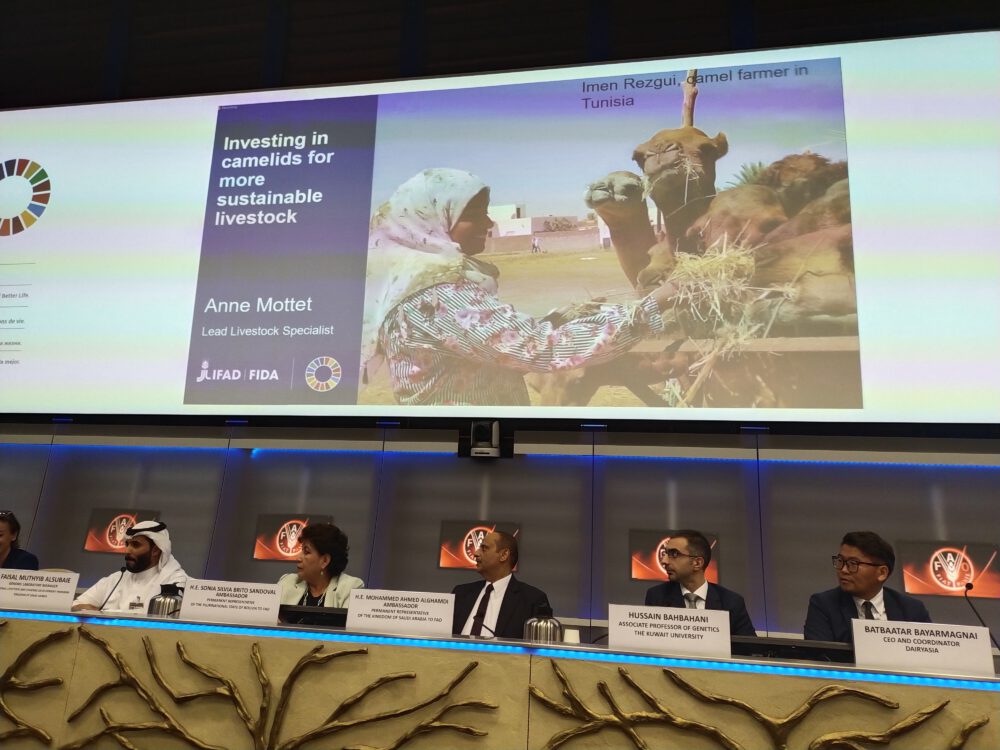
There was of also an official side-event on the International Year of Camelids 2024 that was chaired by the governments of Bolivia and Saudi-Arabia and in whichits visual identity was revealed. It had presentations by Mongolia, IFAD, and two genomics experts. Although the IFAD presentation informed about various projects involving camelid herders, communities themselves did not have a chance to speak. Hopefully they will be given a proper platform once the IYC has been officially inaugurated in December. Certainly much can be learned from them on how to best manage ‘the heroes of deserts and highlands’!

World Biodiversity Day and Pastoralists

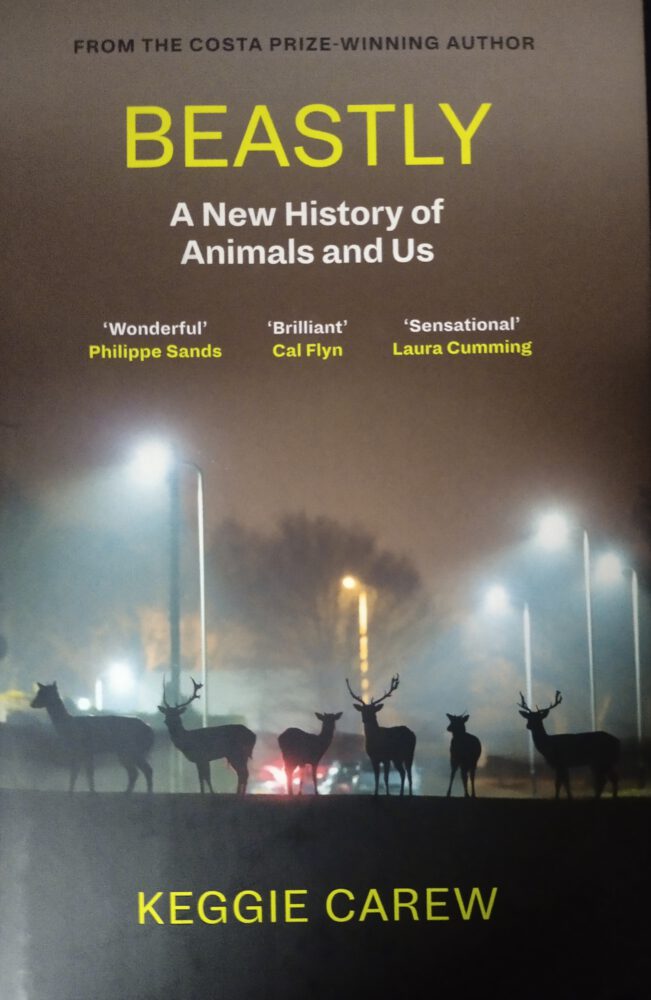
I am currently reading a fabulous (in the true sense of the word) book by Kelly Carew ‘Beastly. A new history of animals and us‘. In it she describes her revulsion as a child to the Biblical story of Cain and Abel, the sons of Adam and Eve. The former was a farmer, the latter a shepherd and inexplicably God preferred the offering of Abel (a lamb) to those of Cain (harvested crops).

I am not a Biblical scholar, but from what I understand the name Abel is derived from ibl, the Arabic word for camel, and the name Cain was associated with metal forging and copper mining. According to one source :

The Biblical conflict between Cain and his brother Abel is an iconic story of the conflict created by the copper mining operations in the Negev. Copper was mined and smelted on site using local brushwood as fuel. The mining operations denuded the area where the Bedouin and caravan tribes grazed their goats and camels causing a conflict between the miners and the shepherding Bedouin and camel herders. The conflict is represented in the Cain and Abel saga in which Cain represented the mining interests and Abel represented Bedouin pastoralism as well as the caravan tribes in the frankincense trade.

If this interpretation is correct, then it is no wonder that God preferred the sheep- or camel herding Abel to the miner/farmer Cain. Because herding livestock is the one systematic way of food production that respects and does not structurally modify ‘God’s creation’ , i.e. the Earth’s natural biodiversity and replace it with monocultures (or sometimes polycultures). It is by far the most natural way of producing food, one whose only prerequisite is trust and good communication between humans and herd animals. It requires no fossil fuels, no pesticides or any other -cides, no fertilizer. It is a much more efficient way of protein production than factory farming and feedlotting – systems which consume more human edible protein than they generate although they are conjured up as necessary to feed the world.

As Keggie Carew eloquently and emotionally conveys in Beastly, we KNOW that industrial livestock faming serves as a n incubator for zoonotic diseases that can jump over to humans, and we also KNOW that replacing tropical rain forests with palm oil plantations and other mono-cultures exposes humans to new disease vectors. We are also realizing that the most effective way of stablizing the climate is by conserving biodiversity, and that these two environmental issues can not be disentangled.

We know all this, yet as an international community we are paralysed. We continue to pump carbon dioxide into the air, pour asphalt over the ground, and support and subsidize industrial and factory farming. Not that we are not concerned about ‘conservation’: At the last Conference of the Parties to the United Convention on Biodiversity held in Montreal in December 2022, the world agreed on conserving 30% of the earth’s land and sea through the establishment of protected areas (PAs) and other area-based conservation measures (OECMs).

Yet, this was a highly controversial target opposed by many indigenous peoples because ironically and tragically they are the ones who are prone to be affected negatively. It is in their ancestral territories that these conservation areas are likely to be established, because they most closely resemble nature.

The 30% target would be fine, if we now supported pastoralists and other indigenous peoples, to continue stewarding biodiversity. But Conservation with a big C has a bismal record with respect to the rights of indigenous peoples and it seems as if only affluent western wildlife agencies come out on top. Although ‘fortress conservation’ has become discredited, in practice it still predominates.

Look at the Raika camel and sheep/goat herders of Rajasthan – people who produce milk and meat in a humane and ethical way, while also stewarding the environment. They tolerate that leopards prey on their animals without taking retribution, ther herds support germination and regeneration of local acacia trees, while also providing organic manure. Yet these services go unrecognized and these genuine conservers of biodiversity are regarded as threat to conservation and have lost their long-standing grazing rights in places such as the Kumbhalgarh Wildlife Sanctuary.

No wonder few young people want to continue in this profession which combines food production wth environmental services.

Reinstating the rights of pastoralists to their ancestral territories and prioritizing them over mining and other interests would go a long way towards saving both biodiversity and limiting climate change. It would be a measure that does not cost anything and have many positive social percussions as well. But, alas, at the moment I do not know of any single country where this is happening (although I would love to be told that I am wrong). Amazingly, the story of Cain and Abel is still very relevant more than two thousand years later.

The International Year of Camelids 2024: How can it benefit camel pastoralists?

It is late March 2023, and there are no plans, as yet, for celebrating the International Year of Camelids (IYC) that the United Nations General Assembly has declared for 2024. Compare that situation with the status of preparations for the International Year of Rangelands and Pastoralists that will happen in 2026 and for which a large number of active regional preparatory groups have already worked out detailed activity plans, in a bottom-up initiative.

With respect to camelids – which includes the two Old World Camels (Bactrian and dromedary), as well as four New World Camelids (llama, guanaco, alpaca and vicuna) – there is no coordinated approach. Certainly, interest in, and research on, camelids has snowballed in recent years, with regular conferences happening, and camel milk being hyped for its health enhancing properties. There is an effort of some kind to ‘turn the camel into the cow’ in terms of global significance, with research focusing on camels as such, without consideration of their socio-economic and ecological context. The prime interest is in increasing yield and performance under controlled conditions; large scale dairy farms such as in the UAE, with hightech interventions including artificial inseminaton and embryo-transfer, are held up as model.

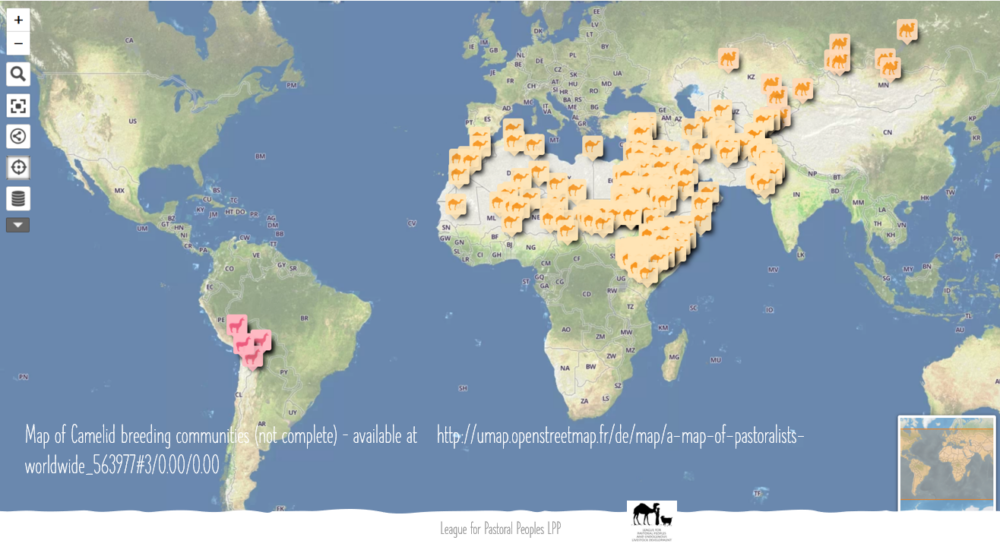
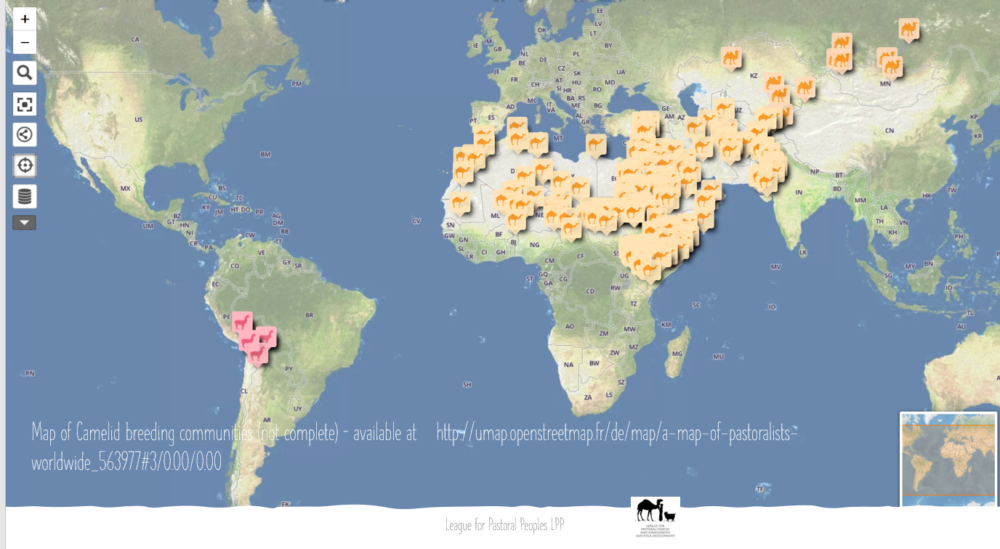
Map showing many of the camelid pastoralist groups (not complete) Available at http://www.pastoralpeoples.org/pastoralist-map/

But such visions exclude the traditional camel pastoralists and do nothing for the continuation of their herding systems that have generated the amazing genetic diversity of camelid breeds and types adapted to local conditions. They will eventually result in the dangerous genetic uniformity that we have in the dairy cattle sector and they ignore the close human-animal relationships that are typical for camel pastoralists. If we continue on this path, camels will become cogs in the wheel of big farms where they lose their individuality and are regarded as input-output machines. And where they are cut off from their original ecological role of converting scarce and dispersed desert vegetation into animal protein, and instead fed with imported feed grown far away.

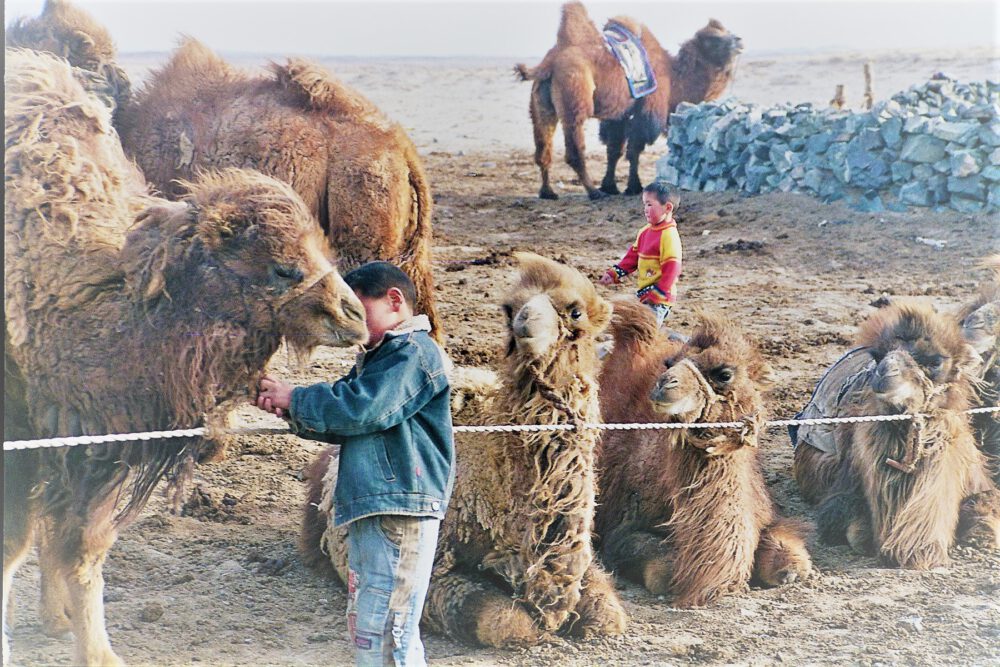
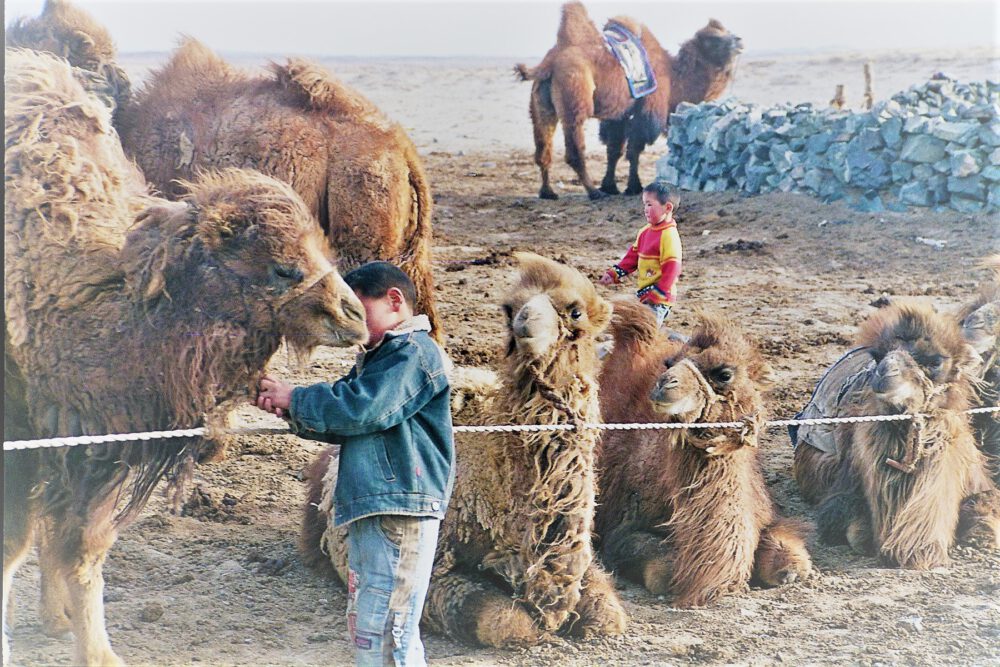
Camel herders in Mongolia’s Gobi Desert

The International Year of Camelids presents an opportunity to set up a different development trajectory and avoid the errors of the cow dairy sector. Building on the traditional knowledge and ethics of camel pastoralists it provides a chance to carve out a new, cruelty-free, ecologically sound and community centered approach to dairying, on the lines that we have been pursuing through our social enterprise Camel Charisma and for which we have linked up with the startup Nomadic Nutrition. If taken up more widely, I am sure this path will benefit the planet and also appeal to the many who currently believe they have to be vegetarian or vegan in order to be good people.

My organization, the League for Pastoral Peoples, has hosted two preparatory meetings for the IYC in which people working with both dromedary camels and New World camelids have participated. More background information about the IYC is available in this presentation that I recently made at the Oxford Desert Conference.

Pastoralism at the Oxford Real Farming Conference!

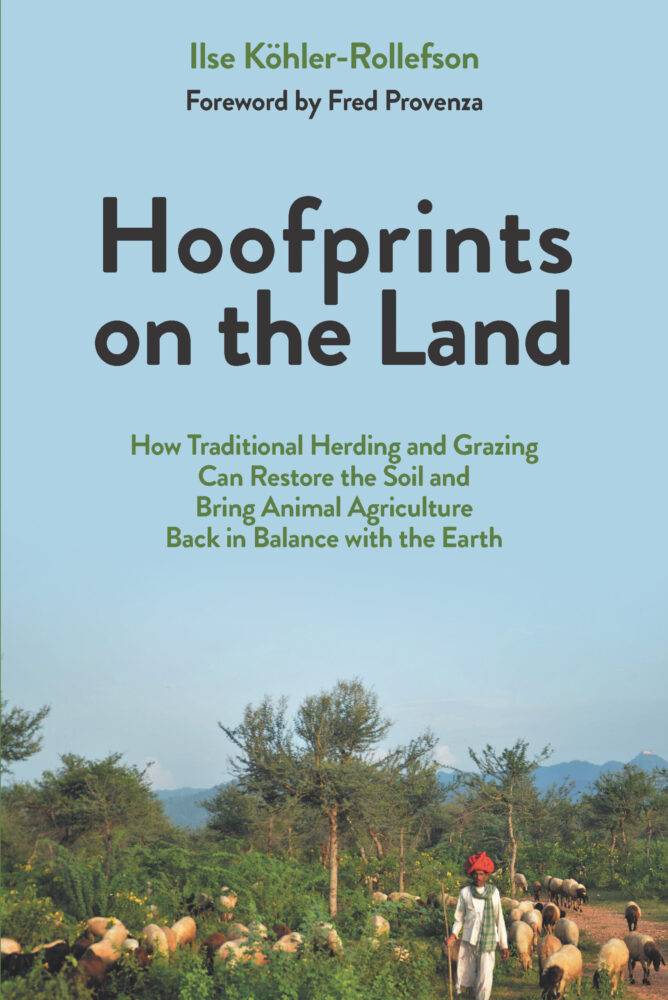
Forgive me for engaging in some self-promotion, but I am incredibly excited to share that my new book Hoofprints on the Land. How traditional herding and grazing can restore the soil and bring animal agriculture back in balance with the Earth will be launched on 5th January at the Oxford Real Farming Conference which is the ‘largest gathering of the agroecological movement on the planet, dedicated to transforming food & farming systems for good’.

I could not think of a better venue for releasing Hoofprints which is published by Chelsea Green Publishing, both in UK and USA.

This is how the publisher describes it:

A timely, powerful but also incredibly lyrical book about nomadic pastoralism and how traditional herding cultures are not a thing of the past but a regenerative model for the future. Nomadic herding is the most ancient and natural means of keeping livestock, and this book debunks the myth that animal-free agriculture is the only way forward for a healthy planet.

Hoofprints on the Land is Ilse Köhler-Rollefson’s passionate rallying cry for those invisible and forgotten herding cultures that exist all over the world, both of ancient heritage and modern pioneers. These are people that tend their flocks, from alpacas to reindeer, cattle and sheep, camels, goats and yaks, in harmony with the land and in partnership with their animals, a relationship that is founded not on exploitation but reciprocity.

Hoofprints is already available for pre-order from Chelsea Green Publishing (in the USA), Amazon, and some other bookshops which ship globally.

Will the UN Convention of Biological Diversity ever help the true guardians of biodiversity?

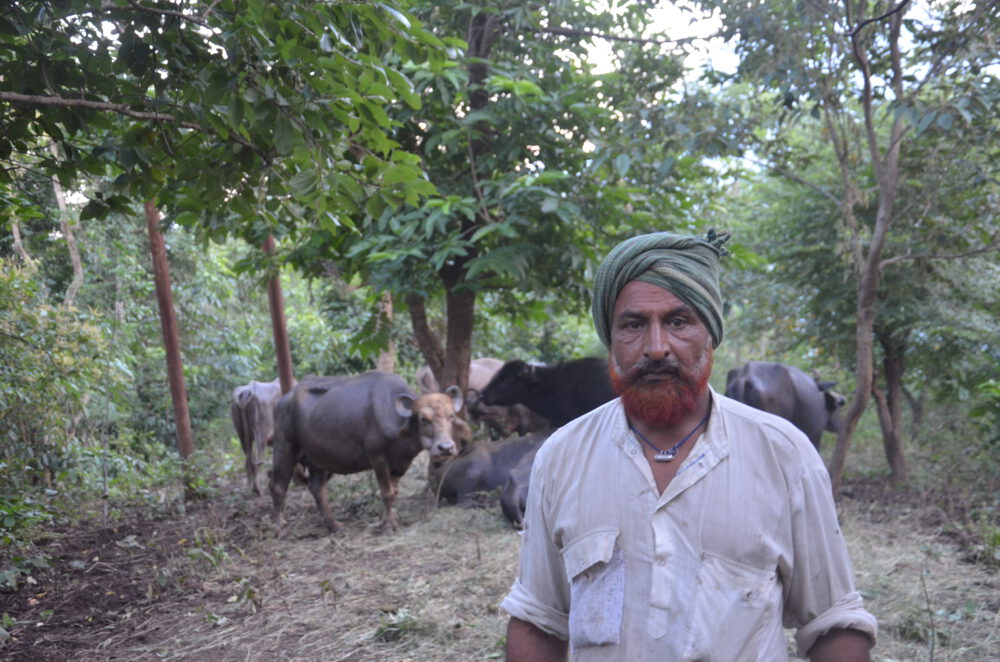
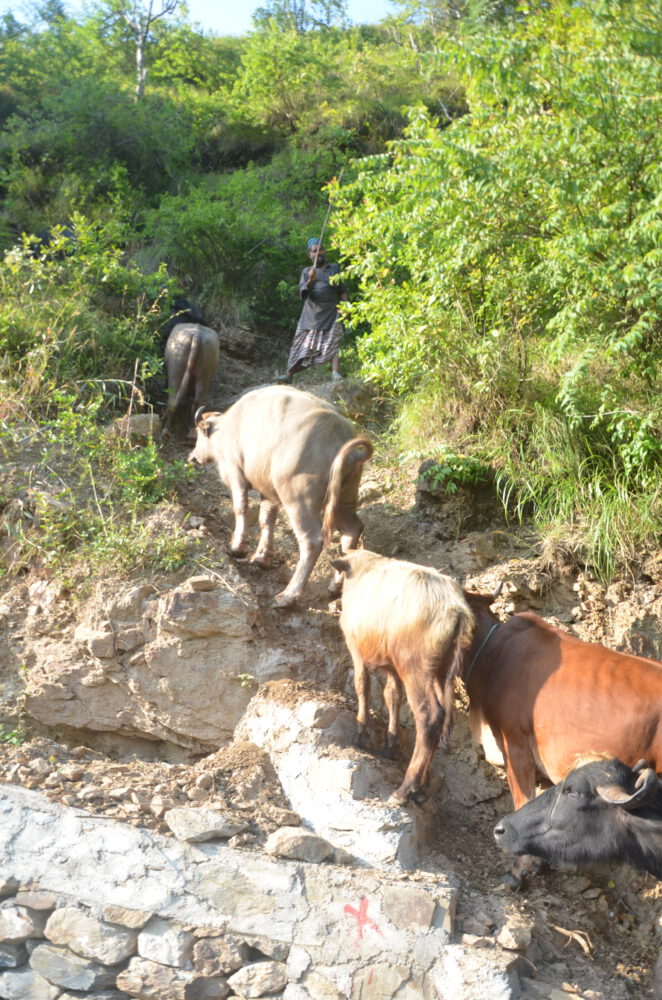
Recently I had the pleasure and good fortune of visiting the Van Gujjars, a buffalo breeding transhumant community that traditionally migrates between their winter stays in the forested foothills of the Himalayas and alpine pastures in the summer. As our host and guide, Meer Hamza, founder of the Van Gujjar Tribal Yuvak Sangathan, explained, the identity of this community is based on its intimate relationship with the Gojri buffalo breed that is able to climb up incredibly steep hillsides and produces totally natural – and cruelty free – milk is processed into butter, ghee, paneer and khoa, with male buffaloes being sold to farmers who use them to genetically upgrade their own stock.

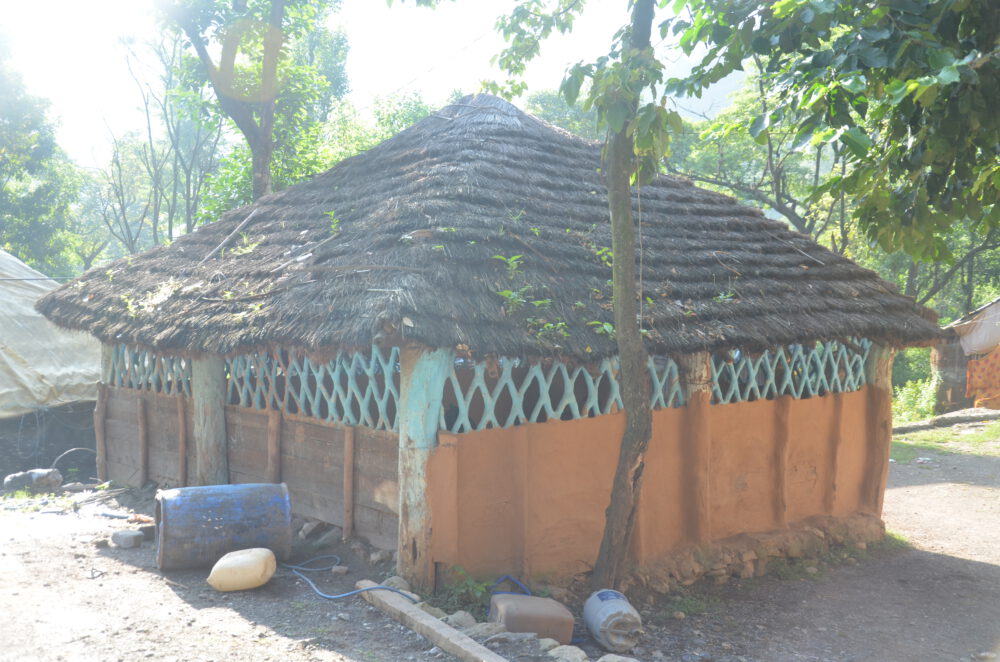
The Van Gujjar way of life is about the most ecologically positive one can imagine, with their seasonally used homes built only out of natural materials and an almost complete independence from fossil fuels and non-solar energy.

One would think that the Van Gujjar’s role in producing food without the usual externalities and in harmony with nature would be recognized and merit all possible support, but instead they face constant harassment on their migrations and are threatened by eviction from the Forest Department, as much of their territory has been declared a national park.

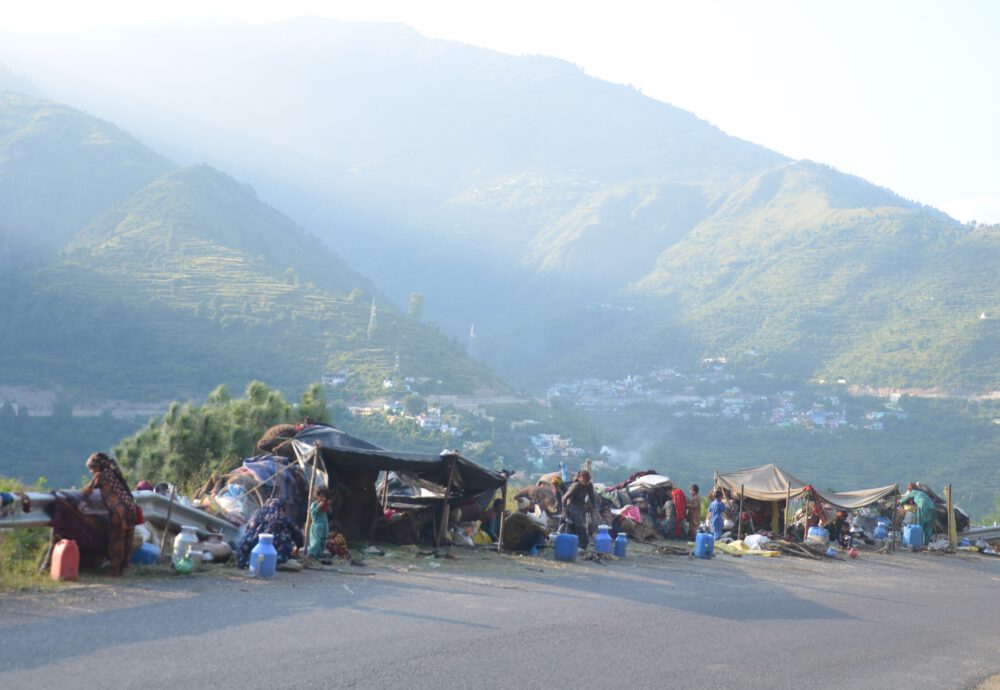
During migration between summer and winter pastures, the Van Gujjar often camp on the roadside.

This battle has already been going for decades and taken on many twists and turns, too complex to reiterate here. Suffice it to say that life is made difficult for people who basically conserve nature, although India, together with almost all other countries, is a signatory of the legally binding UN Convention on Biological Diversity (CBD).

The Nagoya Protocol was supposed to ensure that communities who steward biodiversity receive benefits and introduced the concept of ‘Community Protocols’.

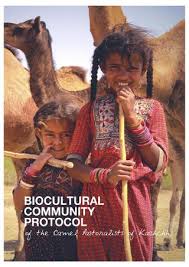
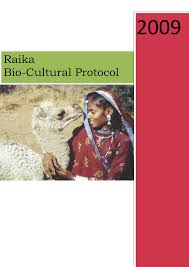
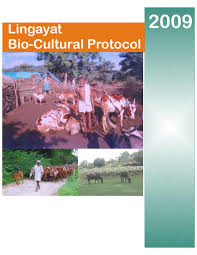
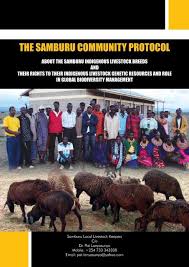
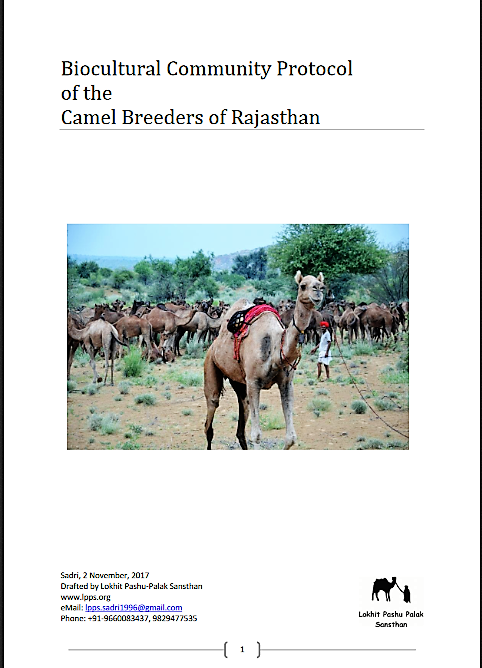
It is now twelve years ago that the Nagoya Protocol on Access to Genetic Resources and the Fair and Equitable Sharing of Benefits arising from their Utilization was negotiated as an addendum to the CBD to ensure benefits reached those communities that actually steward biological diversity and are holders of traditional knowledge on genetic resources. The Nagoya Protocol obligated its parties to encourage the development of Community Protocols in which indigenous and local communities would document their role in the conservation of genetic resources and biological diversity. It was hailed as a milestone by both governments and Civil Society,including my own organization. Together with like-minded NGOs we jumped on this opportunity enthusiastically, expecting it to be an avenue to finally get recognition for pastoralists and their biodiversity conserving ways. We catalysed a number of ‘biocultural community protocols’ by a number of pastoralist groups, including several in India, but also in Kenya and elsewhere. Only to find out that they were totally ignored and had no impact whatsoever.

Looking back on almost twenty years of advocacy, it seems to me that the UN Convention on Biological Diversity has not really made any difference. It was ill-designed from the start by placing biodiversity and genetc resources under control and ownership of nation states rather than declaring them as our common global heritage. As most biodiversity is found in the South, while its commercial applications benefitted the North, this probably seemed an equitable approach that would compensate the so-called ‘developing countries’ for past injustices. Furthermore, the move was supposed to encourage countries to steward their biodiversity, but in practice it has reduced biodiversity into a commercial good. Those communities who actually protect biodiversity by means of their way of life continue to be ignored, left unsupported, or and evicted from the ancestral territories they conserved.

One of the several attempts of promoting conservation partnerships with indigenous communities, is the Dana Declaration on Mobile People and Conservation that was the outcome of a workshop held in Jordan by conservationists in 2002. Recently a follow-up workshop (Dana +20) was held, this time with representatives of pastoralist and other mobile communities that put together the Dana+20 Manifesto on Mobile Peoples

Will the manifesto be heard at the upcoming 15th Conference of the Parties (COP 15) of the UN Biodiversity Conference that will take place in December in Montreal?

There is always a lot of fanfare around the COPs, but in reality few if any benefits have trickled down to the communities who live with biodiversity. Besides the Van Gujjars, look at what is happening in Tanzania with the Maasai being evicted, and closer to home, there are the few remaining Raika pastoralists who are threatened by the establishment of a tiger reserve in their monsoon grazing grounds, although they are singlehandedly responsible for the conservation of India’s dwindling camel population.

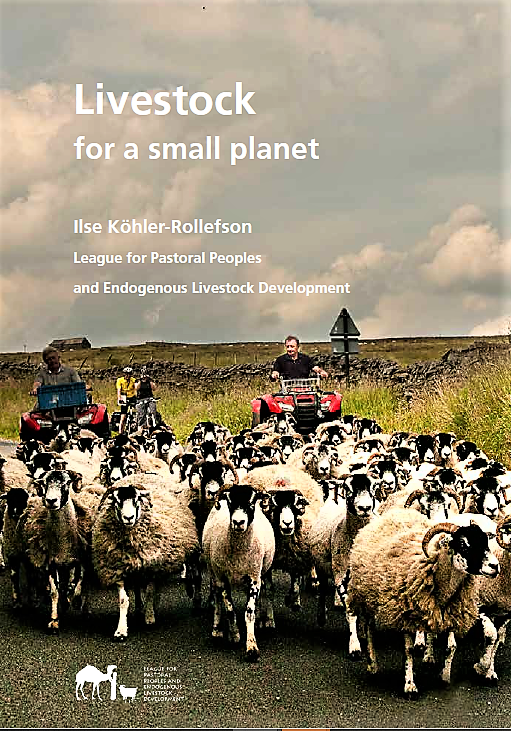
Review of ‘Livestock for a Small Planet’ by Judith Schwartz in the Pastoral Times

Judith Schwartz is one of the few environmental journalists who recognize the importance of livestock for the health of the planet. She is author of the classic Cows Save the Planet, and more recently of Reindeer Chronicles. I am delighted to share her review of ‘Livestock for a Small Planet‘, originally published in the latest edition of Pastoral Times (a highly recommendable broadsheet about happenings in the pastoral world that currently comes free of charge into your inbox).

Ilse Köhler-Rollefson’s timely and compelling report is an homage to Frances Moore Lappé’s 1971 book Diet for a Small Planet, which places food at the center of social justice and calls attention to the ecological cost of industrial meat production and consumption. In the five decades since that book’s publication, the world has gotten yet smaller, thanks to the Internet, more accessible travel, and increasingly opaque global supply chains. In addition, livestock—the heartbeat of traditional cultures throughout the world and integral to the livelihood of a billion-plus people—have become vilified and blamed for crises from water shortages to climate change. Köhler-Rollefson’s succinct, readable book directly takes on widespread misunderstandings about animal agriculture and shows how nature-aligned livestock stewardship can sustain people and planet. At a time when anti-livestock rhetoric has reached a treble pitch (to wit: with world leaders at this month’s COP26 climate summit urged to forego meat) Köhler-Rollefson’s cogent, clear-eyed account is a powerful corrective.

            Rather than getting mired in well-trodden arguments, the author offers a fresh angle on animal-land dynamics informed by decades of observing pastoral practices. For example, she points out that nature has designed plants to be stationary and animals to be on the move. Under modern, industrial management, however, animals are kept in place while plants are cultivated as commodity feedstock and delivered to livestock, a system that involves shipping goods around the world. The health of the land, the animals, and the people who consume animal products all suffer as a consequence. This plant-animal “role reversal”, she writes, transforms a system based on solar energy into one totally dependent on fossil fuels. Highlighting the folly of manipulating nature to conform to markets cuts through squabbles about the need to intensify production in order to feed the world.

            Köhler-Rollefson brings in the perspective of pastoralists, whose voices are often missing in policy discussions. Conversations about livestock tend to betray Western ethnocentrism, she says. She makes the point that we humans evolved in tandem with the animals we raise, and stresses the deep knowledge that herding cultures have built over time. If we lose these animals and traditional herding ways, she suggests, we lose a part of ourselves.

            The book is divided into two distinct sections. The first zeroes in on nine common myths about livestock. This format allows the author to effectively counter misinformation and bring facts to what has become an emotional topic. She points out that rather than undermining food production by “taking up too much land”, livestock thrive in landscapes that are unsuited for crop agriculture. At a moment when many in western countries see livestock as climate villains and meat eating as unethical, Köhler-Rollefson makes the distinction between industrial management, which is environmentally destructive and cruel to animals, and pastoral systems, which regenerate dryland environments and afford animals better lives than in the wild.

            The author takes on the fraught topic of greenhouse gas emissions, emphasizing the distinction between methane, a short-lived gas generated by the breaking down of plant material, and carbon dioxide, which remains in the atmosphere indefinitely. As she acknowledges, this is a complex matter and the focus of much fuzzy “cows-are-bad” math. She correctly says that regenerative grazing can build carbon in soils, thereby absorbing atmospheric CO2, and mentioned the high-profile example of ranch-owner and one-time US presidential candidate Tom Steyer. She could have noted, however, that restorative livestock rearing is more than a quirky California trend, as grassland restoration via holistic grazing is a rapidly growing, worldwide movement. For example, Savory Global now has training hubs in twenty countries and has developed land-to-market meat, dairy, wool, and leather supply chains based on ecological monitoring protocols. This underscores the increased awareness of grazing solutions and the wealth of potential alliances for pastoral communities.

            One small quibble is the author’s parenthetical remark that grasslands require occasional burning. This is not true of all grassland ecosystems. What is necessary is a means of breaking down senescent vegetation. As Allan Savory points out, this process can occur chemically, through fire, or biologically, via the digestion of ruminant animals. While fire emits particulates and greenhouse gases and leaves bare soil, grazing sustains moisture and promotes more life on the land. It is important to acknowledge that herbivores represent an alternative to fire as well as a factor in fire resilience.

            The second part articulates a vision for livestock management that aligns with nature and the needs of herding societies. The author challenges the assumption that we should intensify animal production, saying that what we actually need is to extensify livestock herding so that more plant waste material can be “upcycled” to protein-rich food and more land benefits from regenerative animal impact. She highlights the value of heritage breeds suited to specific locales and the need to empower small-scale farmers and herders. This part, a blueprint for a just, ethical, and regenerative livestock future, is essential reading,: a manifesto for human-animal partnership on a resource-stressed planet.

             “Livestock for a Small Planet” extends a hand to readers familiar with problems linked to modern animal agriculture but may not be aware of alternatives—or that pastoral cultures have much to teach us. In all, Ilse Köhler-Rollefson does a wonderful job in showing the role livestock play in making our small planet go round.