Make Cheese, not Mass!

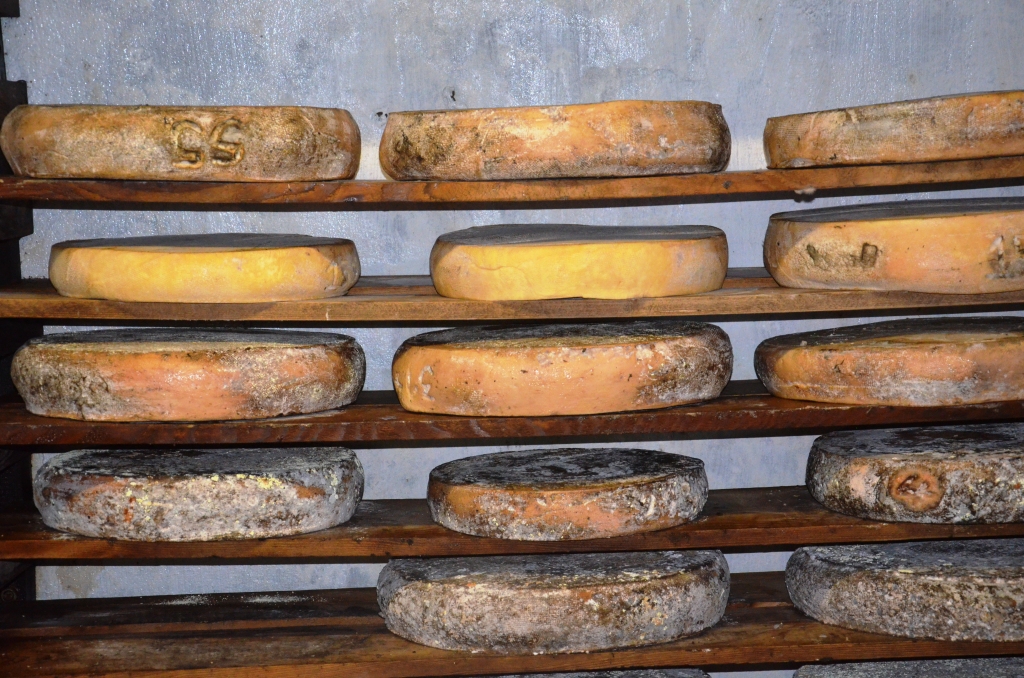
munster cheese
Bargkass (mountain cheese), ripening in a cheese cellar in the Vosges in France

More! Faster! Cheaper! Mass production is the mantra of global livestock development as breeding companies create ever more productive genetics and farmers and countries are caught  in cut-throat competition worldwide. “Producing more with less” is also the guiding principle of the Global Agenda for Sustainable Livestock (GASL), a multistakeholder platform that seeks to make livestock production more sustainable, both environmentally and socially.

The spiraling pressure has not been good to livestock producers. Exhorted to “grow or go”, they need to invest heavily in infrastructure and additional animals if they want to stay in business. They get caught up to the hilt in debt, as my colleague Evelyn Mathias has shown in her study “Livestock out of balance. From asset to liability in the course of the Livestock Revolution?“. In all developed countries the number of farmers that can make a living from livestock has plummeted precipitously and this is being repeated in the emerging economies, such as Brazil, China, Thailand, and India, as well as Eastern European countries that have recently joined the European Union. Its a trend that does not forebode well for the sustainability of the livestock sector as holdings become ever bigger leading to huge problems with manure recycling, public health and animal welfare, besides abandoned rural areas.

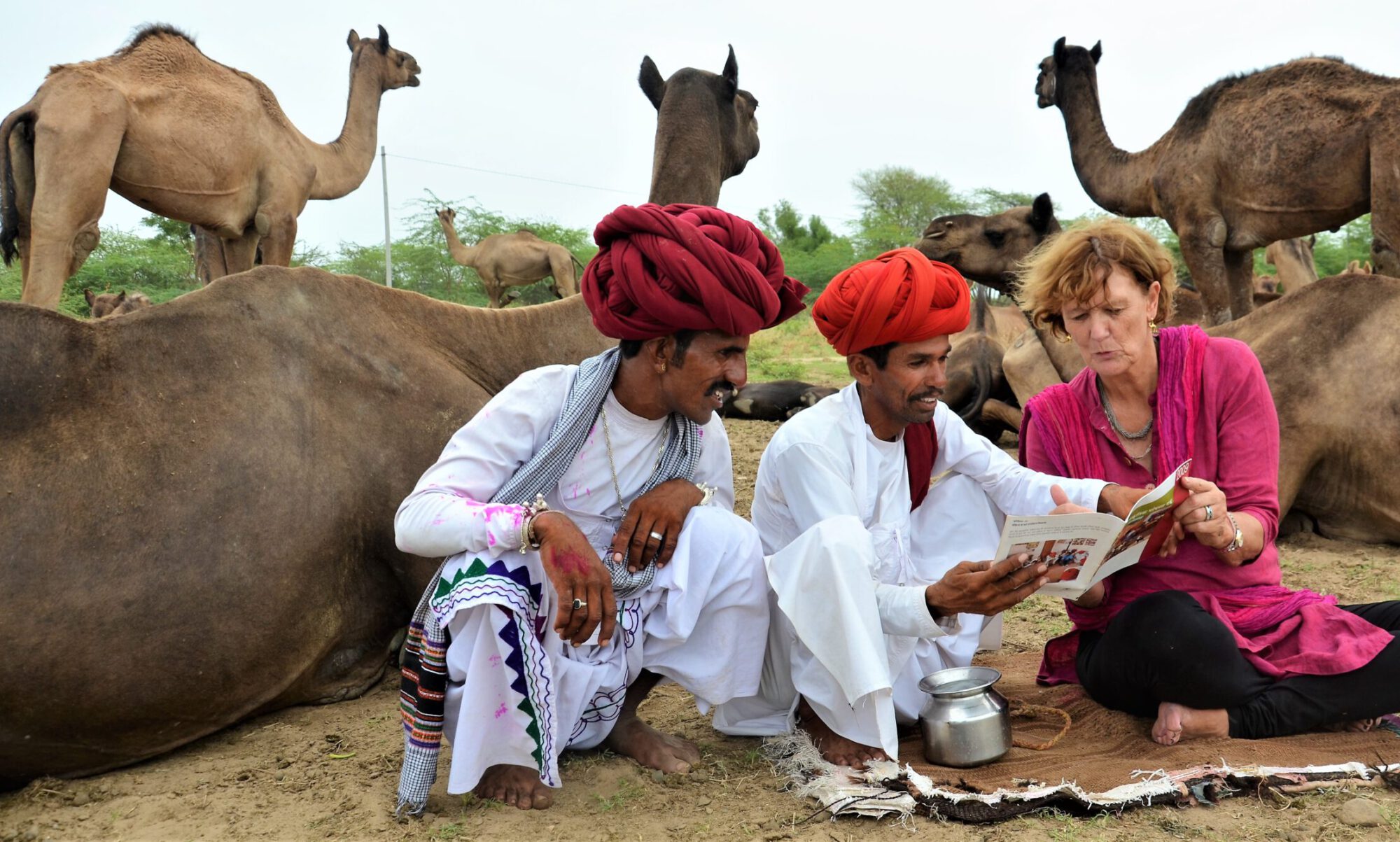
Yet its still possible to buck the trend and make a decent living from keeping a small number of animals which do not even need to be “highly productive” in the conventional sense, and even enjoy doing so!  The secret is to make cheese. This is the lesson learnt during a recent whirlwind tour to artisanal cheese makers in three European countries originally inspired by the desire to test whether cheese making would be an option for processing camel milk in Rajasthan.

Our first stop was Robert Paget in Lower Austria who produces camembert and mozzarella from about 30 goats and a dozen buffaloes. Robert started out more than 30 years ago with a single goat and believes in growing in quality rather than in quantity. He has a long waiting list of customers – both individuals and gourmet shops – who have to order their cheese quite sometime ahead. Robert covers almost the entire value chain, although he rents the land that produces the fodder for his herds. He has help to milk, but makes and sells the cheese entirely on is own and still finds time to share his knowledge in cheese making courses at home and abroad and supporting the local Slow Food movement.
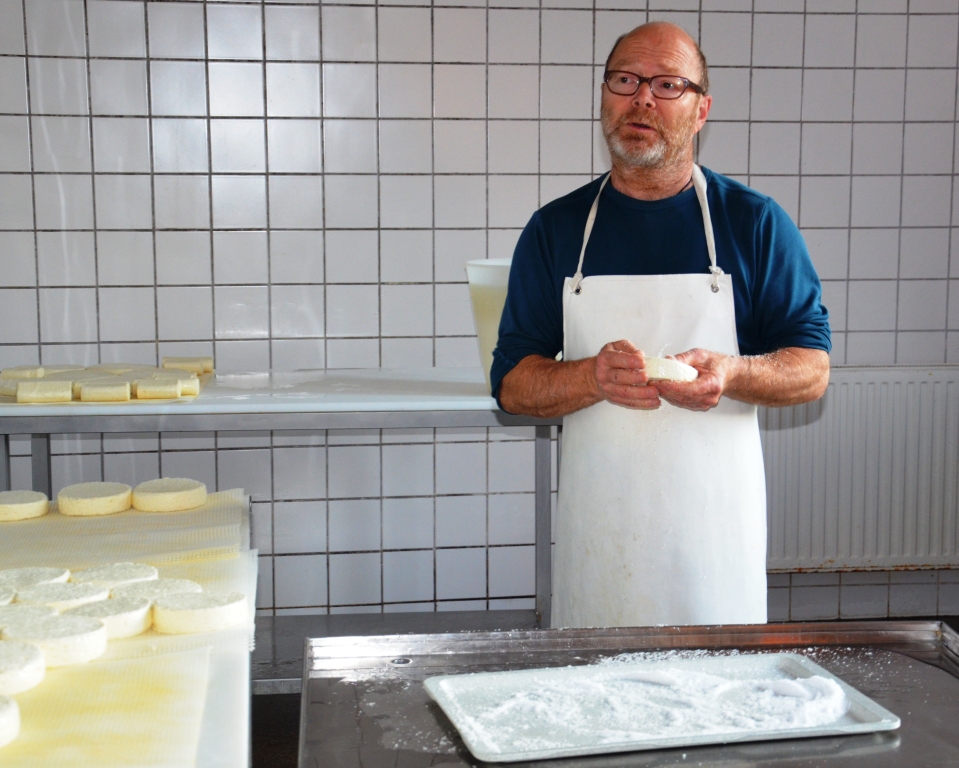
Robert Paget of Bufala-Connection explaining the intricacies of gourmet cheese making

The next stop on our tour was Northern Italy where we had the pleasure to meet Alessandro a very young man in his early twenties who has embarked on a cheese making career. Alessandro is crazy about his goats and he loves what he is doing – the only downer being the inordinate amount of bureaucracy he has to put up with.
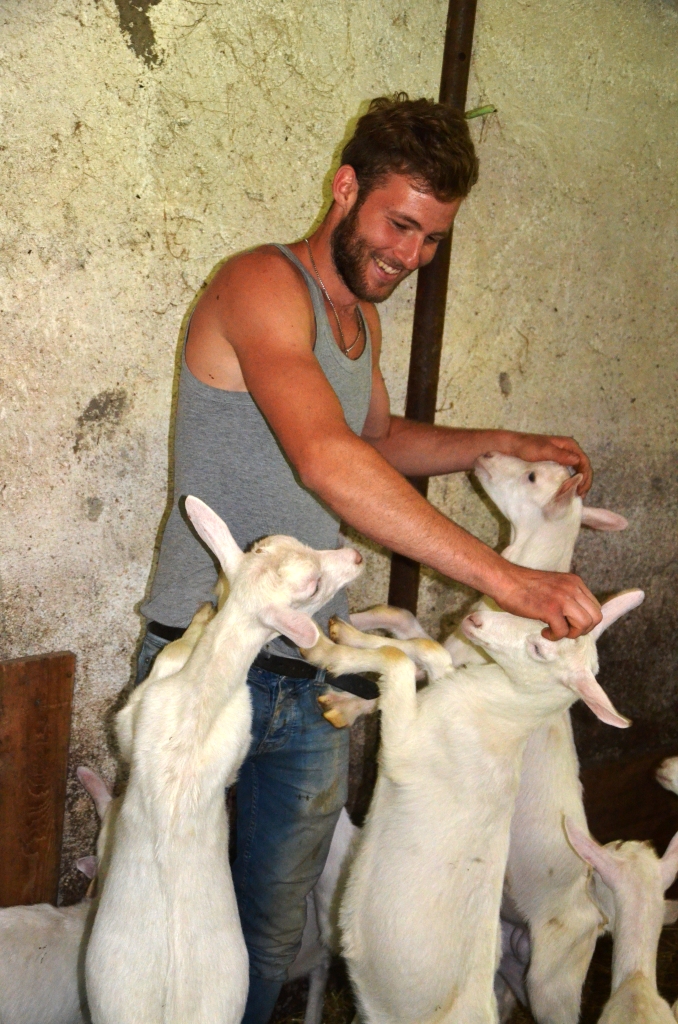
Alex goat hugger
Alessandro Breda in a village near Bergamo (Northern Italy) hugging the goats that are the basis for his cheese making enterprise

Over the span of a few years and with small investment he has built up a faithful clientele for his cheese which he is crafting with the help of his mother in a tiny production unit in his parents’ garden. His enthusiasm – and his lovingly hand crafted cheeses – are absolutely enthralling.

Another interesting experience was waiting for us in the Alsace region of France at the Pensées Sauvages farm of the Baumann family in Linthal. “Pensées sauvages” has the double meaning of wild pansies and wild thoughts which I found very appropriate, as the Baumanns keeps about 30 cows of the Vosges breed which have average milk yields of just above 3000 l. In the European context where dairy farmers usually need well over a hundred high performance cows to make a living, such figures indeed seem to be a wild idea. But here two generations lived well from this enterprise that creates premium organic Munster cheese, a local specialty that is protected by an Appelation d’Origine Controlée (AOC), a French type of Geographical Indication and can be made only from milk produced in the high meadows of the Vosges.
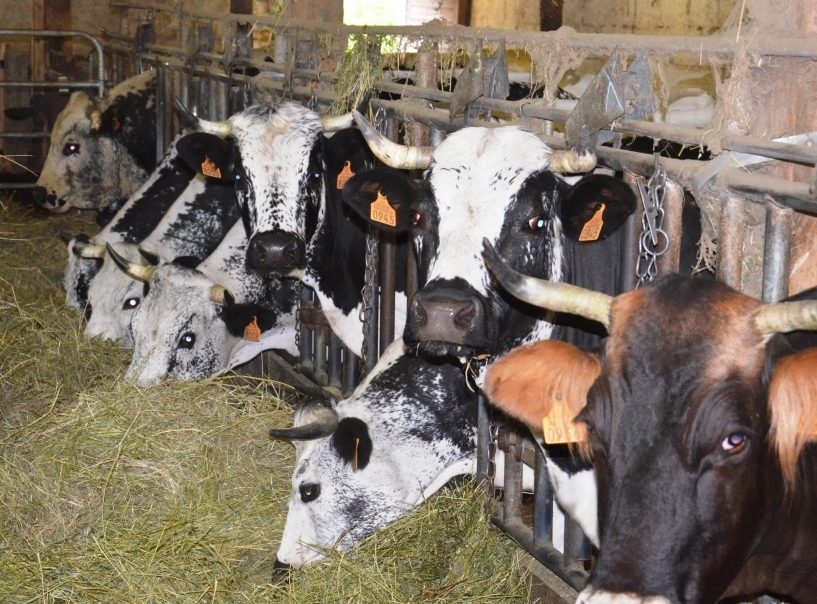
 

The Vosges cattle, a once highly threatened local breed, that produces the milk for Munster cheese

Here too there were two generations absolutely loving what they were doing and producing high quality food with happy animals – in a way that seemed against the odds.
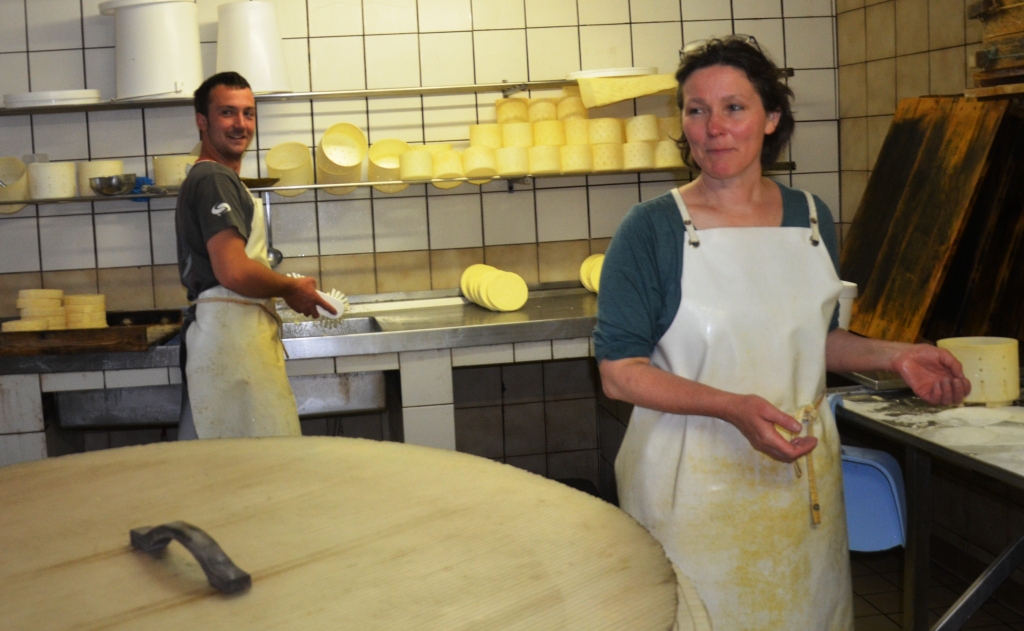
Tow generations of the Baumann family enjoy making specialty Munster cheese
Two generations of the Baumann family enjoy making specialty Munster cheese

Some observations:

All three cheese makers were first generation farmers coming from a non-farming background.

All of them seemed to be doing well – their secret being to have built up their own value chains and being in control over it  – starting with the feed or access to grazing land to the  sale of the premium products.

There did not seem to be a downside – except of course hard work every day of the year. But everybody benefitted: landscape, animals, farmers, quality of food and consumers.

More support – and less bureaucracy – for such kind of enterprises would go a long way towards making the livestock sector more sustainable. In Europe it would enable more people to come back from the cities and revitalize the rural areas. In developing countries  this could be a model for generating rural income opportunities and curbing high unemployment rates.

We are convinced of the potential of cheese making – the only question is whether it will work with camel milk in Rajasthan!


So what’s the future role of small-scale livestock-keepers in food production?

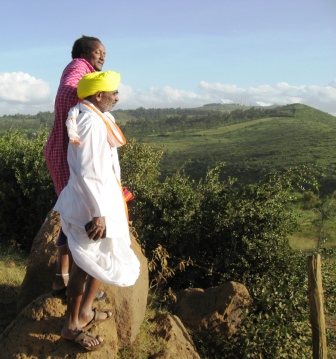
Mama and Adam looking into the future
Pastoralist leaders Neelkanth “Mama” Kurbar  from LIFE Network India and Adam Ole Mwarabu from the LIFE Network in Tanzania look down into the Rift Valley at the side-lines of the Third Multi-stakeholder Platform of the GAA (Global Agenda of Action towards sustainable livestock sector development) recently held in Nairobi.

The future of livestock keeping will have to revolve around finding a balance between economy and ecology. Economically it might make sense to crowd huge numbers of animals in small spaces and automate their feeding and management but this runs counter to all ecological principles: it requires huge amounts of fossil fuels (to grow and transport feed, to climatize stables), it results in accumulations of manure that become difficult or impossible to dispose of (turning dung from a much sought after asset into a liability and threat to the environment), it raises disease pressure (so that routine use of antibiotics becomes essential), and it is problematic from the animal welfare angle. It’s also not good for livelihoods – studies from various countries where the Livestock Revolution has taken hold testify that it results in depopulated rural areas.

Ecologically, decentralised models of livestock keeping as epitomized by pastoralists are much more preferable. They are based on the optimal utilization of locally available biomass and independent of fossil fuels, manure recycling is integrated into the system, disease pressure is small, and animal welfare is almost solved optimally. So why not support these, if we are concerned about the sustainability of the livestock sector?
“But young people don’t want to do this work and prefer to live in the cities” is the argument that is always raised when one suggests that small-scale livestock keeping may be an answer to the sustainability question. There is certainly some truth in it. Many young people are attracted by the urban life, and – by all means – they should be given a chance to go for it. But there are also many youths who find a life taking care of animals preferable to slogging away at menial jobs and a life in slums. So why not encourage these young people, by giving them respect and support, instead of branding them as backward? By directing subsidies towards these ecological livestock production systems instead of the industrialised ones? By building another livestock development paradigm that takes into account the ecological externalities, instead of always comparing the milk yields of the Indian cow with the Israeli cow and automatically concluding that the second one is so much superior?

According to a remarkable presentation by ILRI’s director Jimmy Smith during the third Multi-stakeholder platform meeting of the Global Agenda of Action towards sustainable livestock sector development (GAA), 80% of livestock derived food is still contributed by small producers. If we focus on raising the performance of these systems – for instance through adequate animal health care – and providing incentives for the young generation, then we can solve the livestock sector sustainability question. And we will help address another burning issue – the high unemployment rates that bedevil not only developing countries, but also Europe and the USA – as well.

Sustainability of the livestock sector

The FAO is worried about the global sustainability of the livestock sector – which it should be. It is preparing to launch a “Global Agenda of Action in support of responsible livestock sector development. The focus appears to be on “resource efficiency” and environmental aspects. However such an approach would neglect equally important angles of livestock, such as social implications and livelihood issues, as well as the animal welfare perspective. We urgently need a holistic approach that scrutinizes the direction that livestock development has taken in the last few decades. The effects of the Livestock Revolution in the countries where it has hit the hardest, such as China and Brasil, are now becoming apparent – they include loss of  rural livelihoods and outmigration to the cities.

In order to make the livestock sector sustainable, we need a radical rethink and thrive for decentralisation instead of further concentration and ever bigger livestock holdings. We need Livestock Keepers’ Rights instead of a further expansion of the Livestock Revolution. I have expanded a bit on that in a recent article published in Ecology and Farming.

Five reasons against farm animal cloning

Selling food from cloned animals without special labelling has been confirmed as legal by the European Commission, while at about the same time representatives from USA, New-Zealand, Brazil, Argentina, Paraguay issued the Buenos Aires Declaration on Livestock Cloning, under the guise that such new technologies would be essential for food security. I beg to differ for the following reasons:

  • It is undemocratic: While 58% of European consumers are against it, in the USA its a whopping 67% that oppose eating meat from cloned animals or their descendants.
  • It is causing immense animal suffering: According to the European Food Safety Agency (EFSA), “health and welfare of a significant proportion of clones have been severaly affected, often severely and with a fatal outcome.” Only a small percentage of the embryos actually survive and the remainder develops in odd ways.
  • It is eroding genetic diversity: pretty soon the supermarkets will only want products from exactly the same animals – so they can fit better into the standardized trays.
  • It undermines food security: We dont need more soy-bean and corn guzzling super animals – that basically compete with humans for food/feed. Instead we need robust, vital and self-contained animals that can fend for themselves and live off the vegetation of the drylands and mountainous areas of the world – that would otherwise go unutilized. Only pastoralists keep these types of animals, and they dont lend themselves to cloning,  since much of their behaviour is learned and not genetically inherited, as my friend Saverio Krätli has convincingly shown.
  • It is a waste of resources – that benefits only the scientists and companies that have invested not only in the technology but also substanial amounts in lobbying lawmakers.