Desert delicacies

desert plenty
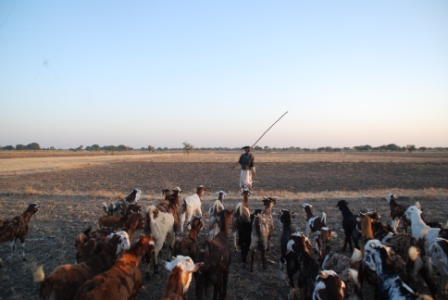
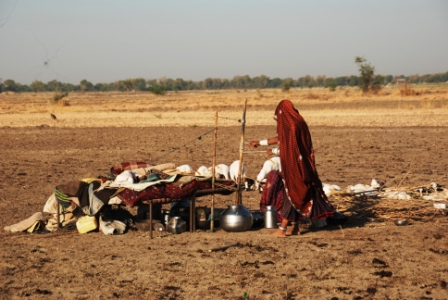
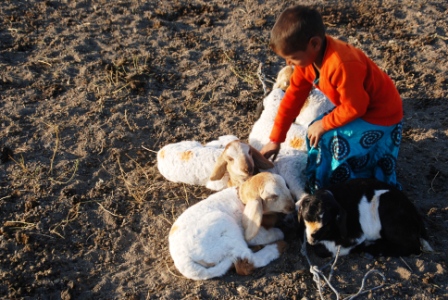
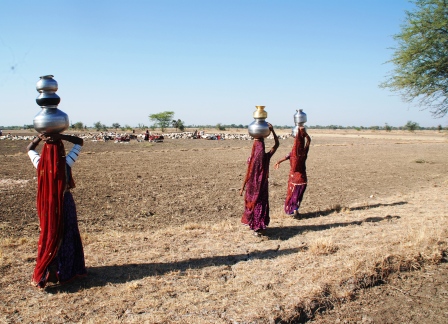
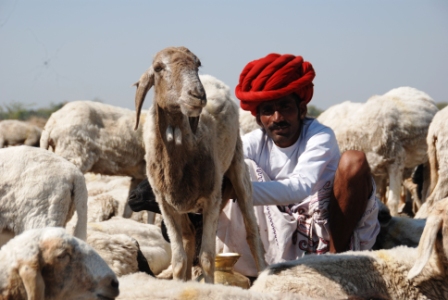
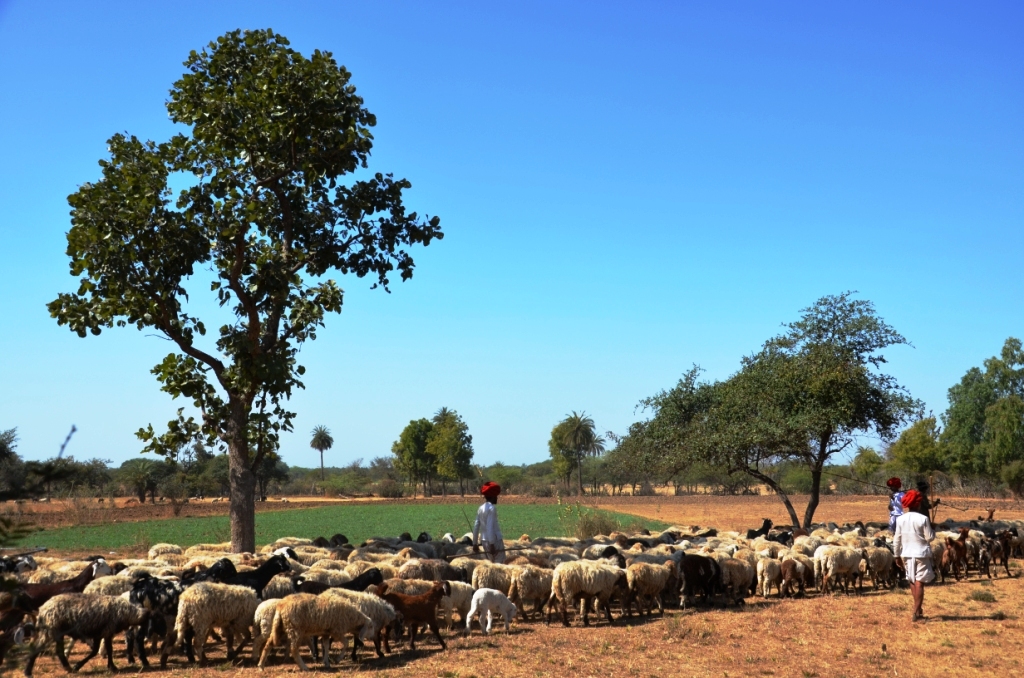
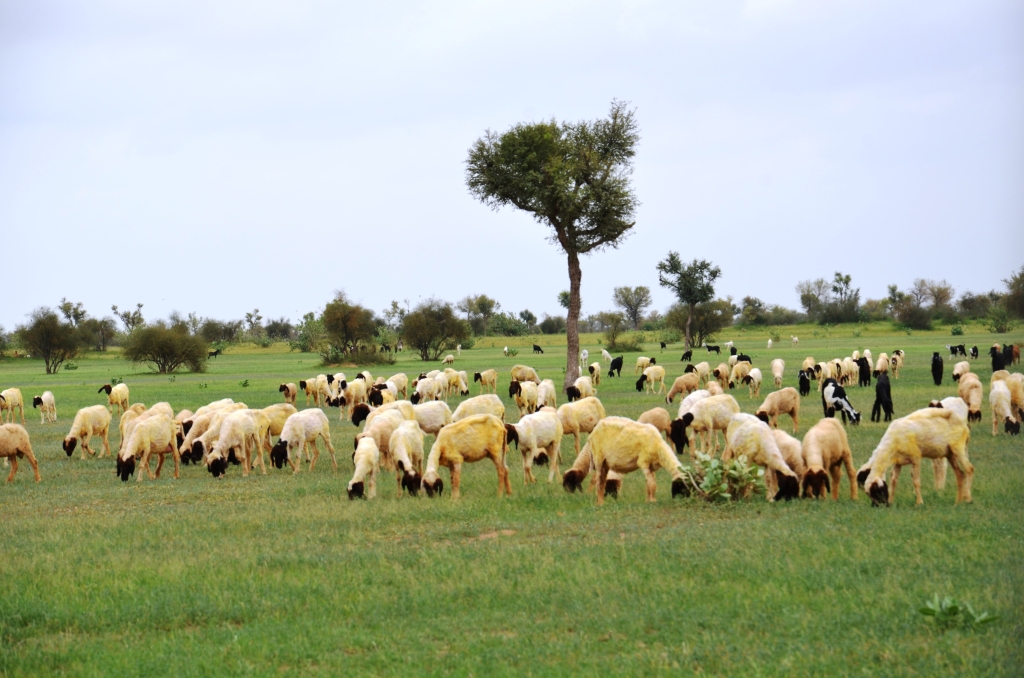
The Thar Desert in the rainy season (12th August, 2013): sheep grazing on nutritious bekar grass. The lambs will be exported to the MIddle East, as Northern Indians tend to be averse to mutton. They prefer goat meat.

Deserts are usually cast as bad or inhospitable, something to combat, as the United Nations Convention on Combating Desertification (UNCCD) tries to do. People living in deserts are thought to be poor and in need of help from outside. But I think that paradigm is in urgent need of revision. Deserts may experience seasonal material scarcity, but they are also very rich, and not only spritually. Desert dwellers are immensely resourceful and their hospitality is impeccable. They also feed the world’s cities with dairy products and meat. In our Ark of Biodiversity project we have started to accumulate evidence that the nutritional quality of these products is much much better than those produced in industrial systems.

Hanwant Singh, the director of Lokhit Pashu-Palak Sansthan (LPPS), an NGO working with and supporting Rajasthan’s pastoralist communities, and I are currently experiencing this in Rajasthan’s Thar Desert where we are trying to tie up some of the loose ends of the Jaisalmer Camel Breeders’ Biocultural Protocol. We got way-laid because of heavy rains and stopped overnight at the place of a good friend who also happens to be the president of the Jaislamer Camel Breeder’ Association. We slept outside on cots under the pipal tree. In the morning we were awakened by the clatter of milking pails –  the seven or so cows of the family that had assembled right next to us were being milked by our host’s wife and son. It was a gentle scene – the cows letting themselves be hand milked without any restraint, although the calves were present to induce the milk flow. After several buckets had been filled, the cows went for grazing on their own. Only one very old cow, said to be more than 20 years old, stayed behind.
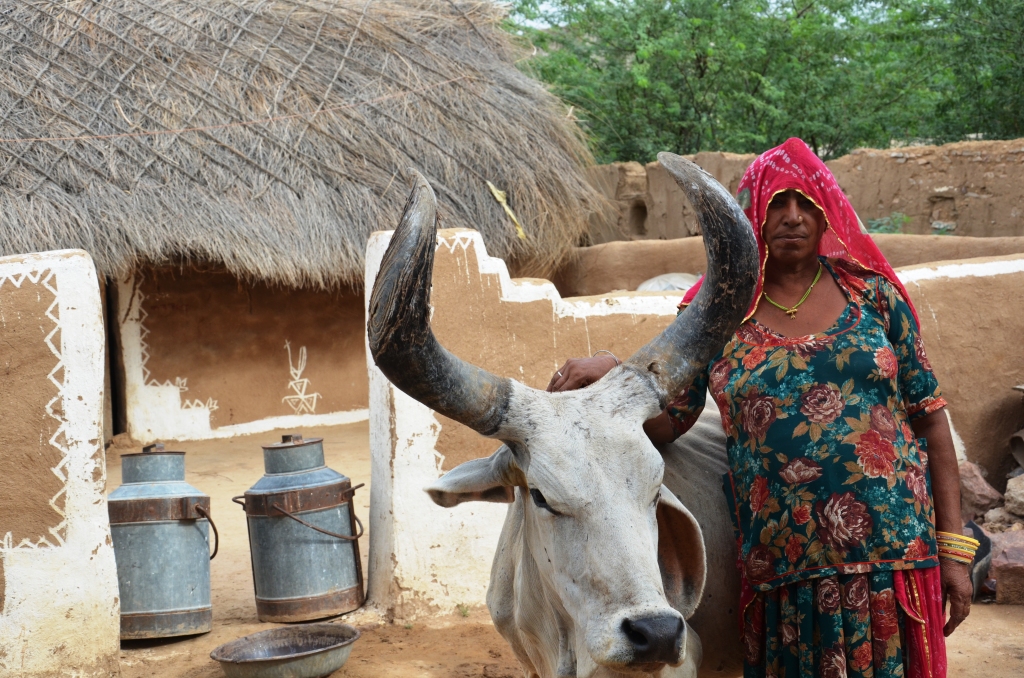
Cow in Sanawra
A very old cow that had recently calved.

This must be one of the most humane and mutually beneficial livestock systems that exists. The cows are habituated to harvest the local desert grasses on their own and willingly share their milk with their keepers. They require hardly any inputs, except a friendly pat and some encouraging words now and then. This production systems runs without medicines, fertilizers, and fossil fuels – not even a shed is required for this system.

Cattle has actually aways been the backbone of human subsistence in this desert, kept by members of all casts and communities. Sheep and goat were rare earlier, as most people were vegetarians. And camel ownership was restricted to the Maharajah and a few wealthy landlords. So cows provided food, manure and draught power.

Our friend, who is in his late fifties, told us in some detail how scarce water had been during his childhood and that guests had not been offered water, but buttermilk, because the latter was more abundant and easier to obtain. He also described how people had lived mostly of buttermilk and ghee and fruits from desert trees. Even bajra – pearl millet – was a rarity.

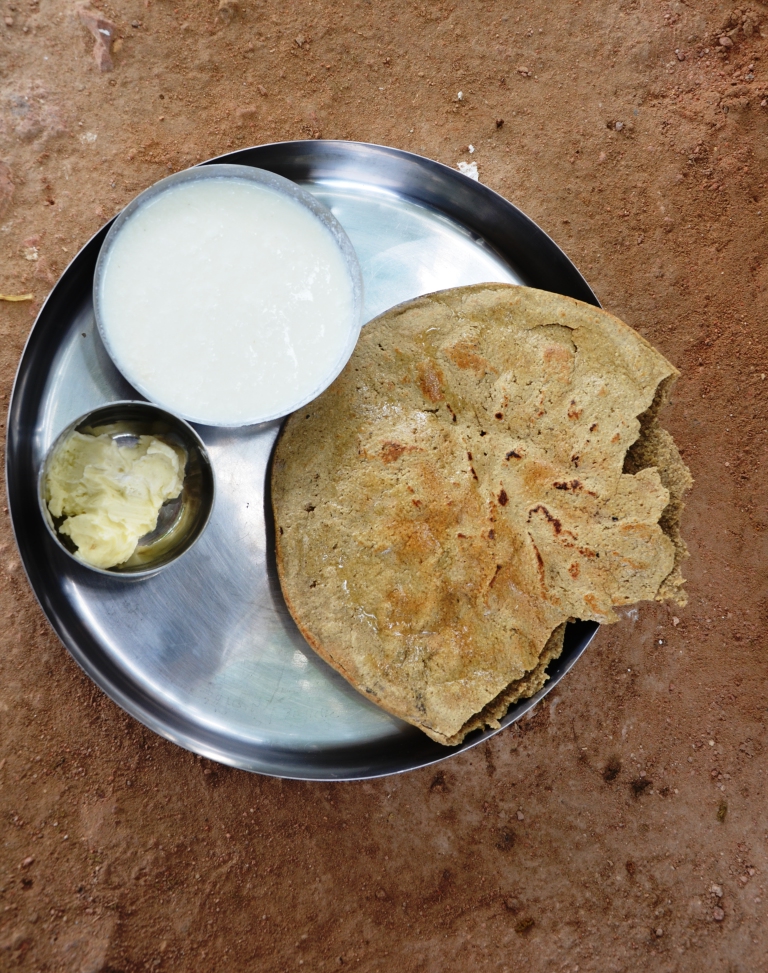
This traditional food – all natural, home made, and organic – is delicious, as well as healthy. Below is a picture of my breakfast – which kept me going throughout the day.
desert delicacies
Our breakfast and typical delicious and healthy desert meal: freshly churned butter, curd that has soured overnight, and a “sogra” (flat bread made from pearl millet).

Are livestock keepers part of the private sector?

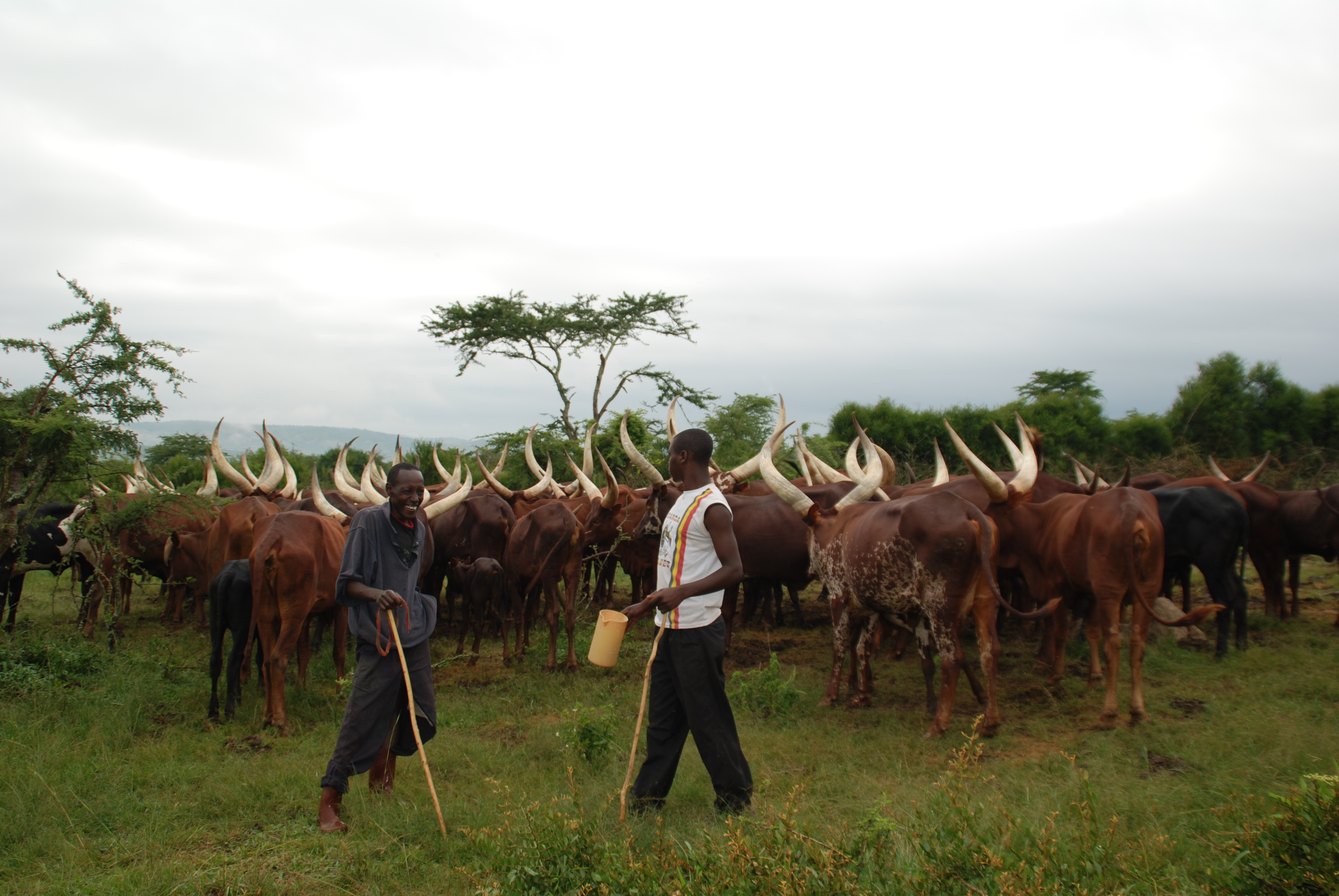
Milking Ankole cattle
Should these Ankole longhorn cattle breeders from Uganda be classified as “private sector”?

This is a question that we will have to give some thought if we want to arrive at fair and equitable livestock development. Most people that are involved in international policy processes seem to think small-scale livestock keepers are “private sector” – this appeared to be the consensus of the participants of the recent 14th IADG (Inter-Agency Donor Group) meeting held in Berlin from 22-24th May. The same stand is taken by the GAA (Global Agenda of Action towards sustainable livestock sector development) which does not regard livestock keepers as a separate stakeholder group and subsumes them under “private sector”.

And, of course, on one level, small-scale livestock keepers, such as the milk producers from Uganda pictured above, are “private sector”: producing meat and milk for their own benefit and profit, they are definitely small-scale rural entrepreneurs.

However livestock keepers themselves see this differently. My friend Elizabeth Katushabe, also an Ankole cattle breeder from Uganda, emphasizes that in her parlance, “private sector” is equivalent to “industrialists”.

And this is exactly the issue here. If we subsume pastoralists and other small-scale livestock keepers under “private sector”, they are lumped into the same group as the industrial livestock sector, represented by such actors as the International Feed Industry Federation, the International Egg Commission,  the International Meat Secretariat, etc. 

I think it is fair to say that there are few if any commonalities between these two types of actors and that their interests may even be at cross-purposes. The vast majority of  livestock keepers just want to make a decent living and be able to give their children some education. They try to achieve this by minimizing  their expenditure on inputs, by making social arrangements for access to pastures and by sharing resources and labour with their neighbours and relatives. The industries however thrive on high input systems, pursue economies of scale, engage in cut throat competition, and, in the final analysis, only care about the bottom line.

Well, according to Charles Darwin, there are lumpers and splitters, when it comes to classifications and taxonomy. I think I am definitely a splitter in this case, as I can not see the similarities between small-scale livestock keepers that are often still mired in a moral economy and struggle for their livelihoods on one side and globally operating multinational companies on the other.

The two groups are too distinct in their needs, their resources, their priorities and especially their worldview and agency to be lumped together. For fairness and justice, they must be represented as distinct stakeholder groups in the context of sustainable livestock development and the processes that hopefully lead us there.

Land and Respect

Salimbhai et al
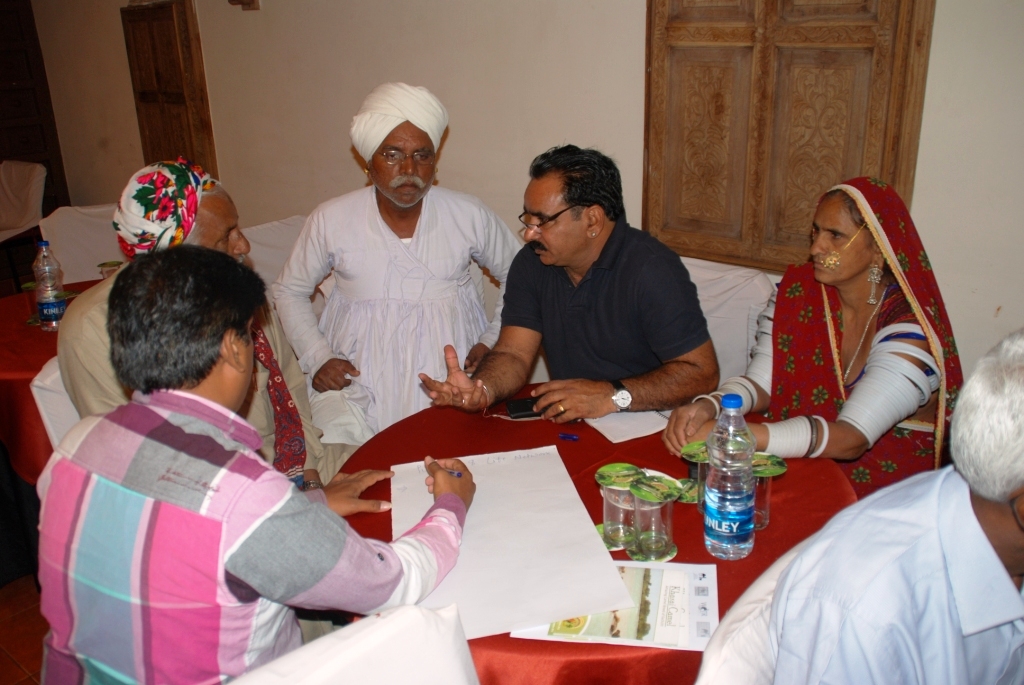
Nathani from the NGO Saahjeevan, Salimbhai of the Banni buffalo breeders, Bikhabhai of the Rebari camel breeders, Hanwant Singh of LPPS and Dailibai Raika, community leader from Rajasthan, discuss the future of livestock keeping at a recent Seminar on “Green and equitable livestock development in India”. Will their holistic traditional knowledge about the balance between people, livestock and land be respected and taken serious by policy makers?

“Physically we are fine, but our minds are uneasy and disturbed” explains Salimbhai, a Banni buffalo breeder from Gujarat (India) and goes on “we don’t know what the future of our animals will be when we our grazing areas are taken away. It is all a question of access to land whether our animals and we will survive.” He is referring to his community’s ancient resource base, the Banni that is known as Asia’s second largest grassland. It has turned into a hotly contested area which the Forest department is fencing in and subdividing for the purpose of “conservation”. Bhikabhai Rebari, a camel breeding colleague from the same area gently shakes his head “Yes, it’s a big problem – I don’t know how we can continue keeping livestock under these circumstances.”

“The forest needs us to thrive” emphasizes Dailibai Raika from Rajasthan, a seasoned campaigner for Livestock Keepers’ Rights who has travelled the world to speak up on behalf of her community. “Our sheep are essential to keep the grass short, preventing forest fires. By eating fallen leaves, they keep the termites in the forest under control. Our livestock helps the forest to recover as tree seeds that have passed through their stomachs germinate much easier and faster. And our community has protected the forest from poachers and loggers – our mere presence keeps them at bay.” Dailibai lives at the edge of the Kumbhalgarh Sanctuary which is slotted to become a National Park, a development that instills fear into the hearts of the local livestock keepers.

“We need to ensure a balance between land used for crops and land available to livestock. In Maharashtra so much land has been taken over by sugar cane cultivation, there is no more place for livestock. And once livestock is gone, farmers become prone to suicides” pleads Nilkanth Kuruba whose community breeds the famous black Deccani sheep.

At a seminar that the LIFE Network organised on 13th April in Hyderabad (India) the representatives of India’s pastoralist communities expressed both deep worries as well as profound wisdom. With their immense experience, they can provide valuable guidance on how to get livestock development onto a sustainable path – an issue that international agencies are increasingly concerned about. But for that their knowledge needs to be respected and their voices to be heard. This is also the task that the LIFE Network India that was constituted on the next day has set itself. As a collaborative effort between NGOs working on livestock and local breeds, herders’ associations and a small group of supporting scientists, this is an immensely important goal. The proceedings of the meeting will be shared here shortly.

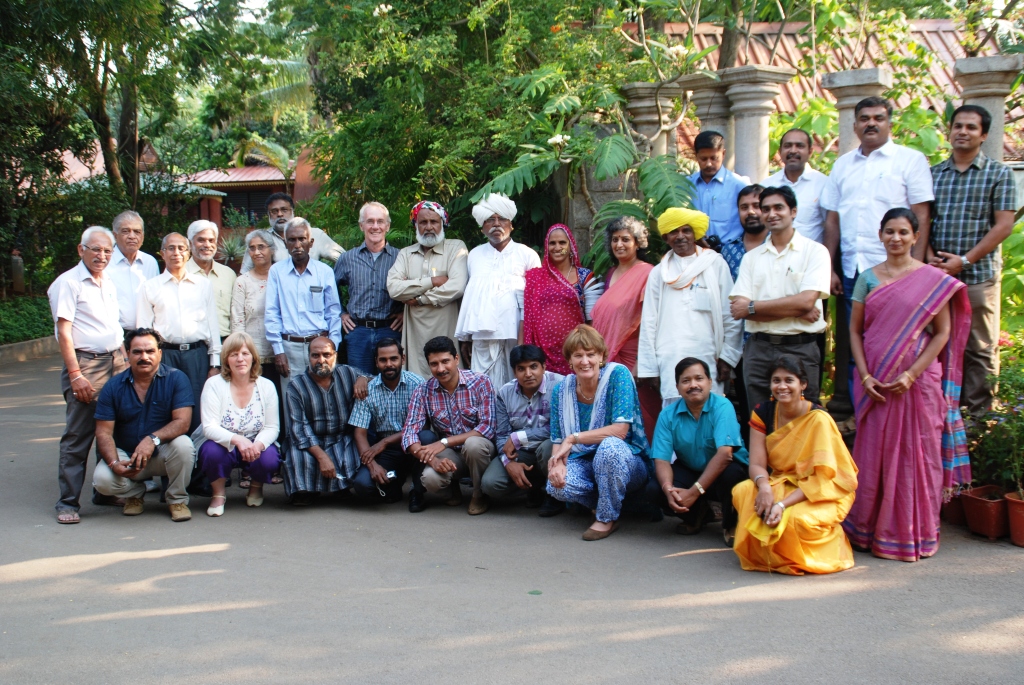
LIFE Seminar group photo
Participants of the LIFE Network Seminar – representing NGOs, livestock keepers and concerned scientists.

What kind of research helps small-scale livestock keepers?

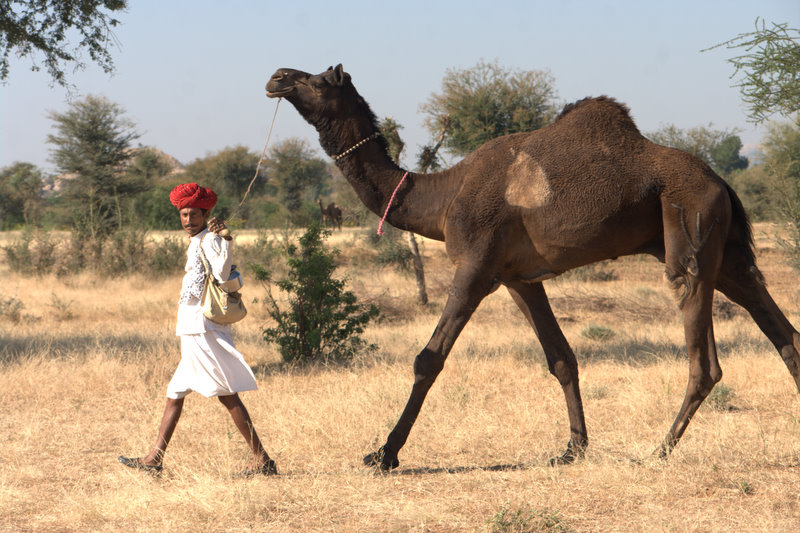
_IGP2719
Camels have tremendous potential for improving food and nutritional security, especially in times of climate change. But how can this potential be leveraged? Most camel research has been conducted from the perspective of the rich Gulf countries, but there has hardly been a stab at helping poor livestock keepers in countries such as India, Pakistan, Afghanistan and Iran getting their products to the market and investigating the necessary technologies. Research into small cooling units for camel milk in the field would be sorely needed.

“Better lives through livestock” is the motto of ILRI, the International Livestock Rsearch Institute which recently brought out its second 10 Year Strategy for the period from 2013-2022. This new strategy is much superior to the previous one, as it encompasses a wider range of goals, including food and nutritional security and acknowledges that livestock can also have negative consequences. However, an important angle is missing and that is the question of how this is going to be achieved. What kind of research is necessary to actually addresses this issue?

Lets face it, livestock research in general is rarely conducted from the perspective of supporting small-scale livestock keepers and ecologically sustainable decentralised ways of keeping farm animals. Most of it has been oriented towards increasing quantities of product – more milk, faster meat – in the belief that this would automatically raise poor livestock keepers’ income. Well, this may true in some cases, but in many instances it is not, because the “genetically improved” animals that go along with this approach usually do not perform in the setting in which poor livestock keepers operate. They require inputs in terms of feed and medicine which need to be purchased and which often are not available or draw the farmer into a debt trap, as is indicated in the research study by my colleague Evelyn Mathias entitled “Livestock out of balance. From asset to liability in the course of
the Livestock Revolution“.

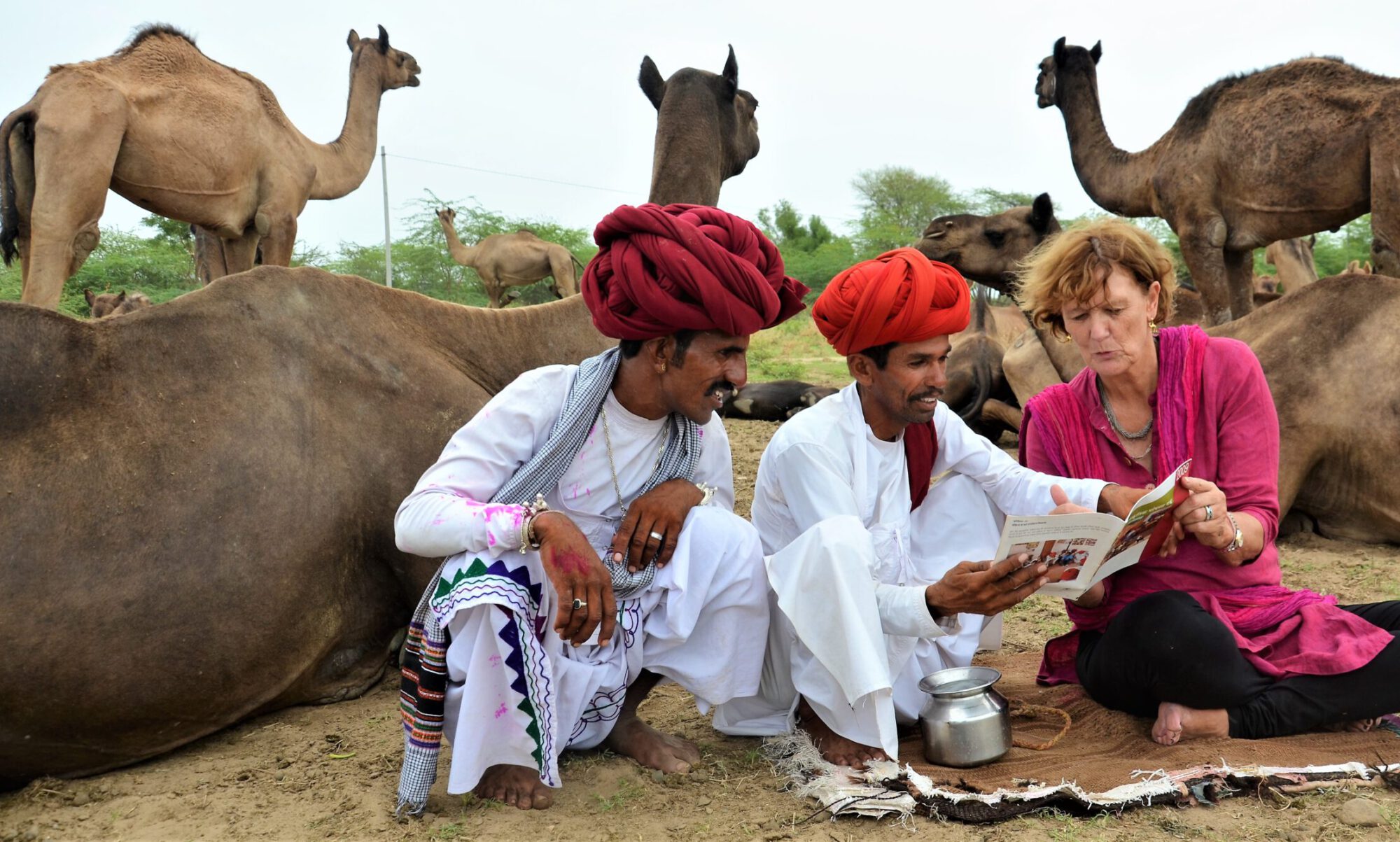
In my experience, research should take its cues from the problems as they are experienced by livestock keepers themselves. And these are almost always the same: insecure access rights to land and lack of veterinary services. I have never heard a livestock keeper complain that his or her animals are not productive enough. But I have seen how excited they get when they realise the marketing potential of their animals, as the camel breeders in Rajasthan when they experienced new camel products such as camel ice cream, fashionable camel wool products or even camel dung paper.

IMG_0479
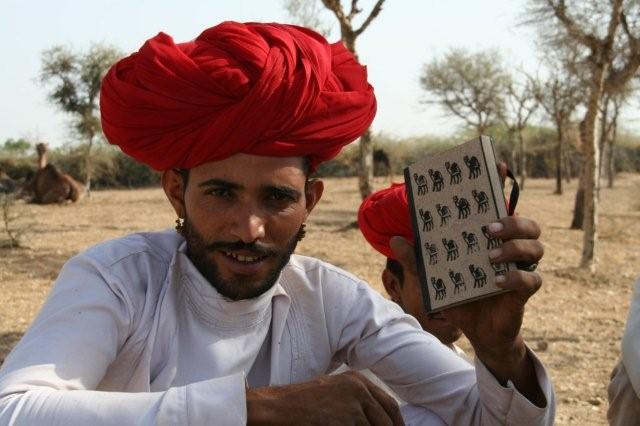
Raika camel herder with a notebook crafted out of paper made from camel poo. Probably not the most relevant product for solving the world’s problems, but illustrative of the range of products that is possible.

But sorry, because of my enthusiasm for the camel, I am getting diverted from the mainpoint that I am trying to make: In order to identify research that really helps poor livestock keepers, a dialogue has to be initiated with them to identify their real needs and priorities. For too long, livestock research has been conducted top-down for scientific merit only and based on the wrong assumptions, equating higher output with better income. What we now need is a platform and a process that enables this kind of participatory and bottom-up approach – an approach that reflects consideration of one of the Livestock Keepers’ Rights – “Livestock Keepers shall have the right to participate in the identification of research needs and research design with respect to their genetic resources, as is mandated by the principle of Prior Informed Consent.”

It would really be great if ILRI (and of course all other research institutes working on livestock) looked into establishing such a platform for the interaction between scientists and livestock keepers that will undoubtedy make research more meaningful, targeted and likely to reach its vision of a world where all people have access to enough food and livelihood options to fulfil their potential. We at LPP and the LIFE Network are certainly ready for this!

Towards green and equitable livestock development in India

Nilkanth Mama
What do livestock keepers have to say about the future of livestock keeping? At an upcoming seminar in Hyderabad, Nilkanth Mama, leader of thousands of Kuruba shepherds will report about his experiences at the Third Multi-stakeholder Platform towards sustainable livestock sector development that was held in Nairobi in January.

LPP and its partners will organise a Seminar entitled “Towards green and equitable livestock development” in Hyderabad on 13th April. The programme will also include presentations of the exciting results of the Ark-project which indicate that one of the main benefits of keeping indigenous breeds is that their products have a higher nutrient content than those of stall-fed animals. And many other interesting presentations, as well as space for discussion!

Eco-livestock keepers – living the good life

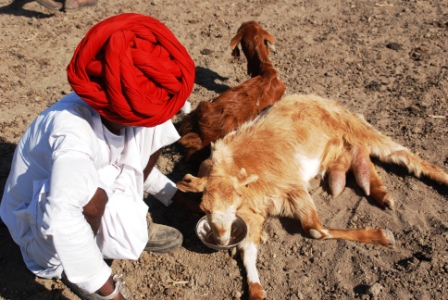
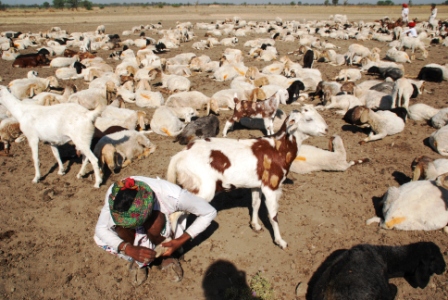
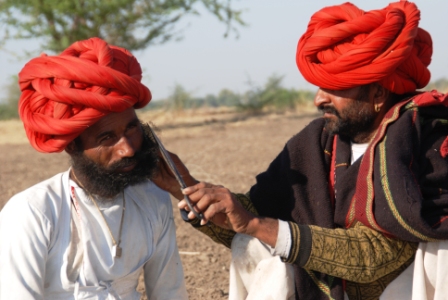
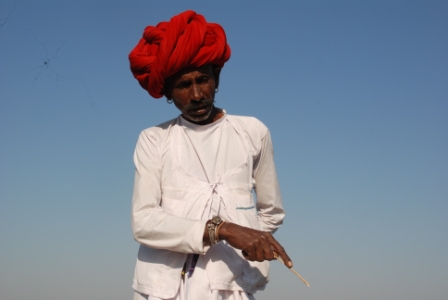
A picture says more than a thousand words……as I have been raving so much about the benefits (and beauty) of livestock keeping as practiced by Rajasthan’s Raika pastoralists, I’ll just share some images from our last visit to our dang, the group of mobile shepherds that we are following in regular intervals throughout the year.

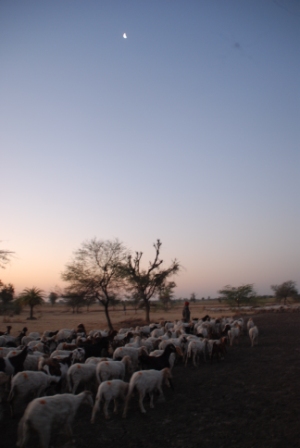
At the crack of dawn, the sheep flocks go on their first round of grazing.
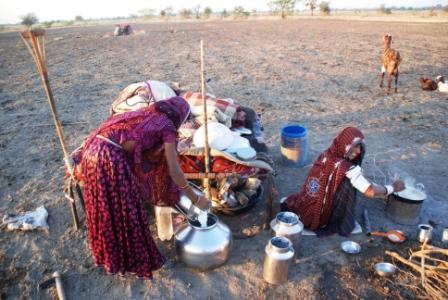
Its early morning and the adult sheep have already gone on their first round of grazing. The women start preparing for breakfast
While they are out, the women start preparing for breakfast.
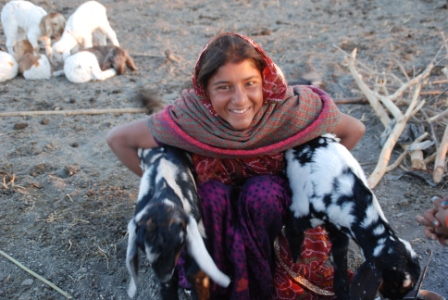
The goats, kept mostly to provide extra milk to lambs, are herded separately.
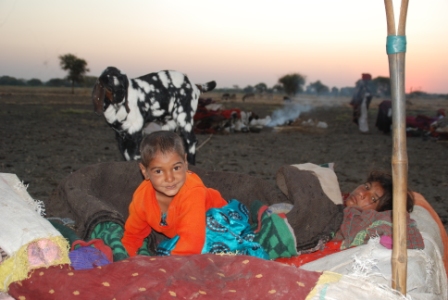
Baddl, 5 years old and currently the youngest member of the dang, has just woken up.
Badl, 5 years old and currently the youngest member of the dang, has just woken up.
Preparations for making butter from the sheep milk that was collected at night
Manju pases with her friends.
Manju poses with her friends.
Mobile dairy: churning butter from last night's milk.
Mobile dairy: churning butter from last night’s milk.
Badl says good morning to the other kids on the block.
By the time, water has been fetched from a distant well, the sheep flocks have returned.
By the time water has been fetched from a distant well, the sheep flocks have returned.
Time for more milking.
Some high yielding does get are hand-fed to keep them in the peak of their health and production.
All animals are given a regular check-up to note any possible problems - here hooves are checked for thorns.
All animals are given a regular check-up to note any possible problems – here hooves are checked for thorns.
When the animals are taken care of, there is time for personal care also.
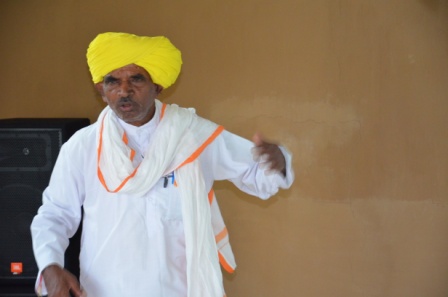
The patel is giving instructions to the group, as he is going to Delhi to receive a national award.

Low carbon livestock

low carbon livestock
A migratory sheepflock of about 4500 head in Southern Rajasthan

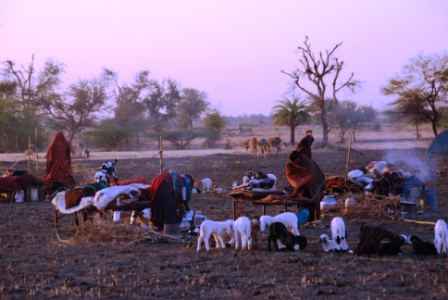
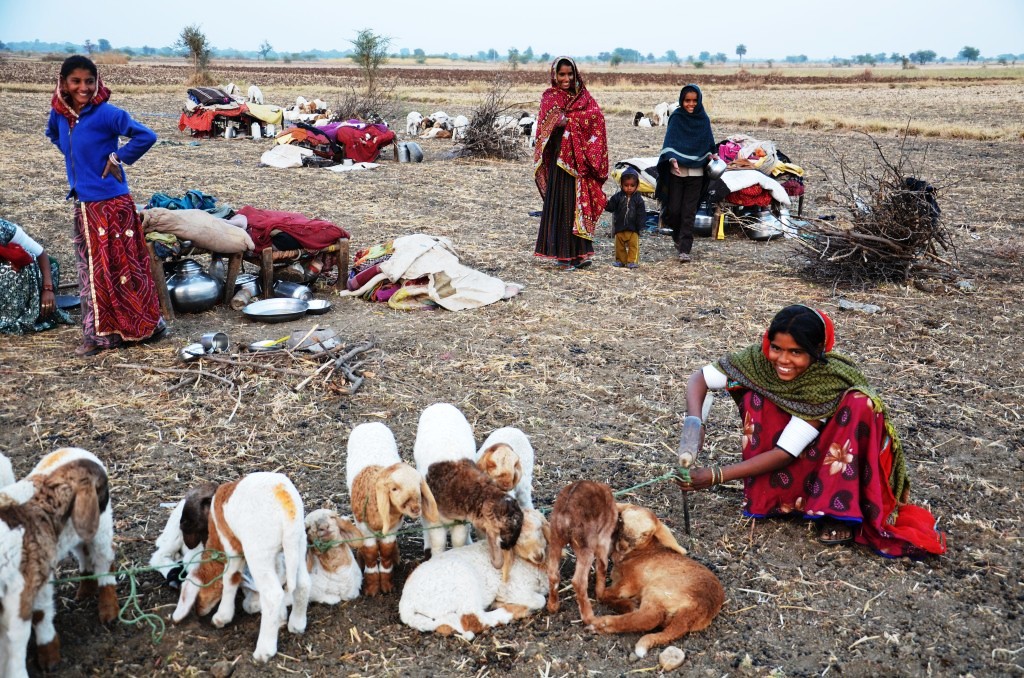
5th February, 2013, along the Udaipur-Chittorgarh highway (in Rajasthan/India), the late afternoon sun bathing everything in mellow light. Dharmabhai, the patel (leader) of his dang (herding group) is directing us to his encampment, tucked in just a few hundred meters away from the highway. There is the familiar sight of seven charpoys laid out in a square on a harvested guar (cluster bean) field. Each charpoy (string bed) signifies a nuclear family and is piled high with bedding and blankets, while cooking equipment and staple foods are stored underneath.

Tying up the lambs in loops

In the shelter of this mobile furniture, the women have set up their temporary hearths, fashioned out of broken buckets or odhis (large metal bowls, used for washing clothes, feeding animals, etc.). Freshly collected firewood is stacked neatly nearby. Rows of goat kids and sheep lambs are tied up with loops around their neck, some of them have escaped and are frolicking around. A few steps away, under the canopy of some Acacia trees, the 13 donkeys of the dang are milling around. Seven camels are hobbled on another flank of the encampment.
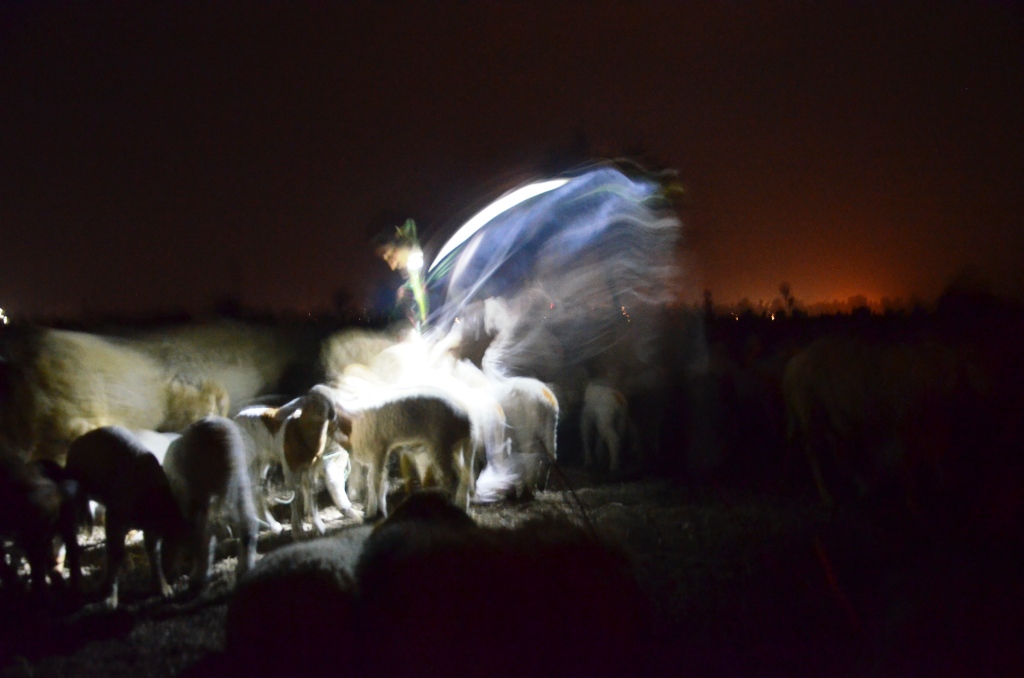
We drink tea, banter, exchange news with the women, children and some elder men. Everything has been well since our last visit about a month ago. No major mishaps, although everybody is nursing a cold, due to the exceptionally chilly weather this year. But the group has entered the territory of the Kanjar community that is known for thieving and other mischievous activities. In fact they were robbed by the Kanjars on this very spot a year ago. So there is a bit of nervousness, but nobody seems to be overly concerned. Around sunset, the goats belonging to the dang return and settle down. But by the time the seven main sheep flocks return, it is already dark. When they approach a choir of bleating sets off, as ewes and lambs are calling out to each other. “Here I am, here I am, where are you?” trying to locate each other. In a crowd of around 4000 sheep it is difficult to find each other, so the shepherds carry around lambs under their arms to match them with their respective mothers. In the shine of their torches, the sheep are reduced to a sea of eyes blinking at us in the dark like headlights.

Matching returning ewes mothers and kids in the shine of torches
Matching returning ewes with their lambs in the shine of torches

After about an hour, the cacophony has ebbed out, as all lambs are united with their mothers and contentedly suckle away. Under a sea of stars, the shepherds assemble around a small fire. We are joined by the owner of the land who has brought tea leaves and sugar. He is still a young man with 100 bighas of land (“lots of land, but no water”) and highly appreciative of the shepherds, noting that the manure of their sheep would result in a bumper harvest of 14 bori (sacks) of guar. When I ask him how he would fertilize if there were no shepherds, he answers that he then would use the manure produced by his own buffaloes. But that would only result in 10-11 bori of guar, because buffalo ate grass while the sheep and goats were consuming shrubs and leaf fodder which rendered their manure much more efficient and long-lasting. And what about chemical fertilizer? He shakes his head in disagreement. “That would be much too expensive. And anyway, it turns the soil sterile and salty (”kharak”) after some time.
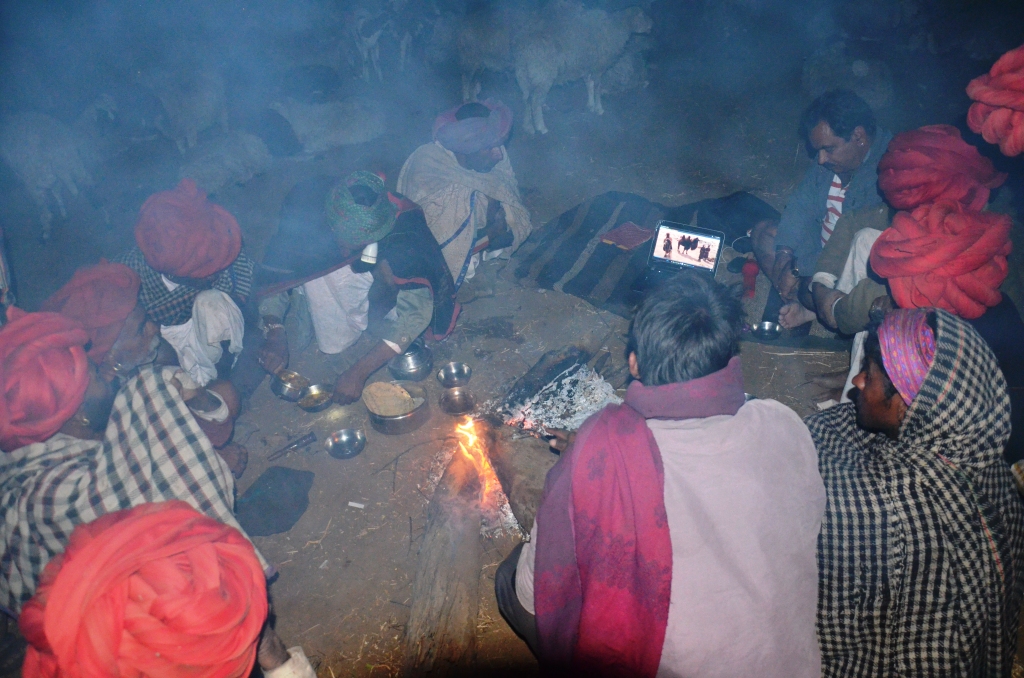
The conversation shifts to other issues. Hanwant shows the shepherds the film “The story of the Weeping Camel” about their pastoralist colleagues in Mongolia. They are fascinated and realize the enormous similarities with the Mongolian herders, despite the cultural and geographic distance.

Watching the "Story of the Weeping Camel" with the shepherds
Watching the “Story of the Weeping Camel” with the shepherds

And I am left to pondering. On our last visit we had been impressed how this dang – representative of many other migratory shepherds in Rajasthan and all over India – was basically producing food out of nothing, and without any carbon expenditure just by managing their sheep and goats to feed on harvested fields and surrounding trees and shrubs. This time, we have understood an additional aspect: the enormous significance of their system in reducing the need for chemical fertilizer. This is not just of benefit for the farmer who saves money, and the consumer, who obtains better tasting, “organic” food, but also to the climate. For fertilizer production is one of the most intensive greenhouse gas emitting activities that we know of.
Now, realising that these shepherds – and tens or hundreds of thousands more of them throughout India – are not only producing food without any fertilizer, but also enabling farmers to save fertilizer, shouldn’t there be a system for them to get carbon credits? And shouldn’t this function of nomadic sheep pastoralism be considered in the discussions about how to make livestock sustainable and lessen its environmental impact? Are any scientists up to calculating the green house gases saved by mobile pastoralists?

So what’s the future role of small-scale livestock-keepers in food production?

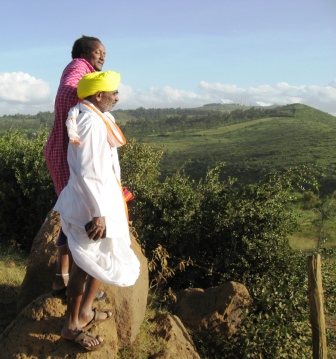
Mama and Adam looking into the future
Pastoralist leaders Neelkanth “Mama” Kurbar  from LIFE Network India and Adam Ole Mwarabu from the LIFE Network in Tanzania look down into the Rift Valley at the side-lines of the Third Multi-stakeholder Platform of the GAA (Global Agenda of Action towards sustainable livestock sector development) recently held in Nairobi.

The future of livestock keeping will have to revolve around finding a balance between economy and ecology. Economically it might make sense to crowd huge numbers of animals in small spaces and automate their feeding and management but this runs counter to all ecological principles: it requires huge amounts of fossil fuels (to grow and transport feed, to climatize stables), it results in accumulations of manure that become difficult or impossible to dispose of (turning dung from a much sought after asset into a liability and threat to the environment), it raises disease pressure (so that routine use of antibiotics becomes essential), and it is problematic from the animal welfare angle. It’s also not good for livelihoods – studies from various countries where the Livestock Revolution has taken hold testify that it results in depopulated rural areas.

Ecologically, decentralised models of livestock keeping as epitomized by pastoralists are much more preferable. They are based on the optimal utilization of locally available biomass and independent of fossil fuels, manure recycling is integrated into the system, disease pressure is small, and animal welfare is almost solved optimally. So why not support these, if we are concerned about the sustainability of the livestock sector?
“But young people don’t want to do this work and prefer to live in the cities” is the argument that is always raised when one suggests that small-scale livestock keeping may be an answer to the sustainability question. There is certainly some truth in it. Many young people are attracted by the urban life, and – by all means – they should be given a chance to go for it. But there are also many youths who find a life taking care of animals preferable to slogging away at menial jobs and a life in slums. So why not encourage these young people, by giving them respect and support, instead of branding them as backward? By directing subsidies towards these ecological livestock production systems instead of the industrialised ones? By building another livestock development paradigm that takes into account the ecological externalities, instead of always comparing the milk yields of the Indian cow with the Israeli cow and automatically concluding that the second one is so much superior?

According to a remarkable presentation by ILRI’s director Jimmy Smith during the third Multi-stakeholder platform meeting of the Global Agenda of Action towards sustainable livestock sector development (GAA), 80% of livestock derived food is still contributed by small producers. If we focus on raising the performance of these systems – for instance through adequate animal health care – and providing incentives for the young generation, then we can solve the livestock sector sustainability question. And we will help address another burning issue – the high unemployment rates that bedevil not only developing countries, but also Europe and the USA – as well.

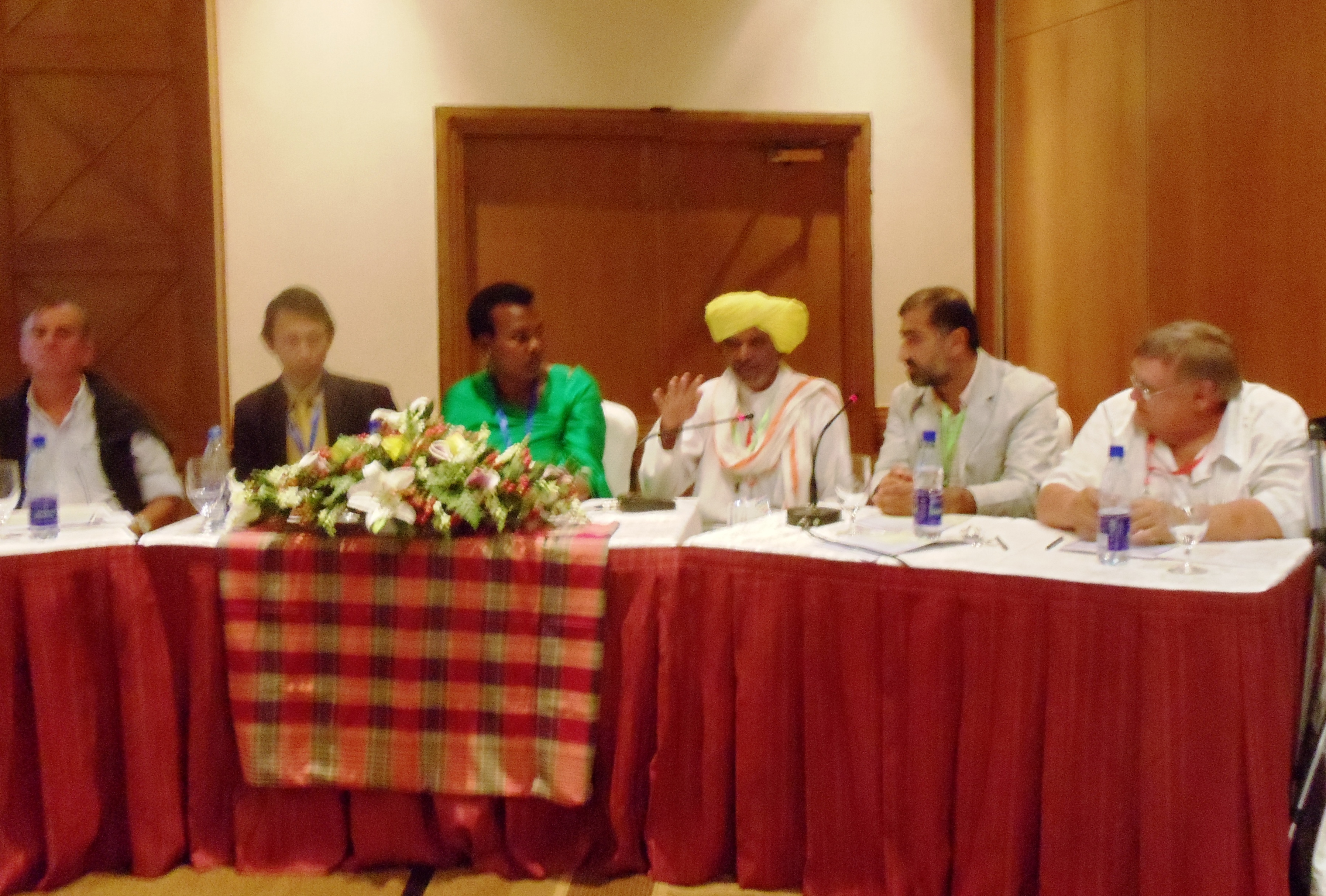
Livestock keepers at the GAA

Livestock keepers at the GAA

LIFE Network’s Elizabeth Katushabe (Ankole long-horn breeder from Uganda), “Mama” Nilkanth (Deccani shepherd from India) and Raziq Kakar (SAVES, Pakistan), share a panel with other participants. (Sorry for the quality of the photo…. more news from the Third Multi-stakeholder Platform on sustainable livestock will follow…)

Pig – the protein pot by and for the poor: Guest blog by Dr. Balaram Sahu

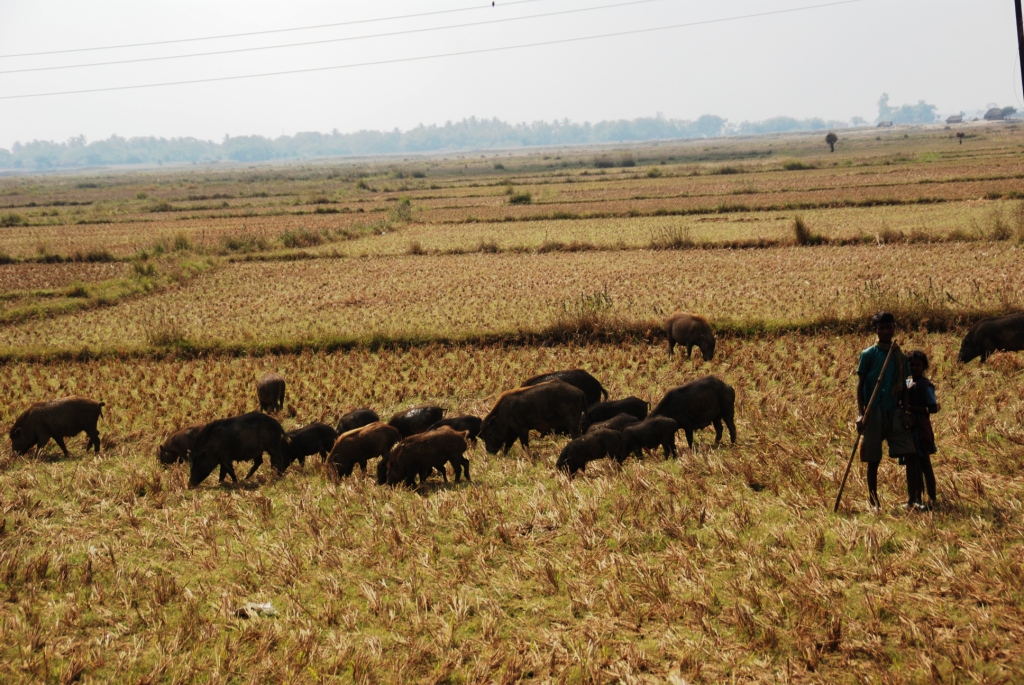
The nomadic pigherds search the harvested paddy fields for left over rice corns and other goodies

To increase diversity, I have asked Dr. Balaram Sahu of the Innovate Orissa Initiative to write a guest blog about the role of Odisha’s pig nomads in food security. Dr. Balaram is a veterinarian, but also an author, poet and film maker. He has made a lovely film about the Chillika buffalo (“Night queen of Chillika”) that forages in the Chillika lake during the night. He has also written a book in his native language about “Ten days in a German village” that describes his experiences in Wembach, my native village in Germany. And he is the founder of the “Pathe Paathshaalaa“, the road side university for livestock keepers. So here is Dr. Balaram Sahu:

It was midday of a cool March, when we were about to reach Rajnagar, a sleepy town in Kendrapara district of my state Odisha, India. Dr Ilse Köhler- Rollefson, the guest and visiting professor of our moving road side university “Pathe Paathshaalaa” requested our driver to slow down the vehicle. On that point of time, I was eagerly waiting to reach the nearest Dangmal Forest Guest House and to have our lunch in the lap of nature. This guest house of Forest Department is situated in the mangrove forests of the world famous Bhitarkanika Crocodile Sanctuary called, near the sea. ”What happened?” was my natural reaction when the vehicle was slowed down to a complete halt. Dr Ilse pointed out a group of nomadic pastoralists grazing their pigs in the mid of a recently harvested paddy field. Her face was brimming with joy and alacrity. A known person of mine was seen in the vicinity, which helped us to go in to the already-harvested paddy field. We met the group of pig pastoralists including some men, women and children, even a lady pastoralist with her small baby in lap. All were on the move, grazing their pigs. Pigs were seen picking up left out grains, regenerated leaves from paddy stumps and roots of local variety of grass, making  peculiar sounds, as if celebrating a much awaited feast. The sight was the reality of pastoralism in rural India, where the humans, animals, souls, spirits and the biodiversity remain in convergence and peaceful situation!

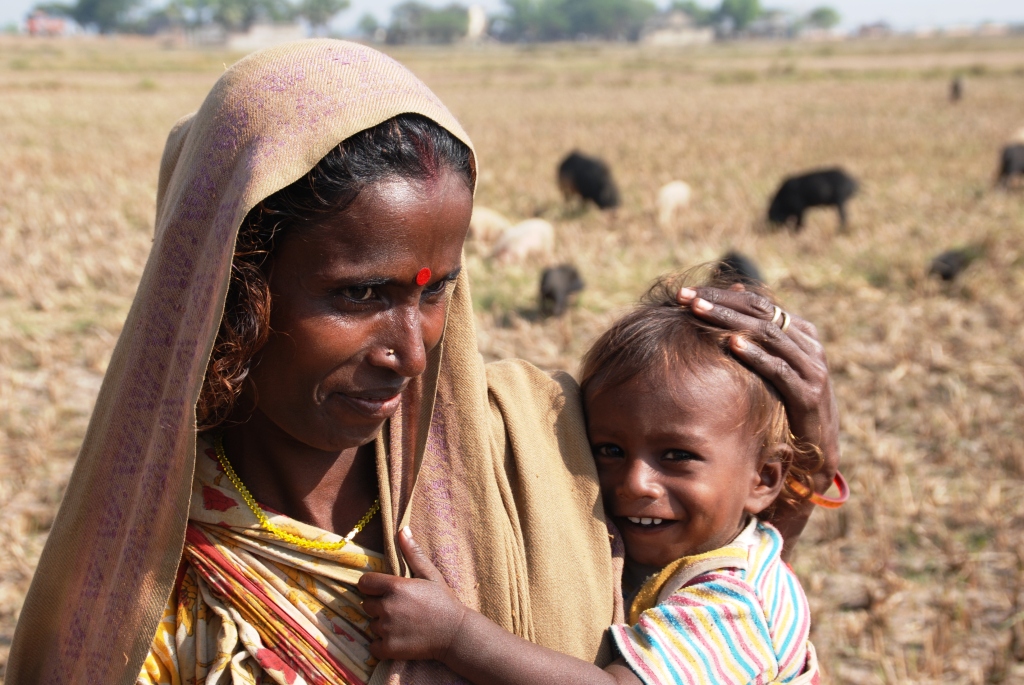
Pig nomads have to carry along all family members

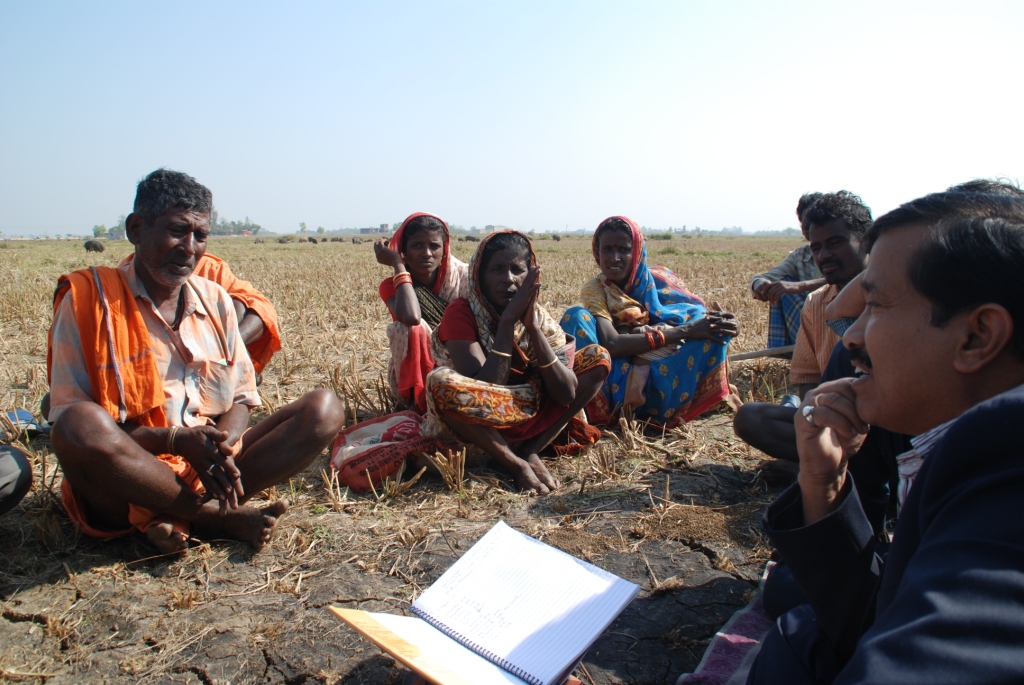
We conducted our “Pathe Paathshaalaa” with the pig pastoralists, in the open paddy field, under the blue sky. It was a unique class of chatting, sharing and discussing. The topics ranged from their life of happiness with animals to the problems faced. The group belonged to the Kela community, who graze native breed of pigs (Swara/Kuji) since time immemorial. Haladhar Das, head of the group, shared his experiences of nomadic pig rearing and described the many challenges. The constant new places, new people, and new environments. Side by side they have to carry their family members also. But they overcome all odds, for the benefit of their animals. Their pigs are disease resistant and need no special feed to be bought. Instead they use all the resources that are not fit for human consumption. “They demand nothing from us and are our food baskets, protein pots and running bank accounts” said Haladhar Das. “There is lots of demand for pork by the local people, and even traders from neighboring states like West Bengal and Andhra Pradesh want to buy from us”, added Baidhar Das, another member of the group with pride and content.

Dr. Balaram Sahu conducting a Pathe Pathshala session with the pig nomads

In our Paathshaalaa, we gave them small tips on low external input based skills like preparation of safe drinking water for them from local ponds, by adding matured and dried seeds of drumsticks (Moringa oleifera) overnight to the water pots, vaccination against pasteurellosis in local veterinary institutions and preparation of special tonic in case of anorexia of their animals. In turn the enthusiastic pastoralists shared some of their traditional knowledge with us. Their knowledge, although are already in public domain, enriched our “Pathe Paathshaalaa” for diffusing to pig pastoralists in other parts of the world.

It was half past two, when we had to say good bye. The pastoralists, that were initially  reluctant had become our friends and seemed emotional while bidding farewell. Dr Ilse was visibly moved by the nomads who could not speak to her directly in words but certainly by the rhythm of their hearts. The pulsation of dedication, belongingness to the nature was palpable.

In this “Pathe Paathshaalaa” we got once more convinced about the importance of these indigenous systems for food security and for providing the basic needs of rual people, even in the case of climate change.